
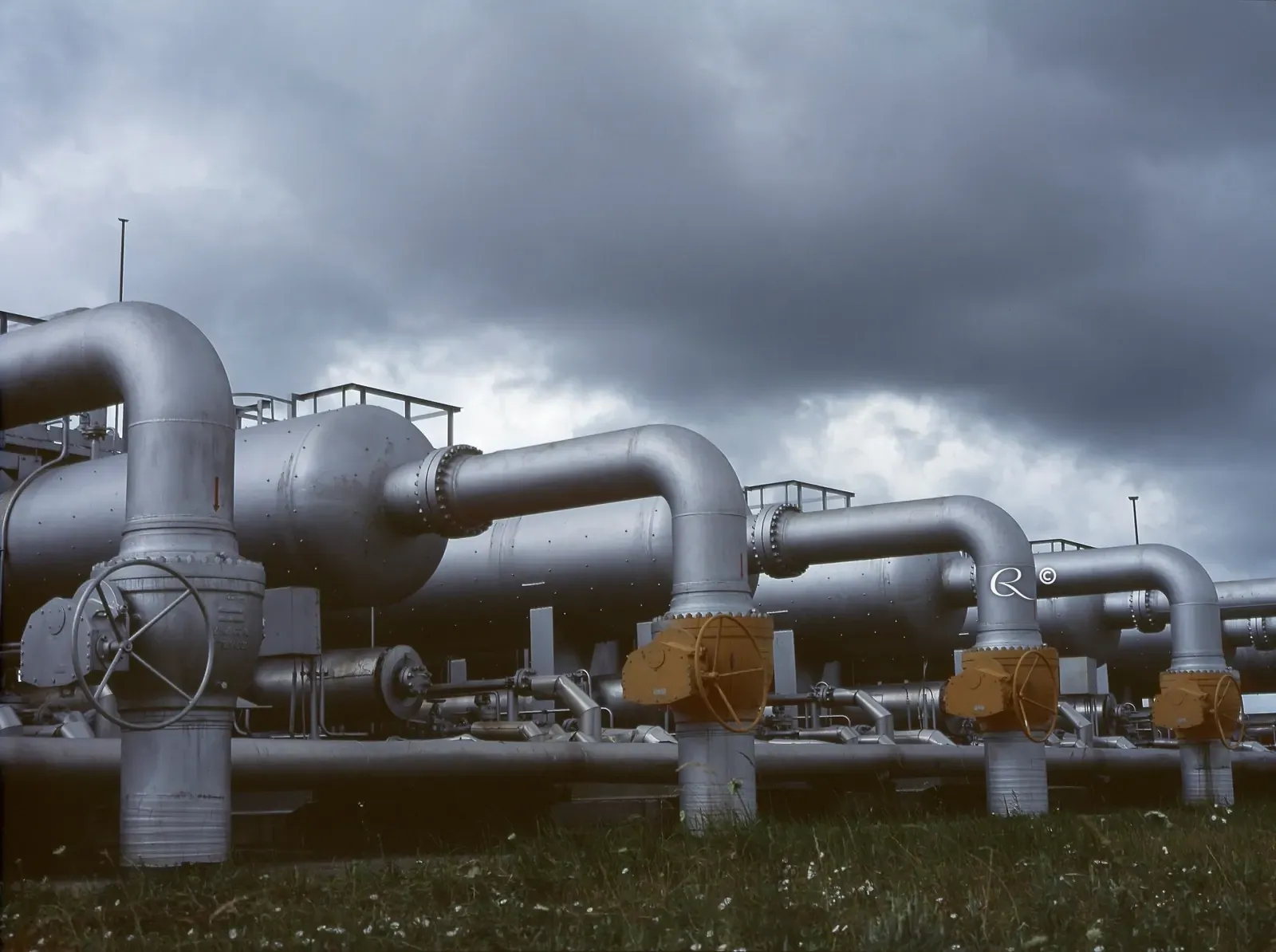
Pipeline Chemical Cleaning Services
Ram Engineering clears rust, scale, oil and sludge from installed pipelines with a chemical chosen for the deposit and pipe metal. On site, across India, from Chennai.
Since 1993Over 33 years of experience
- ISO 9001:2015Certified for industrial field services
The problem
What Builds Up Inside a Pipeline, and When Chemicals Are the Answer
A pipeline slowly fills with what it carries. Hard water leaves scale, steel rusts from inside, oil brings sludge and carbon, and biofilm grows where water stands. The bore narrows, so pressure drop and pumping effort rise and heat transfer falls. Deposit also holds moisture against the steel, where pitting often starts, and it can break loose to block a strainer, a valve or a nozzle downstream.
Chemical cleaning circulates a liquid through the line, so it reaches bends, branches, small-bore runs and welds that a tool or a pig cannot. It suits deposits that dissolve, soften or lift in a chemical, in lines that can be isolated and looped. It does not repair a pipe: a line with heavy wall loss needs inspection first, and a thick, hard deposit in a long straight line may be better pigged or jetted. We say which when we have seen the line.
New pipework is a different job: oil from fabrication, weld heat tint and mill scale come off by degreasing, pickling and passivation, and oil systems are flushed with oil. The pages for those are linked below.
What Is in the Line, and What Usually Removes It
A deposit is named from a sample, a cut-out piece or the line’s history, and only a test confirms it. The cleaning below is the usual start, not a promise for your line; the pipe metal sets the limits (next table).
| Deposit | What usually removes it | What we watch |
|---|---|---|
| Rust and mill scale on carbon steel | Inhibited acid, circulated; citric or phosphoric acid where chloride must be kept out | Iron in the solution, read with the other chemistry checks; the corrosion assessment of a coupon of the same steel; no loose scale in the rinse |
| Lime and other hard-water scale | Inhibited acid on carbon steel; a milder acid such as citric where the metal or the plant needs it | Calcium in the solution, read with the other chemistry checks; flow and pressure drop compared with before, where you have the gauges |
| Silica scale | Hard to dissolve in ordinary acids: it often needs a fluoride-based chemistry with extra precautions, or mechanical removal. A test of the deposit decides | Silica in the solution, after the deposit has been tested |
| Oil, grease, heavy oil sludge and carbon | Bulk product pushed out first, then solvent or dispersant and a hot alkaline degreaser; foam and brush pigs where the line takes them | The last pig comes out without sludge; the rinse is clear with no oil film; a white cloth swab comes out clean |
| Biofilm and other organic fouling | An alkaline cleaner, or a biocide with a dispersant | Clear rinse water at matching pH; no deposit seen at the line ends |
Hot work, welding and cutting are not part of cleaning. Repairs to pitted or leaking pipe found after cleaning are quoted separately.
What the Line Is Made of Sets the Chemistry
Tell us every material in the line, not only the pipe: seals, linings, valves and instruments set limits too.
| Material | What to know | What we do |
|---|---|---|
| Carbon steel | The method we propose for carbon steel pipe uses an inhibited acid, hydrochloric acid in one version. Acid on carbon steel gives off hydrogen, which is flammable. Where chlorides or hydrogen pick-up must be kept down, as in high-pressure hydrogen or oxygen gas piping, the method we propose uses citric acid instead | Vents lead to a safe place; the inhibitor limits attack on the pipe, and a coupon of the same steel is assessed against the project’s corrosion criteria |
| Stainless steel | Chlorides can pit and crack it, so hydrochloric acid is never used. Weld heat tint is a pickling job, not a cleaning job | Chloride-free chemistry and DM (demineralised) water; see pipeline pickling and passivation |
| Aluminium, galvanised steel, copper and brass | Acid and alkali can attack aluminium and zinc; ammonia-bearing solutions can attack copper alloys | Tell us before the offer: such parts are isolated from the loop, or the chemistry changes |
| Rubber, plastic linings and soft seals | Solvents and hot caustic can swell or soften them | Removed or blinded off, and listed for refitting |
How We Clean an Installed Pipeline
This follows the methods we propose for pipelines. Quantities, times and the number of loops are fixed after the site visit, because they depend on the line’s length, size and deposit.
Walk the Line
With your engineer we trace the line on its isometric or line list: material, size, length, high and low points, dead legs, and every valve, instrument and item of equipment to isolate. From that we write a loop plan and list the hoses, spools and blinds it needs.
Isolate and Make Up the Loop
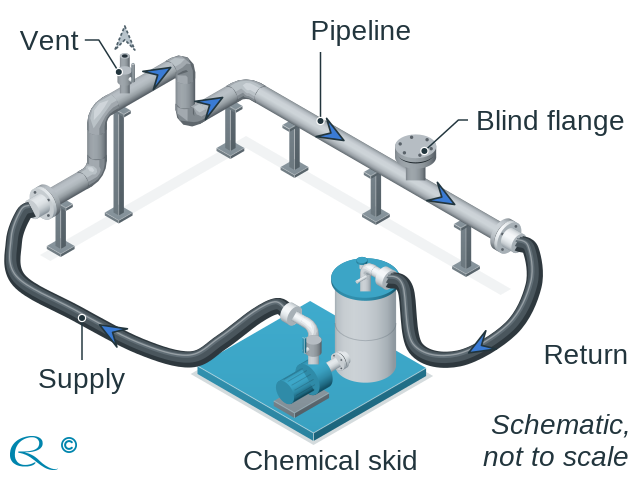
Under your permit the line is positively isolated and locked out; instruments, relief and control valves and soft-seated parts come out or are blinded. Hoses join the line ends into one closed loop, with a vent at each high point, and the loop is leak-tested with water before any chemical goes in.
Flush With Water
Water circulates until the outlet runs clear, taking out loose dirt.
Take the Oil off First
Where the line held oil or heavy product, the bulk is pushed out, then solvent or dispersant and a hot alkaline degreaser are run. A line that can take pigs may be pigged, foam first and then brush, before and between stages.
Dissolve the Deposit
The chosen solution circulates at the strength and temperature the project procedure sets, and fast enough to scour bends and fittings. Strength, temperature and the dissolved iron or calcium are measured through the stage, and a coupon of the pipe metal is assessed for corrosion. A dissolved-metal reading that levels off can mean spent chemistry or poor circulation, not a finished clean, so the stage ends on the project’s chemistry checks, corrosion assessment and acceptance criteria together, not at a clock time or on one reading.
Rinse and Neutralise
Fresh or DM water rinses the line until the outlet pH matches the inlet. Spent solution and rinse water are collected and neutralised, never run to a drain, and the neutralised liquid goes onward only if it meets the acceptance conditions of the authorised waste route.
Protect, Dry and Cap
Bare carbon steel can rust again quickly once wet, so where the method calls for it we passivate it with a nitrite-based solution, dry the line with oil-free air or nitrogen and cap the ends.
Inspect and Hand Over
We inspect the line ends and accessible points, with a borescope where the line allows and a white cloth for oil, and state in the report what that inspection cannot reach. Your engineer witnesses the final checks, and you receive the logs.
How We Check the Line Is Clean
Your own specification applies where it is stricter. A borescope or a cloth reaches only what lies near an opening. Circulation logs record the process conditions; they do not prove that every inaccessible surface is clean. Acceptance rests on validated circulation coverage, representative inspection of the line ends and open points, and the stated limits of both, and your engineer witnesses the final checks.
| Check | What it shows | Acceptance in the method we propose |
|---|---|---|
| Dissolved iron or calcium | How much deposit has gone into solution. A reading that stops rising can mean spent chemistry or poor circulation, not a finished clean | Read with the project’s chemistry checks (strength, pH, temperature, flow) against its acceptance criteria |
| Coupon of the pipe metal | An estimate of corrosion of the pipe metal | A corrosion assessment against the project’s criteria; a coupon with no visible attack is not enough on its own |
| Final rinse pH | Whether acid or alkali is left behind | Outlet pH equal to the inlet water’s, or 6.5 to 8.5 where the offer sets that range |
| Oil check | Oil left on the steel or in the rinse | No oil film in the rinse, and a white cloth swab with no oily or dark deposit |
| Dryness | Whether the line will rust again before use | No free water; dew point, with its pressure basis, as agreed with you |
| Look inside | Rust, scale or deposit left | Clean bare metal at the line ends and accessible points, by eye or borescope |
Case study
Scale Removed From Hot Water and Condensate Return Lines Without Dismantling
The situation. Scale had formed inside the hot water and condensate return lines of a textile mill. Scale narrows a pipe, and pieces that break away can lodge in the equipment downstream. The mill wanted the lines descaled without dismantling any pipework, and in a stop it had planned.
What we did. We isolated the affected sections and connected our chemical cleaning unit to them as one closed loop. An inhibited acid descaler was circulated through the loop and its strength was followed as it worked. We then rinsed the lines and neutralised the spent solution.
The result. The lines were descaled in place, inside the planned stop, with no pipe taken apart. We quote no flow figures for this job. A closed-loop clean can be inspected only at the line ends and open points, so we state the work done and not a measured gain.
Where: A textile mill in Tiruppur, Tamil Nadu.
Records and Handover
In the methods we propose, each stage is logged as it is done and countersigned by your engineer.
- Before work: method statement, risk assessment and job safety analysis for your approval, safety data sheets for each chemical, and the loop plan with the list of what is isolated or blinded.
- During the work: a log of each stage: chemical, strength, temperature, time, iron or calcium reading and rinse pH.
- Hold points: the isolation check and the final checks, witnessed by your engineer.
- At handover: the stage logs, photographs, chemical use and waste quantities, and a job completion report.
Safety on a Pipeline Cleaning Job
The work runs under your permit-to-work, and anyone on the crew can stop it.
- Isolation and pressure: the line is blinded and locked out under your permit, and nothing is pumped until the loop has held a water test.
- Chemicals: acid and alkali move by pump in closed lines and are stored apart in labelled, bunded containers; the crew wear acid suits, face shields, gloves and respirators, with an eyewash and shower at the circuit.
- Hydrogen: acid on carbon steel gives off hydrogen, which is flammable, so the vents are routed to a safe place, away from anything that sparks; the same applies whichever acid is chosen.
- Spent liquid: neutralising it does not by itself make it fit for an effluent plant or for discharge. It must meet the acceptance conditions of the authorised waste route, for dissolved metals and any other contaminants.
- Fuel and heavy-oil lines: flameproof pumps, earthing and bonding, a gas test at the open points, and a solvent that is never heated.
- Opening pipework: Before you open a joint or measure pipework in place, isolate the line, release the pressure, drain it and let it cool, and follow your plant’s safety procedure.
Where It Is Used
- Cooling water, condensate and boiler feed lines: scale and rust.
- Process lines: product residue, polymer and sludge.
- Fuel and heavy-oil lines: oil, sludge and carbon.
- Food processing and water treatment lines: biofilm and mineral deposit.
What Your Site Provides
Our past offers put these in the customer’s scope; your offer confirms them.
- Permits to work, gate passes and access along the line.
- The line isolated by blinds, locked out and tagged out, and free product drained.
- Temporary tie-ins at the line ends, where the line has none.
- Electrical power at the work location.
- DM or fresh water to make up the solutions and to rinse.
- A route for spent chemical, rinse water and sludge: your effluent treatment plant or an authorised handler, whose acceptance conditions the neutralised liquid must meet, with disposal quoted as a separate item if you want us to arrange it.
- A crane or forklift, and scaffolding to reach the line ends.
Questions Buyers Ask
Which chemical will you use on my line?
It depends on the deposit and on every material in the line, so we choose it after we know both. Send the metal, what the line carries, what you see and, if you can, a sample of the deposit; the offer states the chemistry. On stainless steel we never use hydrochloric acid.
Is chemical cleaning safe for stainless steel?
It can be, with chloride-free chemistry and DM water, because chlorides can pit and crack stainless steel. Weld heat tint is taken off by pickling and then passivation, a separate stage with its own page.
How do you know the cleaning is complete?
Not by the clock or by one reading. The project’s chemistry checks, a corrosion assessment of the pipe metal, the rinse pH and the inspection of the line ends are read together against the acceptance criteria agreed with you. Inspection reaches only the line ends and open points, and the offer says so. Your engineer witnesses the final checks.
Can the work be done in our shutdown, and how long does it take?
Yes: send the shutdown dates with your enquiry. We start the work within 7 working days of receiving your purchase order and advance. The days on site depend on the length and size of the line, the deposit and what must be isolated, and the offer states them. For one line, a 2026 quotation allowed about 12 working days at site for a 12 inch, 350 m carbon steel pipeline with heavy oil deposit, excluding delays outside our control; that is one quotation, not a rule.
What happens to the spent chemical and sludge?
They are collected in closed, labelled containers and neutralised, never run to a drain. Neutralising does not by itself make the liquid acceptable. It can go to your effluent plant, or to an authorised facility, only when it satisfies what that route accepts, dissolved metals included. We can quote disposal through an authorised facility as a separate item.
What should I send for a quote?
The pipe material, size and length, what the line carries and at what temperature, what you see (low flow, high pressure drop, rust in a strainer), drawings or an isometric if you have them, and the dates. Send photos on WhatsApp to +91 99400 49505 or by email to [email protected].
What is the price?
Prices depend on line length and size, the deposit, the number of loops, the waste and the site, so we quote for each enquiry. For jobs outside Chennai, travel and stay for our team are included in the quote.
Where We Work
Tamil Nadu
Telangana
Kerala
Andhra Pradesh
Odisha
Delhi NCR
Rajasthan
Jharkhand
Uttar Pradesh
West Bengal
Punjab
Chhattisgarh
Related Services
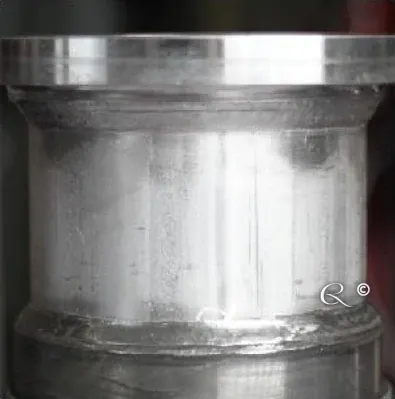
Pipeline Pickling & Passivation
Weld heat tint, mill scale and rust taken off stainless and carbon steel lines, then passivated.
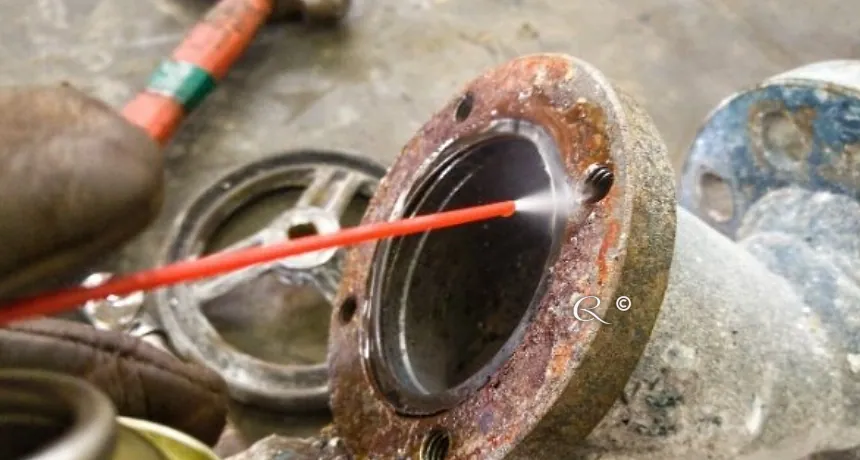
Degreasing of Pipelines
Oil and grease cleaned out of new and installed pipework before pickling, flushing or start-up.
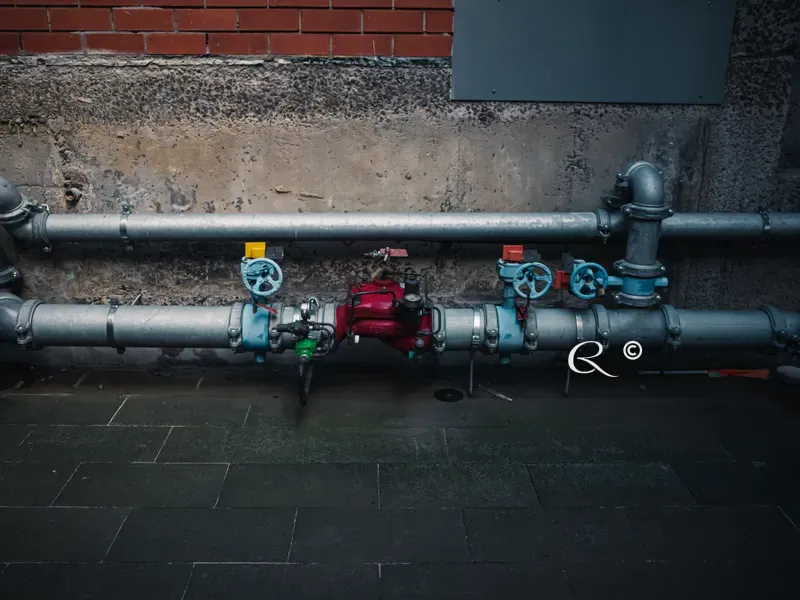
Pipeline Flushing
New hydraulic and lube oil lines flushed with oil to an agreed cleanliness before start-up.
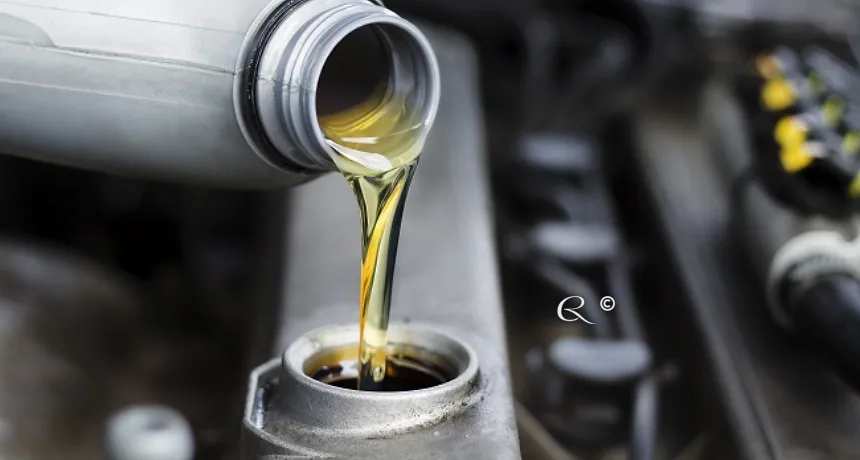
Oil Flushing
A machine’s whole oil system flushed after repair, an oil change or contamination.
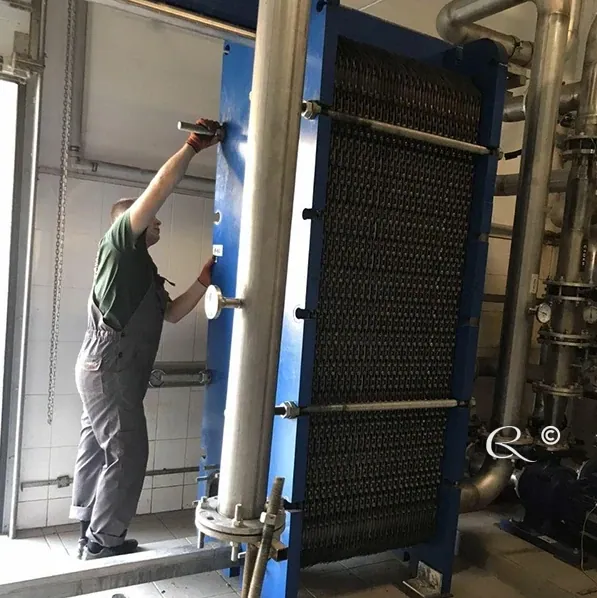
Heat Exchanger Servicing & Retrofits
Chemical and mechanical cleaning of heat exchangers, where the scale is in the exchanger rather than the line.
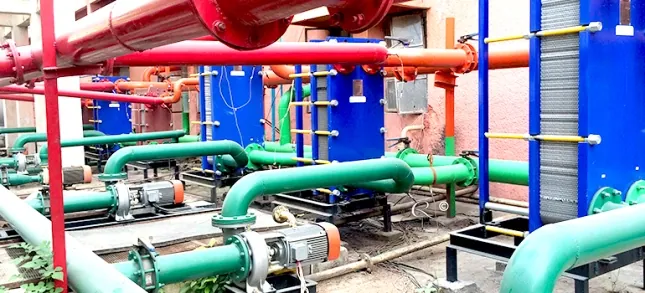
Electrochemical & Cooling Solutions
Cooling water analysis, chemical dosing and tower maintenance against scale, corrosion and fouling.
Pipeline Chemical Cleaning on Our Records
Our invoices and completion records hold no chemical cleaning job, so none is counted here. We have descaled the hot water and condensate return lines of a textile mill in Tiruppur, the job in the case study above, which is not counted with these records. What we have quoted and written down: in 2026 we quoted the chemical cleaning of a 12 inch carbon steel pipeline of about 350 m that had carried a heavy oil feedstock, by pigging, solvent and hot alkaline degreasing, at a plant in West Bengal. We wrote our method for cleaning the gas piping on compressor packages at a plant in Maharashtra, and quoted the pickling and passivation of carbon steel pipework at a plant in Chennai. A quotation is not a completed job.
Ask About Chemical Cleaning of Pipelines
Tell us about the job. “Not sure” is a fine answer; we will ask follow-up questions.
Request received. Your reference is {ref}. We reply during office hours, Monday to Saturday, 9.00 am to 5.30 pm. For a breakdown or a plant shutdown, call +91 99400 49505 at any time. Nothing is booked or ordered until we confirm scope, availability and terms in writing.Prefer to talk? Call +91 99400 49505 or WhatsApp us.

Schedule a Plant Walkthrough
Our team can come to your site to see the pipework, check the deposits or contamination and tell you what cleaning it needs.
Request an Assessment
Get Expert Advice for Your Pipeline Cleaning Needs
Call or WhatsApp an engineer, or send the pipe material, size and length, and the dates. We reply with a method and anything else we need from you.
WhatsApp +91 99400 49505