
Portable Oil Particle Counters
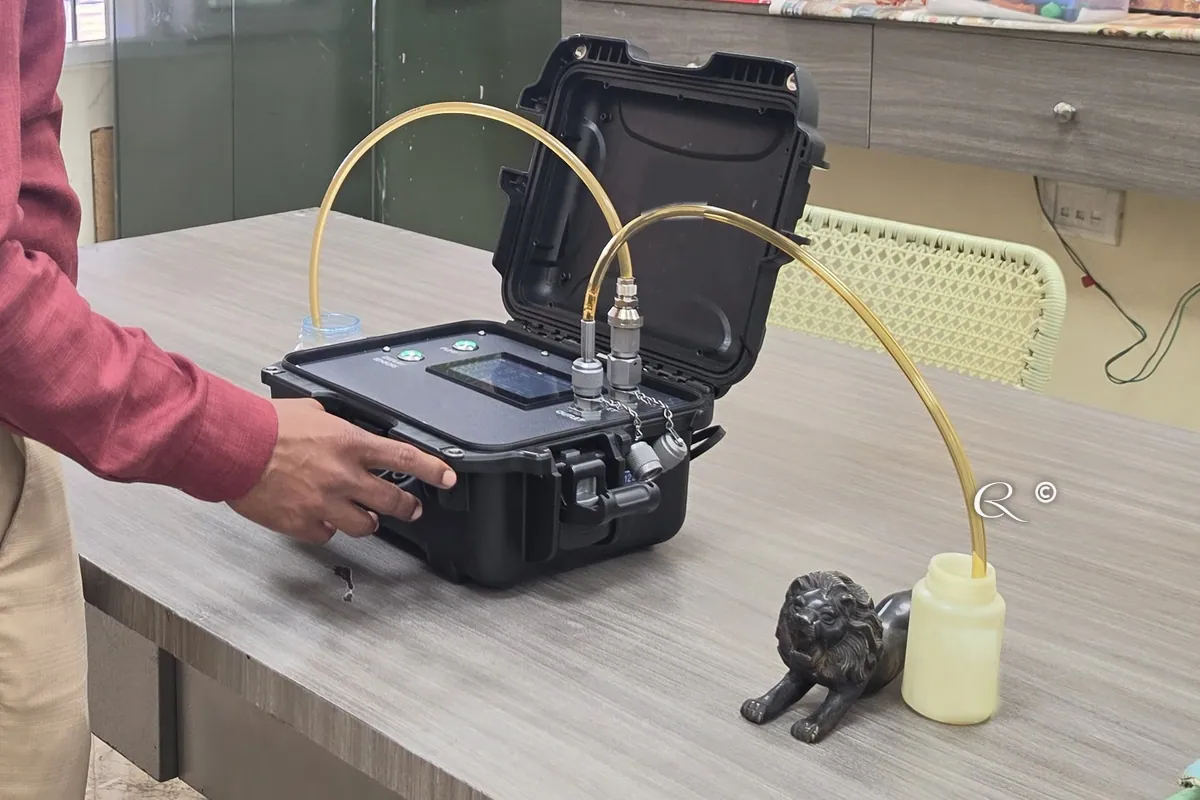
Ram Engineering, based in Chennai, supplies portable oil particle counters: a laser counter that tests bottle samples, so you can read oil cleanliness at your plant.
What to Send for a Quote
Enough to start:
- The oils you will test, with their viscosity grades.
- The code you report in: ISO 4406, NAS 1638 or both.
- Where it will be used: in a laboratory, beside the machines, or carried between plants.
- Your plant’s written specification for the counter, if it has one.
- The quantity and the date you need it.
What a Particle Counter Measures
The counter we offer tests offline only: the oil is taken in a clean sample bottle and tested from the bottle, and the counter is not connected to a running line. It counts the particles in the oil by size and turns the counts into a cleanliness code.
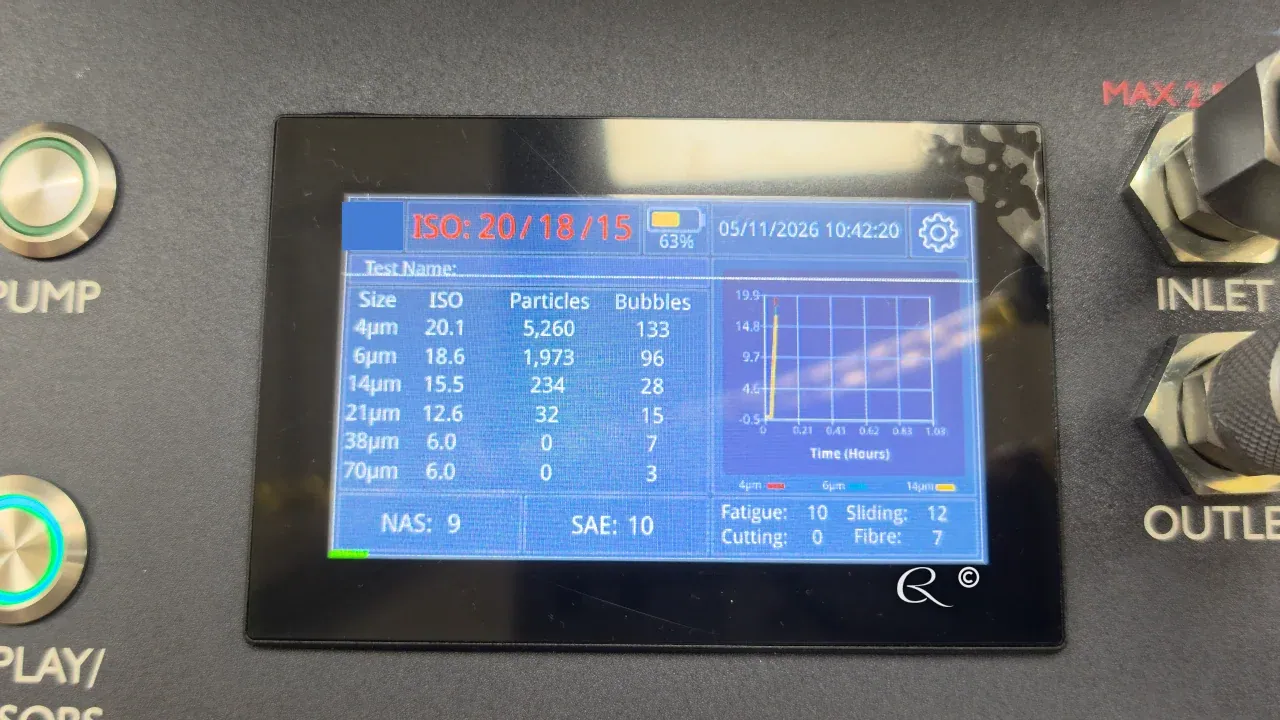
Most plants report the ISO 4406 code: three scale numbers, such as 18/16/13, for the particles of 4, 6 and 14 µm(c) and larger in each millilitre. Older machine manuals and many purchase specifications use NAS 1638 classes instead.
We are a supplier, not the maker.
Taking a Bottle Sample
The counter tests only what is in the bottle, so a count is only as good as its sample. Follow your plant’s sampling procedure: the oil may be hot and under pressure.
A Clean Bottle
Use clean bottles made for oil sampling, and keep each one capped until you fill it.
The Right Point
Take the oil while the system runs and the oil flows steadily, at the same point each time, never from the bottom of a tank.
Flush, Fill and Cap
Let some oil run through the sampling valve before you fill the bottle, then cap it at once and label it with the machine, the point and the date.
Before the Count
Particles settle in a bottle that stands, so mix the sample again before it is counted, and remove air bubbles, as the counter’s instructions set out.
How the Laser Counter Measures
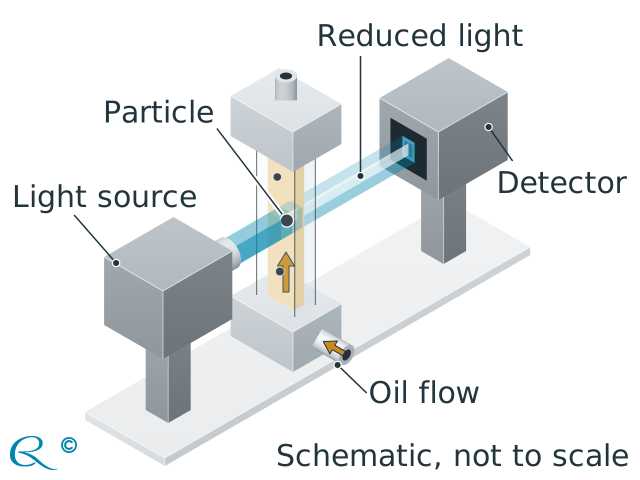
A laser particle counter is an optical counter. Most laser counters for oil work by light blocking: the oil from the bottle flows through a narrow cell across a laser beam; each particle casts a shadow on the detector, and the size of the shadow gives its size. Particles within the counter’s specified measurement range are counted and sized.
Because a light-blocking counter sizes particles by their shadows, it also counts water droplets and air bubbles as particles, and in very dirty oil two particles can cross the beam together and count as one larger particle. Very dark oil can block the light.
Reading an ISO 4406 Code
Each of the three numbers stands for a range of particles per millilitre, and each step up roughly doubles the count: 18/16/13 means more than 1,300, up to 2,500 particles of 4 µm(c) and larger; more than 320, up to 640 of 6 µm(c) and larger; and more than 40, up to 80 of 14 µm(c) and larger, in each millilitre. Automatic counters calibrated by the current method commonly report these three sizes; a microscope count uses 5 µm and 15 µm only, so its code has two numbers after a dash, such as -/16/13. A dash in place of the first number does not by itself show that a microscope was used, so record the method and the calibration with each result.
| Scale number | Particles per mL, more than | Up to and including |
|---|---|---|
| 22 | 20,000 | 40,000 |
| 21 | 10,000 | 20,000 |
| 20 | 5,000 | 10,000 |
| 19 | 2,500 | 5,000 |
| 18 | 1,300 | 2,500 |
| 17 | 640 | 1,300 |
| 16 | 320 | 640 |
| 15 | 160 | 320 |
| 14 | 80 | 160 |
| 13 | 40 | 80 |
| 12 | 20 | 40 |
| 11 | 10 | 20 |
| 10 | 5 | 10 |
The scale runs further both ways. There is no exact conversion between NAS 1638 classes and these numbers, as the two count different size ranges in different volumes of oil; tell us which your specification uses.
Where Particle Counters Are Used
A count can be taken wherever the condition of the oil matters:
- Hydraulic systems. Power packs, presses, moulding machines and machine tools, checked against the cleanliness their pumps and valves need.
- Turbine, compressor and gearbox oil. Routine checks on circulating lube oil systems in power, steel and process plants.
- After flushing and filtration. A check that a flushed pipeline or a filtered system has reached the agreed code before it goes back into service.
- New oil. Oil from a new drum or tanker can be dirtier than the system needs; a count before filling shows whether it should be filtered first.
- Trend checks. The same sampling points counted on a schedule show when contamination starts to rise, before it damages a component.
Before We Select a Counter
Tell us how you will use the counter, and we confirm with the quotation which counter suits and which codes it reports.
| Detail | Why it matters |
|---|---|
| The oils you will test, and their viscosity | The counter must handle the thickest and darkest oil you test. |
| Free water or air in the oil | Droplets and bubbles are counted as particles, so wet or foamy oil may need another way of testing. |
| The code you report in | ISO 4406, NAS 1638 or both, so the results match your own reports and machine manuals. |
| Where it will be used | A laboratory bench, beside the machine, or carried between plants: this decides the power supply and the case. |
| How you keep results | Read on the screen, printed at the machine, or stored and downloaded to a computer. |
| Calibration | How the counter is calibrated, how often it needs checking or recalibrating, and where that is done. |
| Quantity and required date | Lets us confirm availability and lead time. |
What our quotation will confirm: the item we propose and its specification, what we matched it to, the quantity and availability.
Our Own Cleanliness Checks
We check oil cleanliness at site with a portable particle counter on our own oil filtration and flushing jobs, so the code before and after the work is measured, not guessed.
If you want counts before you decide to buy, we can also rent you a particle counter, or check the oil as part of our oil analysis work.
Our Counter Testing a Sample
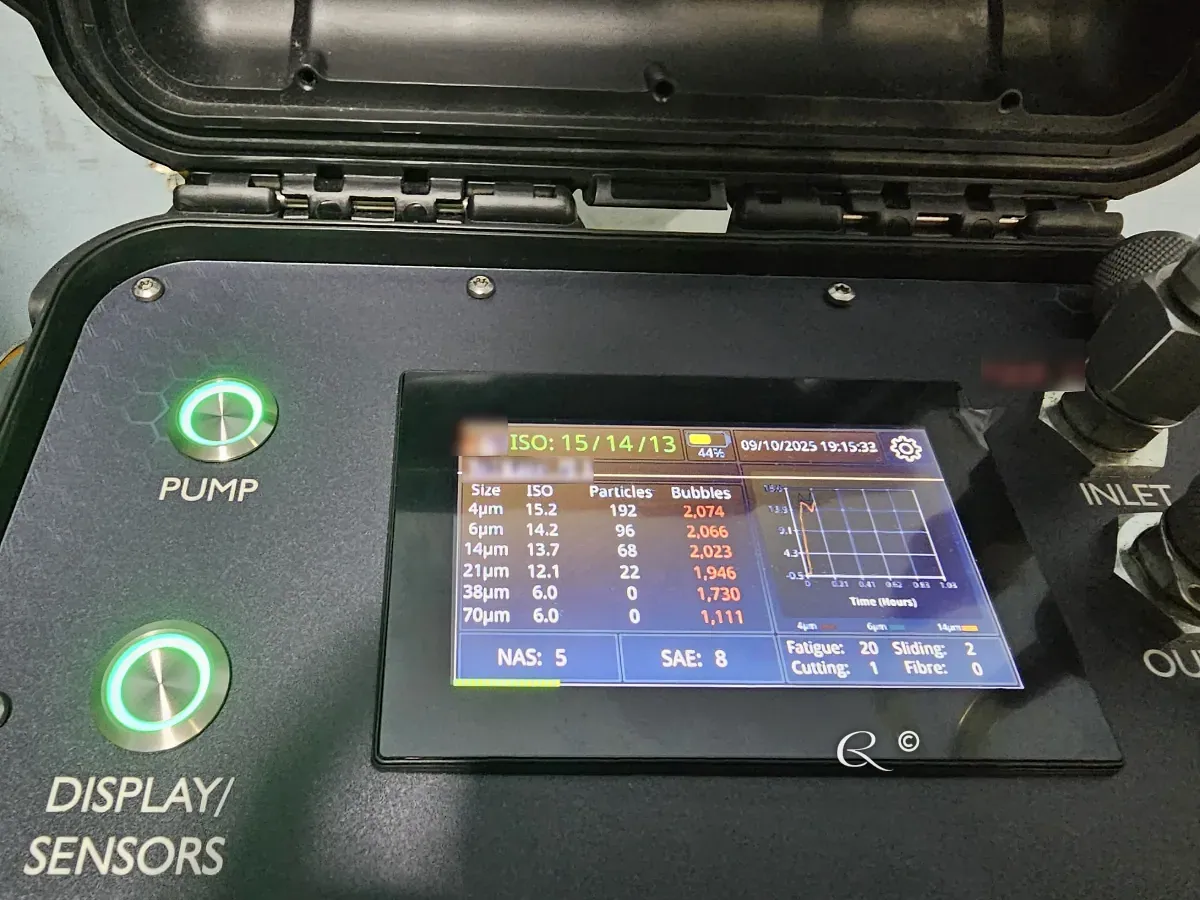
This short clip shows our own counter testing an oil sample from a bottle. The oil runs through the counter, and the screen shows the cleanliness codes as it counts.
The clip has no sound.
The Counter Up Close
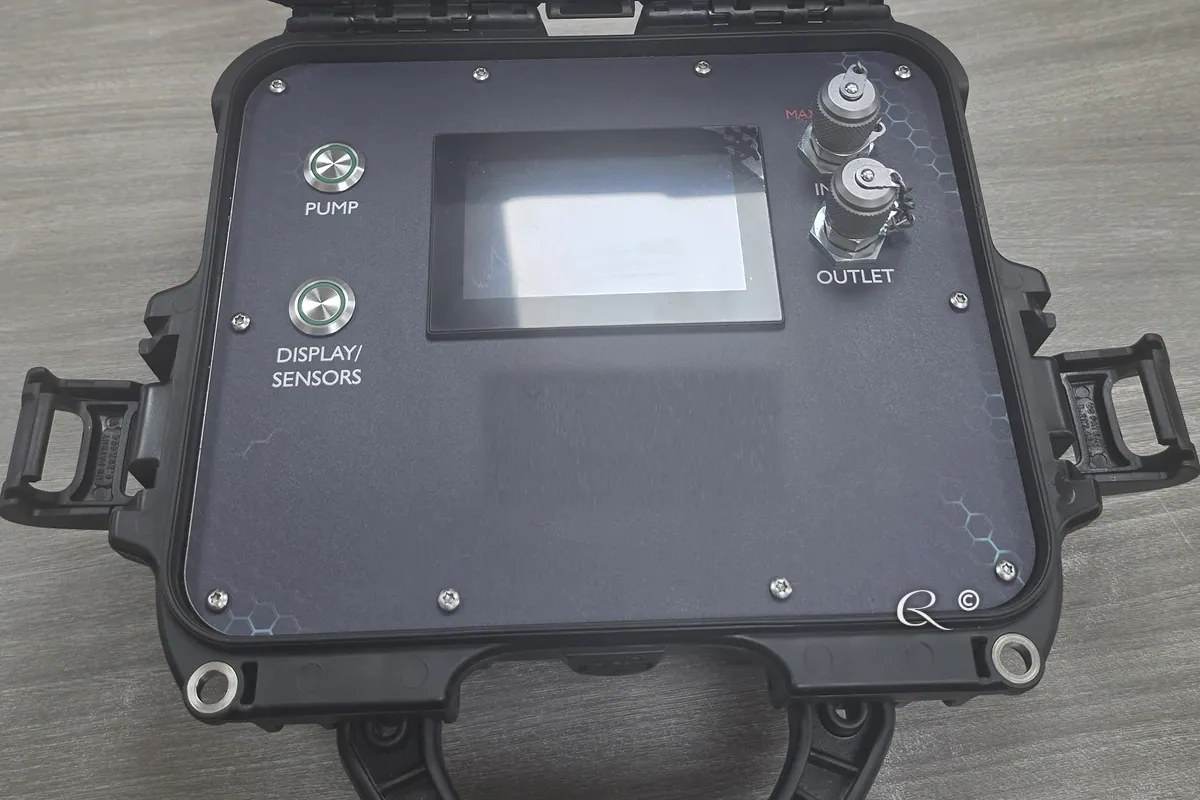
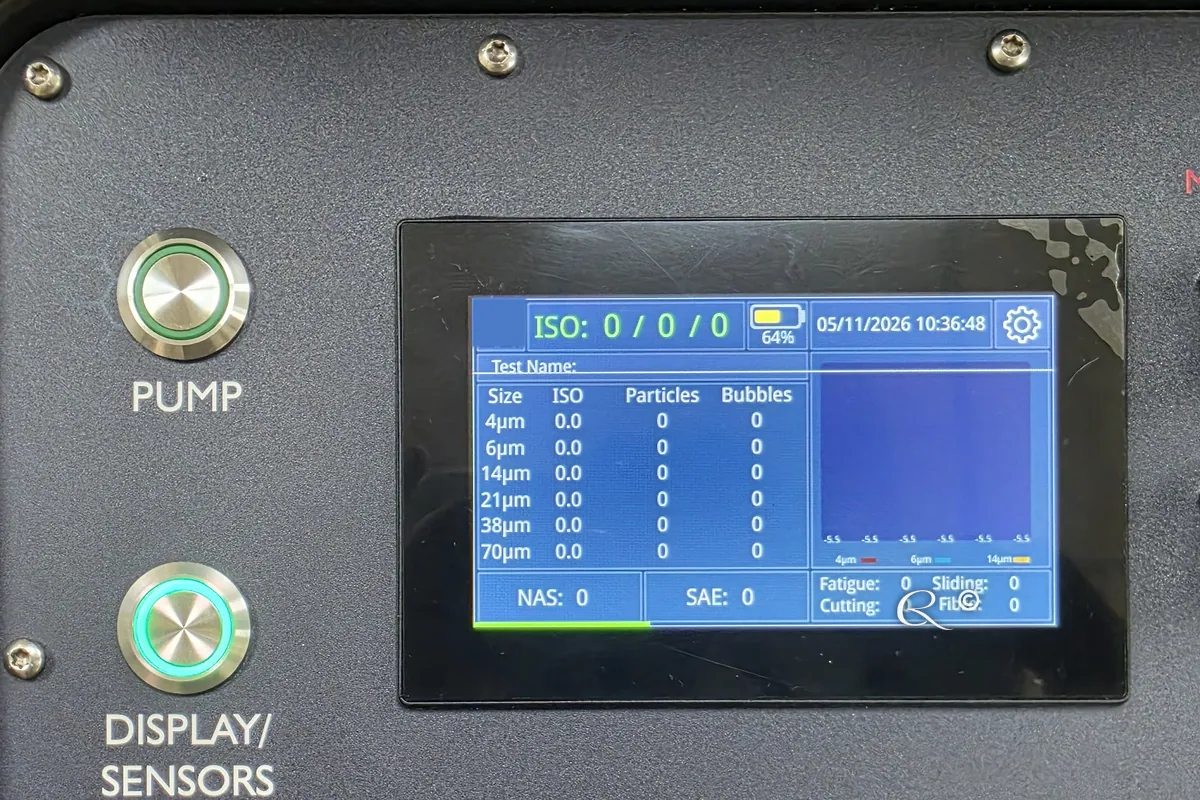
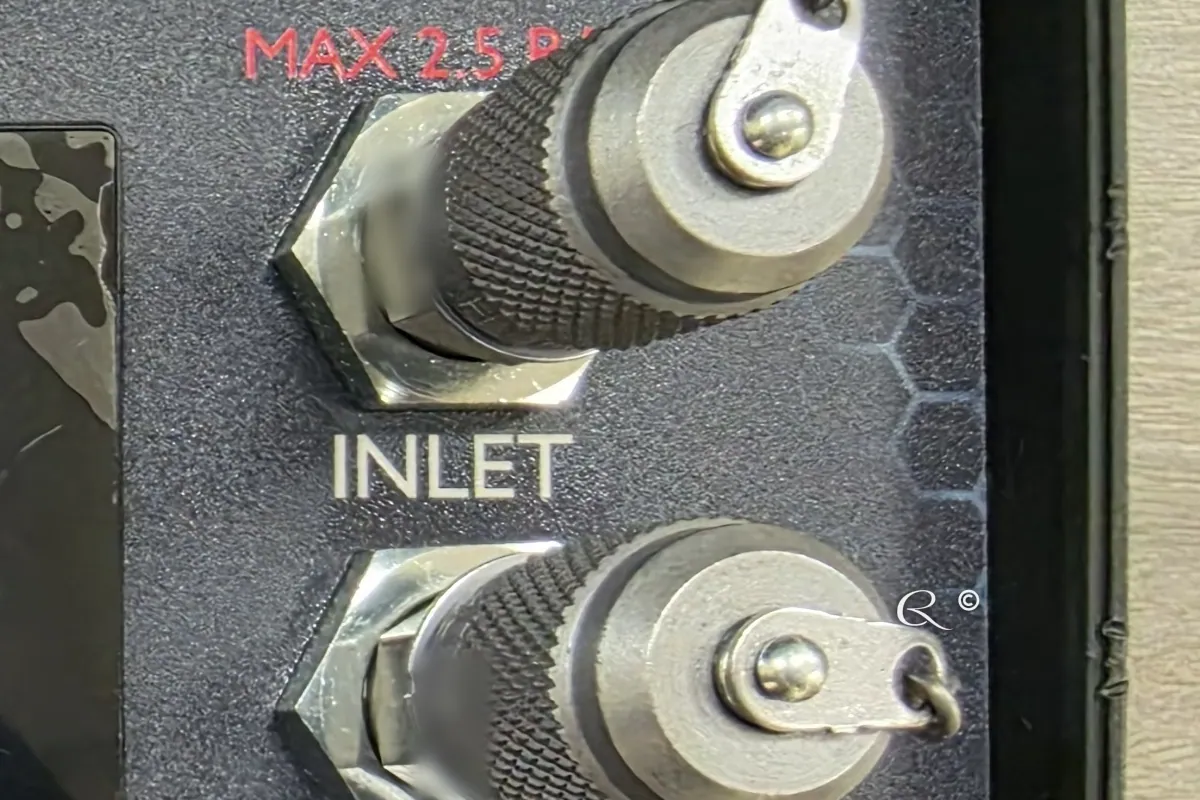
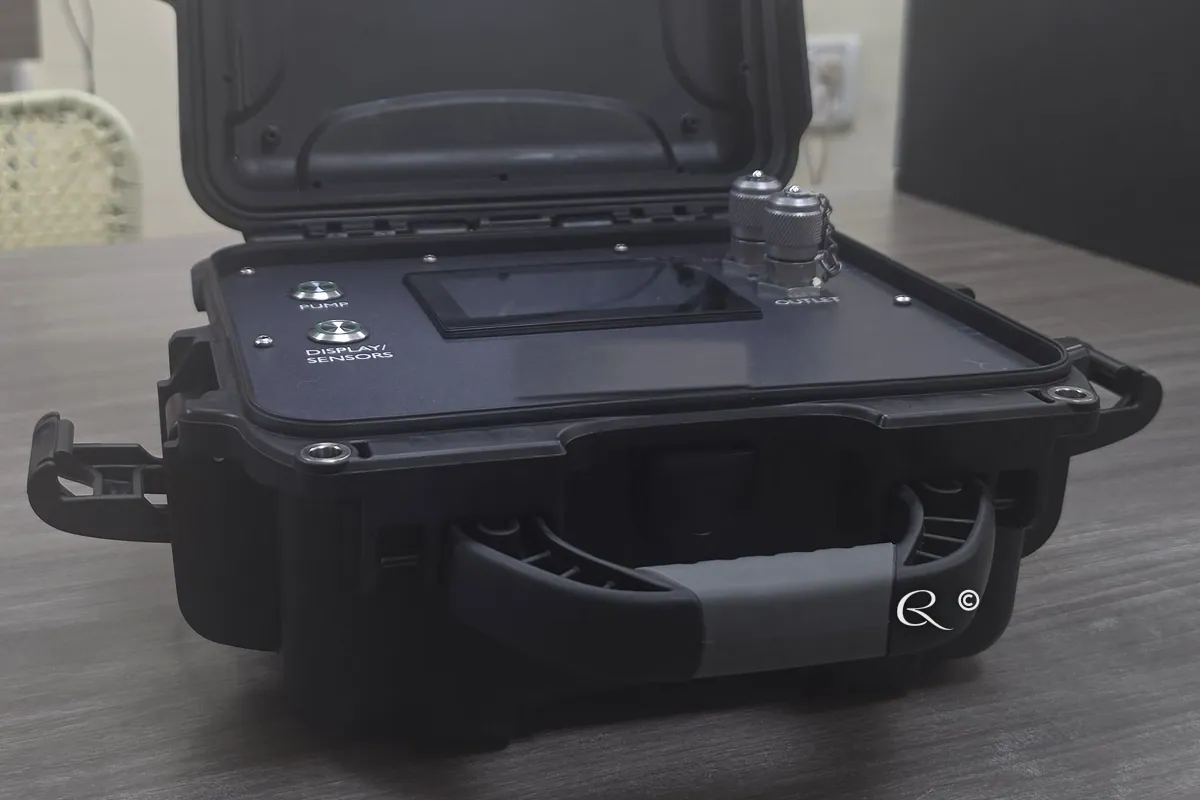
Example
From Our Quotations
In 2025 we quoted portable oil particle counters to a steel plant and a power plant, one counter each.
Questions Buyers Ask
Is a particle count the same as an oil analysis?
No. A particle count measures only the particles in the oil, and is itself one oil analysis test. Broader oil analysis can include water, viscosity, acidity and wear metals; many of these tests are performed in a laboratory.
Which cleanliness code should my oil meet?
It depends on the most sensitive part of the system, usually the pumps and valves. The machine manual often gives a target code; if it does not, tell us the system and we suggest one.
Can the counter test dark or wet oil?
Dark or thick oil may need diluting before the count, as the counter’s instructions set out. Free water is counted as particles, so oil that holds it may need a laboratory test instead. Tell us the oil, and the quotation says how the counter we propose deals with it.
How often should oil be counted?
It depends on how critical the machine is and how dusty its surroundings are. Many plants count critical systems every month and others every quarter, and again after a repair, a top-up or a filter change.
What does µm(c) mean?
Micrometres, as sized by a counter calibrated by the current method. Sizes from older calibrations were stated without the (c), and the two are not directly comparable, so a counter’s results are compared with earlier ones on the same basis.
Do you keep stock?
Availability is confirmed with each quotation.
What is the price?
Prices depend on the counter, its accessories and the quantity, so we quote for each enquiry.
Does your invoice show the HSN code?
Yes. Our GST invoice shows the HSN or SAC code for each line.
Where We Work
Tamil Nadu
Telangana
Kerala
Andhra Pradesh
Odisha
Delhi NCR
Rajasthan
Jharkhand
Uttar Pradesh
West Bengal
Punjab
Chhattisgarh
Ask About a Particle Counter
The oils you test, the cleanliness code you report in, how you take samples and the quantity.
Request received. Your reference is {ref}. We reply during office hours, Monday to Saturday, 9.00 am to 5.30 pm. For a breakdown or a plant shutdown, call +91 99400 49505 at any time. Nothing is booked or ordered until we confirm scope, availability and terms in writing.Prefer to talk? Call +91 99400 49505 or WhatsApp us.
Related
Oil Analysis
Particle counts and BDV checks at your site, and laboratory tests of the oil.
Oil Flushing
Hydraulic and lube oil systems flushed after installation or repair, and checked with our particle counter.
Pipeline Flushing
New or contaminated hydraulic pipework flushed before it goes into service.

Filter Elements
Hydraulic and lube oil elements by part number.
Hydraulic Oil Filtration
Hydraulic oil filtered at your plant with our own machines.
Equipment on Rent
Our particle counter and LVDH machine, on rent for your site.