
Rust Preventive Oil Filtration
Ram Engineering takes dirt, water and sludge out of the rust preventive oil in your dip tanks and coating lines, on site across India, with the tests the quotation lists before and after.
Since 1993Over 33 years of experience
- ISO 9001:2015Certified for industrial field services
- over 80%As the plant reported, rejects fell by over 80% and over 95% of the oil was recovered.
What Goes Wrong in Rust Preventive Oil
A rust preventive oil protects steel by leaving a thin film on it. In a dip line, parts arrive wet from the stage before, carry metal fines, scale and, after phosphating, phosphate dust, and drag in tramp oil. The tank slowly turns cloudy and dirty, and the film left on the parts carries that dirt into store.
Water is the first enemy. It comes in on the parts from the rinse before the dip, with condensation and through leaks, and in the oil it shows as cloud, as a layer at the tank bottom and as rust spots under the film.
Filtering takes out the dirt and water, and where the oil’s protection is still sound the same oil can work again. It cannot put back protection the oil has lost: inhibitors can be used up as they protect, and dissolved contamination or depleted chemistry may need another solution. Only a protection test on a treated part, to the performance you require, shows whether the oil still protects.
Signs on the Line, and What They Usually Point To
What you see also depends on the kind of product in the tank: an oil type darkens and thickens as it ages, and a solvent type loses solvent as it stands too, as its data sheet says.
| What you notice | What it usually points to | What we test |
|---|---|---|
| Oil cloudy or milky | Water in the oil | Water content |
| Grit, dull spots or a gritty feel on parts | Fines and sludge in the oil | Particle count and filter paper test |
| Rust spots on parts in store or in transit | Water on the part, a thin film, or oil that has lost its protection | Water content; a protection test on a part |
| Oil darker, sludge on the tank floor | Dirt, oxidation and tramp oil | Appearance and viscosity |
| Oil thinner or thicker than the new oil | Another oil mixed in, ageing, or solvent lost from a solvent type | Viscosity |
Which Kind of Rust Preventive Is in Your Tank?
The data sheet names the kind. The three differ in what the tank does to them, so say which you run; this page describes the oil and solvent types.
- Oil type. A thin film of oil, usually with inhibitors added, stays on the part. The oil darkens and thickens as it ages, and the inhibitors are used up as they protect. The method below applies: heat, a centrifuge, then an electrostatic cleaner for the finest particles.
- Solvent type. A solvent carries the protective film and evaporates after the dip, so the tank loses solvent as it stands and the oil thickens; the vapour is usually flammable. Dirt and water can be taken out, but filtering does not put lost solvent back: the data sheet says whether the oil can be made up or must be replaced. The flash point is read before any heat is applied.
- Water-based type. The product is diluted with water, so the water is part of it. A water content test is not a contamination test here, and heating or a centrifuge can separate the product. This page does not describe it: send the data sheet first.
How We Clean Rust Preventive Oil on Site
Sample and Target
We take a sample from the dip tank, or you send one, and count its particles by size and test its water. Your quality engineer and we agree the target, from your own specification where you have one, and the protection test, run on your side, that decides whether the treated oil is accepted.
Connection Under Your Permit
Our unit stands beside the tank, drawing from it and returning the cleaned oil across the tank so it mixes in. We keep the hose ends capped until connection so that no dirt rides in with them.
Heat and Centrifuge First
Heat comes first, to a temperature set from the data sheet and well below the flash point, because warm oil is thinner and separates better in the bowl. The oil then goes through a centrifuge, which takes out water, sediment and carbon particles; dissolved water is not removed this way, and the test after shows what is left.
Fine Cleaning
An electrostatic oil cleaner then holds very fine particles and sludge on filter paper. It needs oil with little water, which is why water comes out first. We used it on about 2,400 litres of rust preventive oil at a hose plant in Chengalpattu district.
Sludge on the Tank Floor
Settled sludge is out of any loop’s reach. Where the tank holds a bed of it, we empty and clean the tank first, as a separate line of the quotation, and the cleaned oil goes back.
Final Test and Handover
A closing sample from the same point is counted and tested again, and you get the before and after results with the quantity treated.

How We Measure It
No cleanliness class applies to every rust preventive oil: your quality specification or the oil maker sets the target. Cleanliness and water results do not show that the oil still protects; the agreed protection test does.
| Test | What it shows | Where it is done |
|---|---|---|
| Particle count (ISO 4406 code) | How many particles of each size the oil holds | Our laser particle counter, on bottle samples, offline only |
| Filter paper test | Visible dirt on a paper patch | On site, by us |
| Water content (ppm) | Water, the first cause of rust under the film | Laboratory |
| Viscosity | Thickening, thinning or solvent loss against the new oil | Laboratory |
| Protection test on a treated part | Whether the oil still protects, in a humidity cabinet or a salt spray chamber | Your quality team or the oil maker; not part of our job |
Laboratory tests are sent to our NABL-accredited partner laboratory when the quotation lists them.
Filter the Oil, or Replace It?
Filter when it is still the right oil and the trouble is dirt and water. Replace it when a protection test on a part fails with clean, dry oil (the protective chemistry may be depleted), when another oil has been mixed in, when the data sheet’s limits are passed, or when a solvent type has lost its solvent.
Some adsorbent media, such as clay, take additives out with the dirt. We choose the method with the additives in mind, check compatibility against the oil’s data sheet and agree with you which properties are checked after treatment, because a treatment can change more than the dirt content.
Case study
Rust Preventive Oil Cleaned for a Hose-Making Plant
The situation. A plant making automotive and industrial hoses with metal fittings dipped ferrules, couplings and wire in rust preventive oil baths. Flash rust on the parts led to rejected hoses. About 2,400 litres of bath oil needed its sediment, water and carbon particles taken out.
What we did. We took our oil filtering unit and our electrostatic oil filtration machine to the plant. The unit took out sediment, water and carbon particles, and the electrostatic machine held the finest particles on its filter paper; three filter papers were used on the job.
The result. As the plant reported, rejects fell by over 80% and over 95% of the oil was recovered. We invoiced the job in January 2025, and the same plant had hydraulic oil filtered by us two months later, in March 2025.
Where: Chengalpattu district, Tamil Nadu, 2025.
Records and Handover
- In the quotation: the oil, the volume, the tests and the basis of the price.
- At handover: the particle counts and any other tests from before and after, and the quantity treated.
- A separate line: on an electrostatic job our invoice lists the filter paper for the unit by itself.
Rust Preventive Oil Filtration on Our Records
Our records list 89 rust preventive oil jobs around Chennai from 2000 to 2026, for at least 4 organisations, most of them between 2000 and 2010, and 3 around Coimbatore from 2024 to 2026. A job here means one plant in one month with an invoice or a completion record. Our invoices for 2022 to 2026 show rust preventive oils of 1,680 to 2,410 litres a job, among them the oil of a phosphating line. In January 2025 we brought our electrostatic filtration unit to a hose maker in Chengalpattu district (automotive and industrial hoses with metal fittings) and cleaned about 2,400 litres of its rust preventive oil, taking out sediment, water and carbon particles.
Safety on a Rust Preventive Oil Job
The permit-to-work governs the job; these are the rules we work to within it.
- Flammable oils: some rust preventives contain a solvent and give off flammable vapour. We read the data sheet first, keep flames, hot work and sparks away from the tank and our unit, and keep the area ventilated.
- Spills and slips: a drip tray at each connection, a spill kit to hand, and oil on the floor wiped up at once.
- Opening a line: Before you open a joint or measure pipework in place, isolate the line, release the pressure, drain it and let it cool, and follow your plant’s safety procedure.
- Electrical: earthing for our unit, with its cables laid away from oil and foot traffic.
- Waste: used filter paper, sludge and drained oil are collected in closed containers and passed to your site’s authorised recycler.
Where It Is Used
- Fastener plants, where parts go from phosphating to the oil dip.
- Auto component plants and makers of hose fittings and similar metal parts.
- Bearing, spring and wire plants.
- Stores and exports of finished steel parts, where the film must last through storage and transport.
What Your Site Provides
Our past offers put these in the customer’s scope; your offer confirms them.
- Permits, gate passes and entry to the dip line.
- A connection on the tank, and isolation for any line that must be opened.
- A power point for our unit, with the offer giving the supply it needs.
- Space beside the tank for our unit, and lifting gear where it has to be hoisted in.
- Disposal of sludge, used filter paper and waste oil through an authorised recycler.
Questions Buyers Ask
Will cleaning take the rust inhibitor out of the oil?
Cleaning is meant to take out dirt and water and leave the oil’s additives in, but we cannot promise that every property stays unchanged. Some adsorbent media, such as clay, can strip additives, so we choose the method from the oil’s data sheet, check compatibility and agree with you which properties are verified after treatment. Dissolved contamination and used-up inhibitors are not removed by filtering and may need another solution, such as partial or full replacement.
How do I know the oil still protects?
Only a protection test on a treated part shows it, for example in a humidity cabinet or a salt spray chamber. Your quality team or the oil maker runs it. Our tests show how clean and how dry the oil is.
Can you clean the dip tank while the line works?
That depends on your line and your safety rules. Tell us how the tank is used; the quotation then says how the job will run.
How much oil can you handle?
Our invoices for recent years run from about 1,700 to 2,400 litres a job. Larger volumes are quoted per job. Tell us the tank volume.
How long does a job take?
The time depends on the volume and on how much dirt and water the oil holds; the quotation states it.
How is the job priced?
The quotation states whether pricing is per litre of oil, counted before cleaning, or per job. Filter paper for an electrostatic job, tests and the unit’s transport appear as lines of their own. For jobs outside Chennai, travel and stay for our team are included in the quote.
What should I send for a quote?
The oil’s name or data sheet, the tank volume, the process before the dip (phosphating or a wash, for example), how dirty or wet it looks and what you see going wrong. Send photos on WhatsApp to +91 99400 49505 or by email to [email protected].
Where We Work
Tamil Nadu
- Chennai on our records
- Coimbatore on our records
- Madurai on our records
- Hosur
- Trichy
Telangana
Kerala
Andhra Pradesh
Odisha
Delhi NCR
Rajasthan
Jharkhand
Uttar Pradesh
West Bengal
Punjab
Chhattisgarh
Related Services and Products
Oil Analysis
Water, viscosity and condition of your oil tested, to decide between cleaning and replacing.
Quenching Oil Filtration
Quench oil in a heat treatment shop: sludge, carbon and water taken out of the tank.
Industrial Oil Filtration
Every plant oil we filter on site, and which machine takes out which contaminant.
Tank Cleaning
Dip tanks and storage tanks drained and cleaned when sludge has settled on the floor.
Electrostatic Filter Paper
Filter paper for your own electrostatic oil cleaner.
Portable Oil Particle Counter
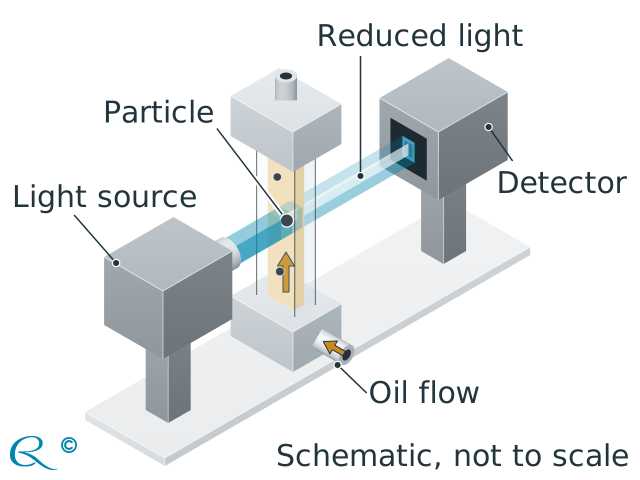
A laser counter for bottle samples, to check how clean your oil is.
We were disposing of tonnes of rust preventive oil due to early degradation. Their on-site filtration saved us huge costs and reduced our waste output by nearly half. It’s both an economic and environmental win.
Ask About Rust Preventive Oil Filtration
Tell us the oil, the volume and the problem. “Not sure” is a fine answer; we will ask follow-up questions.
Request received. Your reference is {ref}. We reply during office hours, Monday to Saturday, 9.00 am to 5.30 pm. For a breakdown or a plant shutdown, call +91 99400 49505 at any time. Nothing is booked or ordered until we confirm scope, availability and terms in writing.Prefer to talk? Call +91 99400 49505 or WhatsApp us.

Schedule a Plant Walkthrough
Our team can come to your site to see the system and the oil, take a sample if needed and tell you what it needs.
Request an Assessment
Get Expert Advice for All Your Oil and Pipeline Needs
Call or WhatsApp an engineer, or send the oil type, the volume and the problem. We reply with a method and anything else we need from you.
WhatsApp +91 99400 49505