
Bolts, Nuts and Washers
Ram Engineering, based in Chennai, is a bolt and nut supplier in India: bolts, nuts and washers in carbon, stainless and alloy steel, to your drawing.
What to Send for a Quote
These four are enough to start:
- The type of bolt, nut and washer, or a photo of the old ones beside a ruler, with the head marking in view. Send photos on WhatsApp to +91 99400 49505 or by email to [email protected].
- The size: the thread diameter and pitch, metric or inch, and the length; for a stud, say whether you measured the effective or the overall length.
- The grade and finish: the head or nut marking, such as 8.8, A2-70 or B7, or the material on your drawing; plain, zinc plated or galvanised.
- How many, with the nuts and washers for each bolt or the number of flange joints, and the date you need them.
What a Bolted Joint Needs
A bolt holds a joint by stretching: as the nut is tightened, the bolt stretches a little, like a stiff spring, and clamps the parts together, keeping a gasket sealed and the parts from slipping.
Joints often leak or loosen because they were tightened unevenly, too little or too much, or built from mixed grades, so choose the bolt, nut and washer together, as a set.
Before you open a joint or measure pipework in place, isolate the line, release the pressure, drain it and let it cool, and follow your plant’s safety procedure. On a machine, support any part the bolts hold before you take one out.
We are a supplier, not the maker.
Bolt, Nut and Washer Types
Tell us the type of the old part, or the one your drawing names. Each drawing shows one common form of its type; all are schematic, not to scale.
Hex Bolts and Hex Head Screws
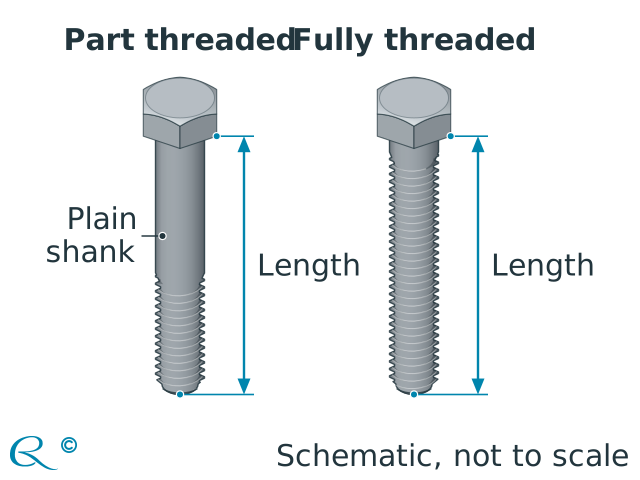
In many catalogues a hex bolt has a plain shank under the head and is threaded towards the end, and a hex head screw is threaded up to the head; the names are not used the same way in every standard. Part-threaded bolts are often specified where the joint takes load across the bolt, so that the shank sits where the parts meet; fully threaded screws suit tapped holes.
Tell us: the thread size and pitch, the length from under the head, part or fully threaded, the class on the head and the finish.
Stud Bolts
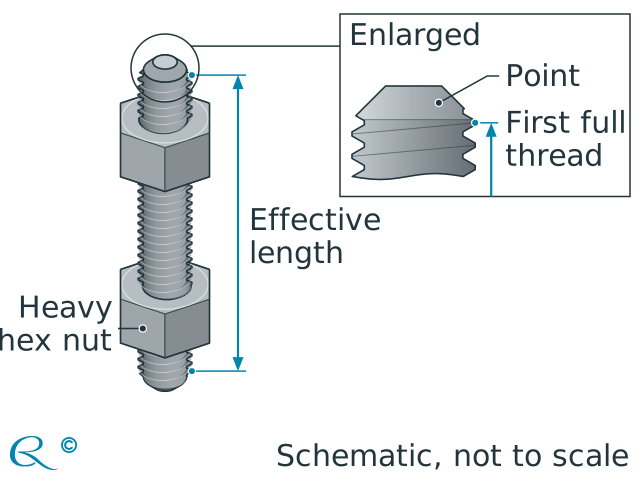
A stud bolt is threaded along its whole length and used with a nut at each end: the usual bolting for pipe flanges. The line’s specification sets the material, often an alloy or a stainless steel. Studs screwed into a tapped hole at one end also hold covers on pumps and valves.
Tell us: the diameter and pitch, the length and whether it is effective or overall, the grade marking, and the nuts per stud.
Socket Head Cap Screws
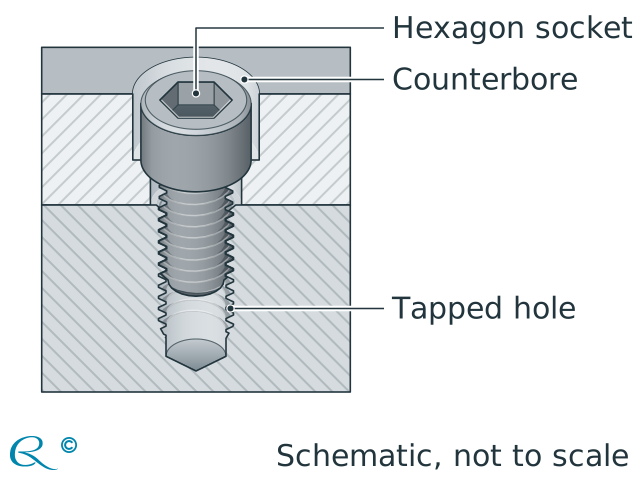
A round head with a hexagon socket, turned with a hex key, for counterbores and tight spaces on machine tools, hydraulic valves and manifolds. Often made in a high-strength class such as 12.9; a valve maker’s instructions usually set the class, length and torque of its mounting screws.
Tell us: the thread size and pitch, the length from under the head, the class on the head, and the part it holds.
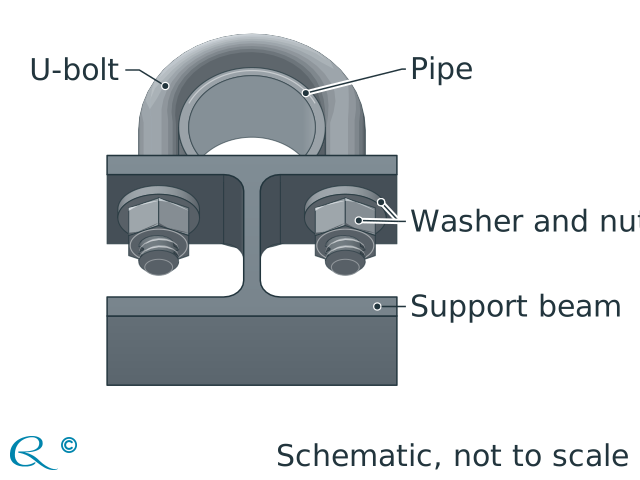
U-Bolts
A U-bolt, threaded at both ends with two nuts, holds a pipe to its support; on a line that moves as it heats, the support drawing may call for it to guide the pipe rather than clamp it.
Tell us: the pipe’s outside diameter, the rod size, the leg length and the finish.
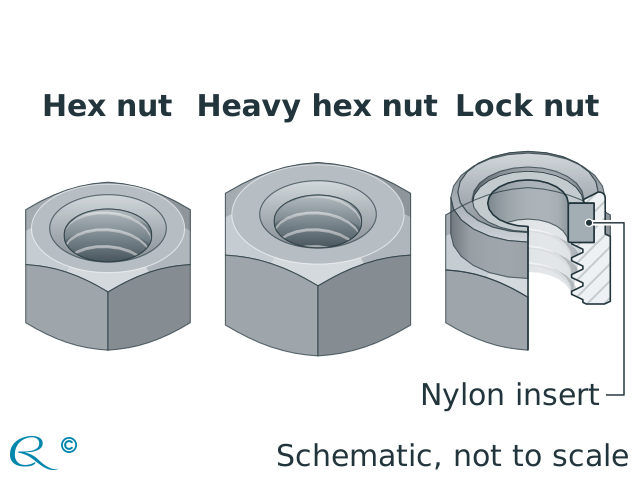
Hex, Heavy Hex and Lock Nuts
Hex nuts suit hex bolts and screws; heavy hex nuts, thicker and wider across the flats, suit flange studs and heavy bolting. Prevailing torque lock nuts resist turning loose: a nylon insert grips the thread, or an all-metal nut has a deformed thread for heat that would soften nylon. Both kinds lose grip each time they come off, so many procedures fit new ones.
Tell us: the thread size and pitch, the type, the class on the nut and the finish; for a lock nut, the working temperature.
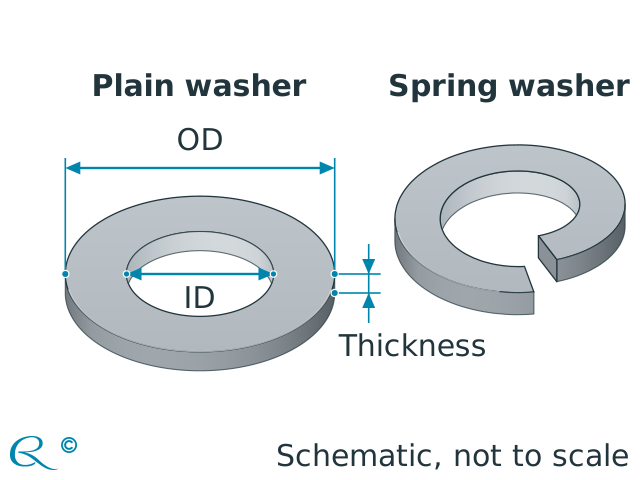
Plain, Hardened and Spring Washers
A plain washer spreads the load of a nut or head and bridges an oversize hole; a hardened washer, of the same flat form, does the same under high-strength bolts and flange nuts without flattening. Split spring washers are widely fitted but are not a reliable lock: see the questions below.
Tell us: the bolt size, the inside and outside diameters and the thickness, the type and the material.
Flange Bolting: Stud Bolts, Heavy Hex Nuts and Washers
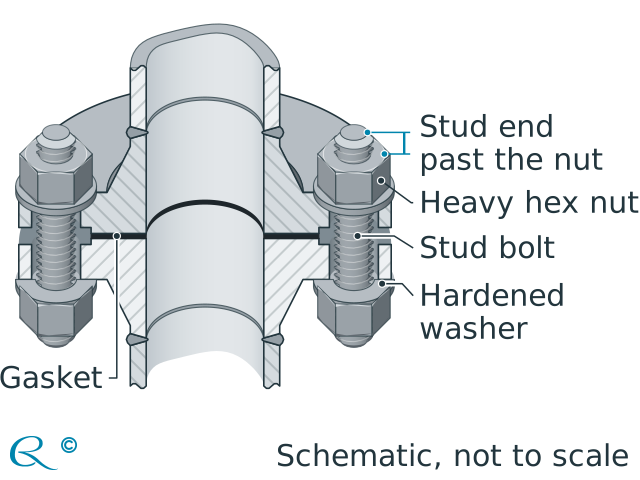
Each bolt hole of a flanged pipe joint usually takes one stud bolt and two heavy hex nuts. Where the plant’s bolting procedure calls for washers, a through-hardened washer goes under each nut: the nut turns on a smooth, hard face, so the torque gives a more even bolt load, and the flange face is not scored.
Studs and nuts are chosen as a pair, such as alloy steel studs marked B7 with heavy hex nuts marked 2H. The flange’s standard and class set the number and size of the studs. Tighten in stages, crosswise, to the bolt load or torque in your procedure; a torque figure assumes a thread lubricant, and dry or rusty threads give much less bolt load.
Send the flange size, standard and class, the number of joints and whether washers are fitted, and we quote the studs, nuts and washers for each joint as a set.
How to Measure a Bolt, Nut or Washer
Measure the old part once it is out, with a vernier calliper. Before you open a joint or measure pipework in place, isolate the line, release the pressure, drain it and let it cool, and follow your plant’s safety procedure.
Thread Diameter
Across the crests: an M12 bolt measures just under 12 mm, and a 1/2 inch bolt about 12.7 mm.
Thread Pitch
With a thread gauge: millimetres from crest to crest for metric, threads per inch for inch. Coarse and fine pitches of one diameter do not mix. With no gauge, send a close photo of the thread against a ruler.
Length of a Bolt or Screw
From under the head to the end, for hex bolts, hex head screws and socket head cap screws; on a part-threaded bolt, the threaded length too.
Length of a Stud Bolt
Flange studs are usually listed by their effective length, along the thread without the chamfered points; some drawings give the overall length, end to end. Tell us which you measured.
Nuts and Washers
For a nut, the size across the flats and the thickness; for a washer, the inside and outside diameters and the thickness.
The Markings
A photo of the bolt head, the nut face and the stud end, where the class or grade is stamped. Send photos on WhatsApp to +91 99400 49505 or by email to [email protected].
Reading the Marks on Bolts and Nuts
A metric steel bolt carries its strength class on the head, such as 8.8, usually beside the maker’s own mark. The first figure times 100 is the nominal tensile strength in N/mm²; the second, times 10, is the yield strength as a percentage of it. With no class mark, the grade is unknown: take it from the drawing or the parts list.
A nut’s class, on a face or a flat, should be at least the bolt’s first figure, such as class 8 on an 8.8 bolt, so that the nut thread is not the weak point.
Markings You May Find on Bolts, Nuts and Studs
You may find these markings on an old bolt, nut or stud, or on a drawing. They do not mean that everything we supply carries them; the quotation names the specification we propose. Markings in one row are not declared equivalents. Strengths are nominal, in N/mm².
| Marking | Where you find it | What it tells you |
|---|---|---|
| 4.6 | Carbon steel bolt head | General-purpose grade: tensile about 400, yield about 240. |
| 8.8 | Steel bolt or screw head | Hardened and tempered, often called high tensile: tensile about 800, yield about 640. |
| 10.9 | Steel bolt or screw head | Hardened and tempered: tensile about 1,000, yield about 900. |
| 12.9 | Mostly socket head cap screws | Hardened and tempered alloy steel: tensile about 1,200, yield about 1,080. |
| 8, 10 or 12 | Metric nut, on a face or flat | The nut’s class, for a bolt whose first figure is no higher. |
| A2-70, A4-70, A4-80 | Stainless bolts and nuts | A2: a 304-type stainless steel; A4: a 316-type, with molybdenum; 70 or 80: tensile about 700 or 800. |
| B7 with 2H; B8 or B8M with 8 or 8M | Flange stud end, and its nuts | B7: a chromium-molybdenum alloy steel stud, with hardened 2H nuts; B8 and B8M: 304-type and 316-type stainless studs and their nuts. |
| Radial lines | Inch bolt head | Three or six lines mark two common higher grades; a plain head usually means the basic grade, or an unknown one. |
Materials and Finishes Compared
Guides only, not ratings: the joint’s design, the equipment maker’s instructions or your plant’s specification decide; the quotation names the grade and finish we propose.
| Material or finish | Often used for | Check before choosing |
|---|---|---|
| Carbon steel, class 4.6 | General fixing, guards and light frames | Not for joints designed for high tensile bolts. |
| Carbon steel, class 8.8 or 10.9 | Machine bases, couplings, structures and flanges on utility lines | Nuts of a matching class; hardened washers where the joint calls for them. |
| Alloy steel: B7 studs with 2H nuts | Flanges on process, steam and hydrocarbon lines | Rusts unless coated; very cold service needs a grade of its own. |
| Stainless steel A2 (304-type) | Wet, washdown, food and many chemical areas | Generally weaker than class 8.8; threads tightened dry can seize, so use an anti-seize compound where the procedure allows. |
| Stainless steel A4 (316-type) | Sea air, chloride-bearing water and many chemicals | Better than A2 against chlorides, but not immune; the same cautions. |
| Plain (black), often oiled | Indoors, under oil, or painted after fitting | Rusts in wet and outdoor places. |
| Zinc plated | Dry indoor places | A thin coat. Bolts of class 10.9 and above can crack some time after tightening if hydrogen from acid cleaning or plating stays in the steel (hydrogen embrittlement), so specifications control their plating. |
| Hot-dip galvanised | Outdoor steelwork and pipe supports | A thick coat; galvanised nuts are tapped oversize for it, so order bolts and nuts together. |
Before We Select Bolts, Nuts and Washers
A fastener must suit the joint, the parts it clamps and the place it works in, as well as the thread. What our quotation will confirm: the item we propose and its specification, what we matched it to, the quantity and availability.
| Detail | Why it matters |
|---|---|
| The joint and what it holds | A flange, a machine base, a coupling or a pipe support: it decides the type, the grade and how the bolts are tightened. |
| Thread: diameter, pitch, metric or inch | A nut fits only its own thread. |
| Length | From under the head; for a stud, the effective or the overall length. |
| Grade or material, from the drawing or the old marking | A bolt of a lower grade than the joint was designed for can stretch or break as it is tightened. |
| Nuts and washers for each bolt | How many of each, and their class and finish, so that every set is matched. |
| Temperatures, and what surrounds the joint | Heat, very cold service, water, chemicals and sea air decide the material and the finish; nylon insert lock nuts suit moderate temperatures only. |
| The standard on your drawing | Parts made to different standards can differ in head size, thread length and marks. |
| Documents with the supply | Need inspection or test documents with the fasteners? Say so when you enquire, and the quotation states what comes with them. |
| Quantity and required date | Lets us confirm availability and lead time with the quotation. A less common item takes longer to deliver, and the quotation states the delivery time. |
Questions Buyers Ask
Do spring washers stop bolts working loose?
Not reliably. In vibration tests, split spring washers do little to keep a correctly tightened bolt from loosening. The bolt load holds a joint; where it vibrates hard, use the locking method its designer or the equipment maker sets, such as a prevailing torque lock nut or a thread-locking compound.
What does 'high tensile’ mean for a bolt?
It is trade usage for hardened and tempered bolts of class 8.8 and above; an 8.8 bolt has about twice the tensile strength of a 4.6. As the term covers several classes, ask for the class itself, from the drawing or the old bolt’s head.
Can I reuse bolts and nuts?
Often, if the threads are clean, undamaged and free of rust, the bolt has not stretched, and the equipment maker allows it. Replace any bolt the maker says is for one use only, such as one tightened to its yield point, and any lock nut whose grip has worn.
Does your invoice show the HSN code?
Yes. Our GST invoice shows the HSN or SAC code for each line.
Do you keep stock?
Availability is confirmed with each quotation.
What is the price?
Prices depend on the type, the size, the grade, the finish and the quantity, so we quote for each enquiry.
Send Your Bolt, Nut and Washer Details
Type, thread size and pitch, length, grade, finish and quantity. The form takes no files: email a drawing or a parts list to us after sending it, or share it on WhatsApp.
Request received. Your reference is {ref}. We reply during office hours, Monday to Saturday, 9.00 am to 5.30 pm. For a breakdown or a plant shutdown, call +91 99400 49505 at any time. Nothing is booked or ordered until we confirm scope, availability and terms in writing.Prefer to talk? Call +91 99400 49505 or WhatsApp us.
Related
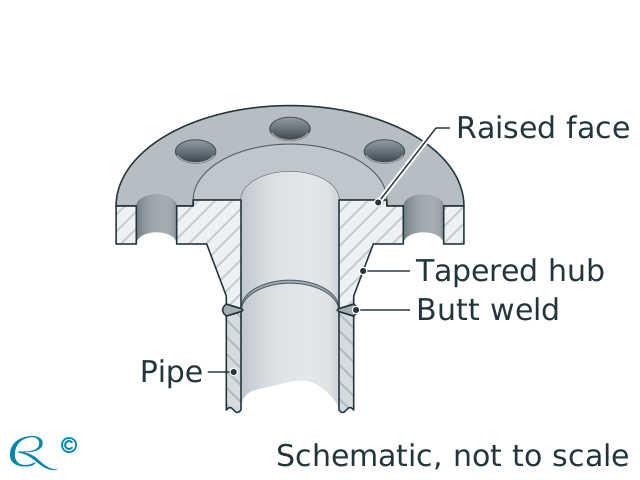
Flanges
Six pipe flange types in carbon or stainless steel, and hydraulic split flanges, by standard and class.
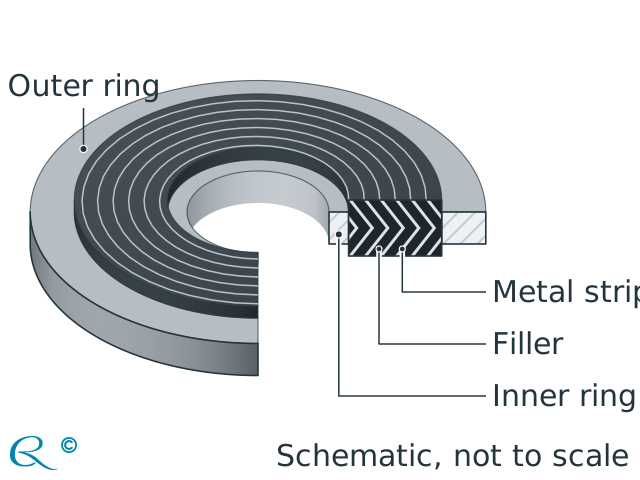
Gaskets
Spiral wound, ring joint and sheet gaskets, matched to the flange face the studs clamp.
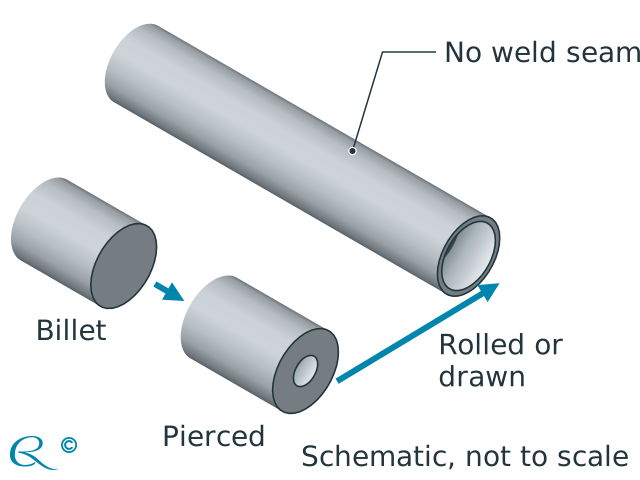
SS and CS Pipes
Pipe and tube in stainless or carbon steel, by NB and schedule or by outside diameter.
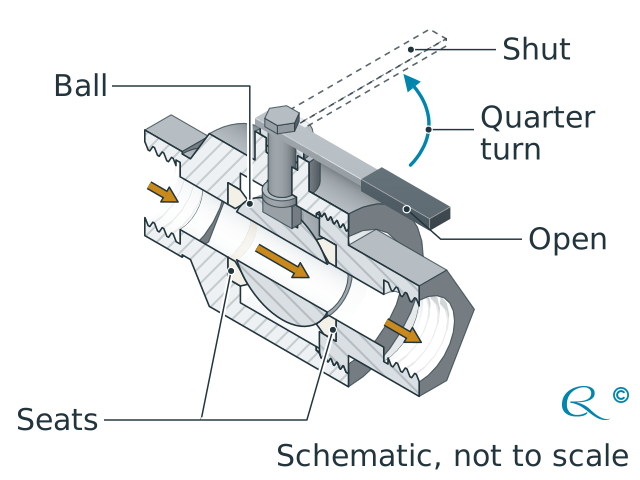
Valves
Hydraulic valves for power packs and machines, and ball valves for oil and diesel lines.
Hydraulic Fittings
Hose ends, adaptors and tube fittings, matched to your threads and seats.
Pipeline Flushing
Scope review for new or serviced hydraulic and lube oil systems.