
Hydraulic and Lube Oil Filter Elements
Ram Engineering, based in Chennai, is a supplier of hydraulic and lube oil filter elements in India: the original maker’s element by part number, or a checked equivalent.
What to Send for a Quote
To start a quote, send:
- The part number on the old element or on the filter housing’s nameplate, and its make.
- A photo of the element with both end caps and the seal in view, beside a ruler. Send photos on WhatsApp to +91 99400 49505 or by email to [email protected].
- Where it fits: a suction, pressure, return or offline filter, or a lube oil filter.
- The fluid, and the micron rating if you know it.
- How many you need, and by when.
What a Filter Element Does, and When to Change It
A filter element is the part of a filter that holds the dirt: pleated filter media, or a wire mesh, on a perforated core between two end caps. It keeps the particles that wear pumps, valves and bearings out of the oil.
As an element loads, the pressure difference across it rises. Many filters show this on a clogging indicator, and many have a bypass valve that then lets unfiltered oil past. Change the element when the indicator shows, at the interval in the machine’s instructions, or after a flush or a component failure. Read the indicator with the oil at working temperature, as cold, thick oil can show a false early warning. Dusty surroundings, worn cylinder rod seals or new oil put in unfiltered make an element load sooner.
Isolate the machine and release the pressure before you inspect or measure a filter. Let hot oil cool and drain the housing before you open it, following the filter maker’s instructions and your plant’s rules.
We are a supplier, not the maker.
Hydraulic Filter Element Types
Elements are built differently for each kind of filter. Each drawing shows one usual build, as a schematic, not to scale.

Pleated Cartridge Elements
Filter media pleated round a perforated inner core between two end caps, often inside a perforated outer wrap; the oil usually flows from outside to inside. Glass fibre media are generally used for fine filtration, cellulose (paper) for coarser duties. Used in pressure, return, offline and lube oil filters.
Tell us: the part number, or the length, both diameters and the seal.

Spin-on Filters
A sealed steel can with a pleated element inside, screwed onto a filter head by its threaded centre and sealed by a gasket; the whole can is changed, and some have a bypass valve inside. Used on mobile machines and small power packs.
Tell us: the part number, the thread size, the can’s diameter and height, and whether it has a bypass valve.

Suction Strainers and Mesh Elements
Stainless steel wire mesh on a frame or a perforated core, with a threaded or flanged end. A suction strainer sits on the pump’s suction pipe below the oil level, clear of the tank floor, and is coarse so as not to starve the pump. Mesh elements can often be cleaned and refitted, as their maker’s instructions allow.
Tell us: the mesh or micron rating if it is marked, the thread or flange, and the length and diameter.

Elements for Duplex Lube Oil Filters
Two housings under one changeover valve, so one side’s element can be changed while the other side filters; common on turbine, compressor and gearbox lube oil systems. Before you open a side, check that the changeover valve has moved fully across, and that the side is depressurised, drained and cool, following the filter’s instructions and your plant’s rules.
Tell us: the part number, how many elements each housing holds, and the oil.
Where Filters Sit in a Hydraulic System
1. Suction strainer: in the tank on the pump’s suction pipe; a coarse mesh that keeps large debris out of the pump.
2. Pressure filter: after the pump, guarding fine-clearance valves such as proportional valves. Many have no bypass valve, so their elements must withstand the full pressure difference when clogged.
3. Return filter: on the line back to the tank, holding the wear particles the machine makes; usually with a bypass valve and an indicator.
4. Offline filter: its own small pump circulates the tank oil through a fine element whether the machine runs or not (a kidney-loop filter).

Reading the Rating on an Element
These are terms you may find on an existing element, its label or its data sheet. They are not a statement that every element we supply carries them: the quotation states the element we propose and its rating.
| On the element or its data sheet | What it means |
|---|---|
| 10 micron (10 µm), or a code in the part number | The particle size the rating refers to. The same figure can describe quite different elements, so compare the basis of the rating as well. |
| βx(c) ≥ 200, or ≥ 1000 (beta ratio) | A result of the maker’s multi-pass laboratory test, at the particle size x and the counter calibration stated: the count of particles of x µm(c) and larger before the element, divided by the count after it. 200 means 99.5 % of those particles are held, 1000 means 99.9 %. It compares elements under test conditions; it is not a promise of the same result in your system. |
| Absolute | Used by makers for a tested rating, usually a beta ratio; they define it differently, so read the figure behind the word. |
| Nominal | A looser rating without one agreed test; a nominal 10 micron element generally holds fewer fine particles than one rated βx(c) ≥ 200 at 10 µm(c). |
| Collapse or burst rating | The pressure difference the element is rated to withstand. In a housing without a bypass valve, it must suit the highest pressure difference the element can see. |
| Bypass setting | The pressure difference at which the bypass valve, in the housing or in the element, opens; the clogging indicator is usually set to warn before it. |
| NBR, FKM | The seal material, which must suit the fluid and its temperature. |
In βx(c), x is the particle size in µm by the current counter calibration, from the multi-pass test that current data sheets cite. Older data sheets may give βx without the (c), from an older test, so the two figures are not directly comparable.
If the Part Number Is Gone
With the machine isolated, the pressure released and the housing cool and drained, take the old element out, let it drip and wipe it. Measure the length from end to end including any spigot, the outside diameter (OD), the inside diameter (ID) of the open end, and the O-ring’s inside diameter and thickness.
Photograph both end caps square on beside a ruler: a spigot, a thread, a valve or the shape of the seal decides the fit as much as the size. Send photos on WhatsApp to +91 99400 49505 or by email to [email protected].
With these, the fluid and the rating, we look for a matching element.

Before We Select a Replacement
An element that fits the housing can still be wrong for the system: a replacement, the original maker’s or an equivalent, has to match the rating and its basis, the collapse rating, the flow, the media and the seals, not only the size. What our quotation will confirm: the item we propose and its specification, what we matched it to, the quantity and availability.
| Detail | Why it matters |
|---|---|
| Part number and make of the old element | The quickest route to the exact element or a checked equivalent. |
| Where it fits: suction, pressure, return, offline or lube oil filter | Elements for each position are built differently, for flow, collapse rating and bypass. |
| Filtration rating and its basis | The micron size, and whether it is a beta ratio or a nominal rating. |
| Fluid and temperature | Media and seals must suit the oil and conditions. |
| Flow, and the bypass setting if it is marked | Affects element size and collapse rating. |
| Dimensions and end caps, if there is no part number | Measured as shown above, with photos of both ends. |
| Quantity and required date | Lets us confirm availability and lead time. |
Example
From Our Invoices
In January 2026 we supplied replacement filter elements, ordered by the maker’s part number, to a plant in Nellore district, Andhra Pradesh. In October 2022 we supplied pressure line filter elements to a plant in Chittoor district, Andhra Pradesh.
Questions Buyers Ask
Can you supply an equivalent for my part number?
Often, yes. We check the equivalent against your application before offering it, and we tell you it is an equivalent.
Can you match an element from a photo?
Often, when the part number shows in the photo. Without it, photos of both end caps beside a ruler and the measurements described above let us look for a match, which we confirm with you before we quote. Send photos on WhatsApp to +91 99400 49505 or by email to [email protected].
Can a filter element be cleaned and used again?
Pleated glass fibre and paper elements are generally made for one use: washing can damage the media and release the dirt they hold. Wire mesh elements and suction strainers can often be cleaned, as their maker’s instructions allow.
Is a finer element always better?
Not on its own. A finer element holds smaller particles, but it may increase the pressure drop or shorten the element’s service life, unless its media area, construction and dirt-holding capacity make up for it. The rating is chosen for the most sensitive part of the system, and a change of rating is checked against the housing, the flow and the bypass setting.
Does your invoice show the HSN code?
Yes. Our GST invoice shows the HSN or SAC code for each line.
Do you keep stock?
Availability is confirmed with each quotation.
What is the price?
Prices depend on the element, quantity and delivery, so we quote for each enquiry.
Where We Work
Tamil Nadu
Telangana
Kerala
Andhra Pradesh
Odisha
Delhi NCR
Rajasthan
Jharkhand
Uttar Pradesh
West Bengal
Punjab
Chhattisgarh
Send Your Part Number
Part number, make, quantity and location. Add the equipment details if you have them.
Request received. Your reference is {ref}. We reply during office hours, Monday to Saturday, 9.00 am to 5.30 pm. For a breakdown or a plant shutdown, call +91 99400 49505 at any time. Nothing is booked or ordered until we confirm scope, availability and terms in writing.Prefer to talk? Call +91 99400 49505 or WhatsApp us.
Related
Oil Particle Counter
Count the particles in your oil to see how well the filters are working.
LVDH Spares
Inlet and outlet filter elements and other spares for vacuum dehydration units.

Electrostatic Filter Paper
Paper for electrostatic oil cleaners, which collect particles finer than most elements are rated for.
Hydraulic Oil Filtration
Hydraulic oil cleaned at your plant with our own filtration machines.
Lube Oil Filtration
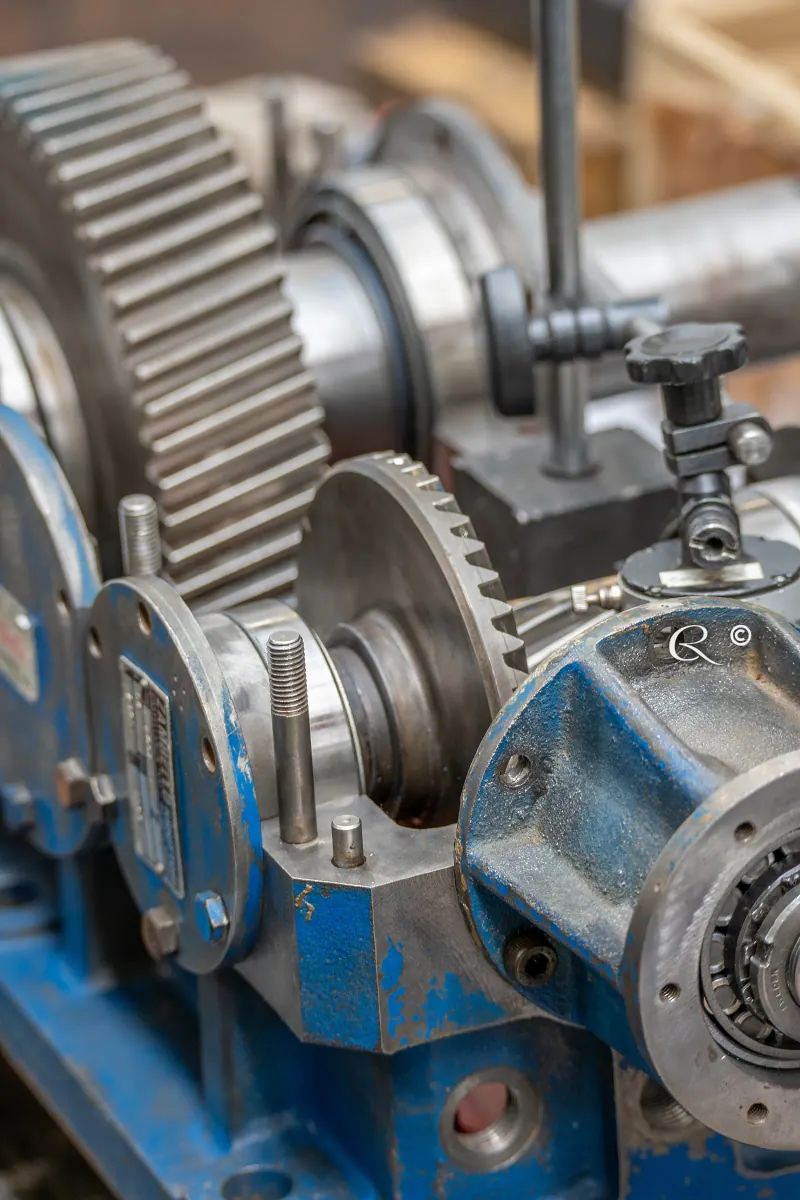
Gear and bearing oil cleaned and dried at your site.
Oil Flushing
Hydraulic and lube oil systems flushed after a repair or a component failure.