
Industrial Oil Management Services
Across India, Ram Engineering runs oil management as a programme at your plant: each oil system tested, given a target, cleaned as its test calls for and resampled.
Since 1993Over 33 years of experience
- ISO 9001:2015Certified for industrial field services
- 95%As the plant measured, oil-related shutdowns fell by 95% and oil consumption by 20%.
What an Oil Management Programme Is
Filtering one machine’s oil helps for a while. Where a plant runs dozens or hundreds of hydraulic power packs, gearboxes, compressors and turbines, the trouble comes back unless somebody keeps looking after the oil. An oil management programme does that: it lists the oil systems, tests each, sets a target, treats what fails the target and samples again on a schedule.
We treat the oil with our own machines at your site, and where the plant wants regular oil care, with our own team working there. Our centrifuge units heat the oil as they filter it and take out water, sediment and carbon particles. The method for each oil comes from its test, not from a fixed routine.
We have completed jobs at plants in Tamil Nadu, Kerala, Karnataka, Andhra Pradesh, Telangana, Maharashtra, Odisha, West Bengal and Uttarakhand.
What a Programme Covers
Each part is in the quotation only where your plant needs it; the quotation lists what is included.
| Part | What it means | What you get |
|---|---|---|
| Survey | The oil systems listed: machine, oil, volume and where each is sampled | One list of your plant’s oil |
| Targets | A cleanliness target for each system, from the machine maker’s figure where there is one | Something to measure against |
| Testing | A sample tested before the work at our NABL-accredited partner laboratory, and the particle count checked at your site | The state of each oil |
| Treatment | Centrifuge, vacuum dehydration, electrostatic cleaning or fine filtration, as the test shows | Oil back inside its target |
| Monitoring | Samples at regular intervals, so that a change shows before it causes a breakdown | An early warning |
| Care of the oil | Leaks found early, accurate top-up and tracking of oil use, where our team works at your site | Less oil used |
| Reports | Results before and after in ISO 4406 or NAS 1638 terms | Records to compare with your target |
We can also supply filter paper for electrostatic oil cleaning machines.
How a Programme Is Set Up and Run
Walk the Plant
With your maintenance team we see the machines and their oils, list the systems and note the volumes, the sampling points and what already goes wrong.
Test Every Oil
A sample from each system is tested, and the particle count is checked at your site. The results show which oils are fine, which carry particles, water or varnish, and which look worn out and need checking against the supplier’s limits.
Set the Targets
With your engineers we agree a target for each system, the machine maker’s figure first, as an ISO 4406 code, and a water limit where it matters.
Treat by the Test
Each oil gets the machine its test calls for (table below). Oil that is still sound is cleaned and returned to service; oil that tests beyond the supplier’s limits is flagged for changing.
Sample Again, on a Schedule
Regular samples show whether each oil stays inside its target. A trend towards the limit calls for a visit before a breakdown does.
Report and Review
You get the before and after results for every treatment. We also look at the system the oil runs in, and say what should change there.
Which Treatment for Which Finding
The test decides. These are the usual pairings; several findings can apply to one oil. Acid number is one input, never a verdict: it counts acidic constituents, which additives and contamination also feed, and it does not show the additive life left. Its trend from the new-oil value, by one method, is weighed with the supplier’s limits and the other condition results.
| What the test shows | Treatment | What it cannot do |
|---|---|---|
| Particles above the target | Fine filter elements, with a centrifuge first where the load is heavy | A centrifuge is usually less effective on the finest particles, so elements finish the job |
| Water above the limit | Our unit warms the oil so the centrifuge separates free water and droplets more easily; vacuum dehydration (LVDH) takes out the dissolved water and any emulsion that remains | No treatment is promised to clear every trace of dissolved water; the test after treatment shows what is left |
| Varnish or sticky deposits | An electrostatic cleaner, usually with a centrifuge | Oxidation products still dissolved in the oil are not necessarily removed |
| Sludge | A centrifuge; where it has settled in a tank, tank cleaning | No machine lifts sludge fixed to a tank floor or wall |
| Viscosity outside the supplier’s in-service limits, additives gone, or a climbing acid number that the other results support | Change the oil, once the results are judged against the oil supplier’s limits | Purification does not put back additives or reverse oxidation |
Varnish: Why a Particle Count Can Miss It
Varnish is a thin, sticky film that forms when oil oxidises under heat. It coats valve spools, bearings and filter surfaces, and makes control valves stick. It is mostly dissolved in the oil or carried as particles too small for a standard particle count, so oil can count clean and still cause trouble.
An electrostatic cleaner holds the suspended part of it, with the fine particles, on filter paper between charged plates. Oxidation products still dissolved in the oil are not necessarily removed, so the oil is tested again and, where it is worn, changed.
A varnish test is a laboratory test. Tell us what your laboratory has reported; our NABL-accredited partner laboratory tests the oil when the quotation includes it.

Case study
On-Site Oil Management for Three Divisions of an Automobile Plant
The situation. An automobile plant ran three divisions, each with about 100 hydraulic power packs and many lubricated systems. Even with its own maintenance team it had frequent unplanned shutdowns and costly repairs. The oil was contaminated, leaks were common and oil consumption kept rising.
What we did. We put a team in each division: one machine operator who ran our mobile filtration units, and one fluid monitor who watched the power packs, spotting leaks early, topping up exactly and tracking oil use. One Ram Engineering supervisor led all three teams and was the plant’s single point of contact.
The result. As the plant measured, oil-related shutdowns fell by 95% and oil consumption by 20%. Our teams were on site every day and filtered the oil regularly, so the routine oil work left the plant’s own maintenance team, who could give their time to other jobs.
Where: Sriperumbudur, Kanchipuram district, Tamil Nadu, 2016.
A Programme, or One Treatment?
The programme is the main offer: it suits a plant that wants its oil looked after all year. It can run with our own operators and a fluid monitor at your site, as in the example above, or as regular sampling and treatment by what each test shows.
One treatment is quoted on its own for a single problem: a contaminated system, a tank of oil to recover, a machine before a major run. It covers one system, without the survey, targets and schedule that make a programme. Oil contaminated with about 50 per cent water, which often follows a heat exchanger failure, is such a case: we have recovered oil in that state, from experience rather than from the counted invoices below. Regular sampling can show a rise in water at the next sample, sooner than a breakdown would.
The quotation says which it is, what each side provides and how often we sample. For a larger job, an SOP we write sets out who does what.
Records and Handover
- Before work starts: the quotation lists the systems, the oils, the tests and the targets.
- After each treatment: results taken at the same sampling point before and after, in ISO 4406 or NAS 1638 terms, to compare with your target.
- In a programme: results kept for each machine, so that the trend shows; the quotation states how often we sample and report.
- On request: a completed-work method statement, like the one issued for a centrifuge job in 2026.
Oil Management on Our Records
Our invoices name each oil, not this service, so oil management work is counted under the oil treated. Counting only the Chennai area, our job records hold 523 quenching oil, 318 hydraulic oil and 121 lube oil filtration jobs between 2000 and 2026. A job here means one plant in one month with an invoice or a completion record.
Safety on an Oil Management Job
Your permit-to-work governs the job; these are our own rules on top of it.
- Connecting to a running machine: under your permit; we hook up at the reservoir and leave the pressurised circuit closed.
- Opening a line: Before you open a joint or measure pipework in place, isolate the line, release the pressure, drain it and let it cool, and follow your plant’s safety procedure.
- Hot and flammable oil: gloves and eye protection at each connection, drip trays and a spill kit, and no flame or hot work near our units.
- Moving and high-voltage parts: the centrifuge is guarded and its bowl is not opened while it spins; the high-voltage part of an electrostatic cleaner is not opened while it is energised.
- Waste: spent elements, filter paper, sludge and drained oil are kept in closed containers for your site’s authorised recycler.
Where It Is Used
- Steel and metal manufacturing, cement plants and paper mills, where large hydraulic and lube systems run hot.
- Power generation, where turbine and lube oil systems must stay clean.
- Automotive plants, with many hydraulic power packs and lubricated systems.
- Chemical and food processing plants, with compressors, gearboxes and hydraulics.
- Turbine, hydraulic, quenching and compressor oils are the oils this service treats.
What Your Site Provides
Our past offers put these in the customer’s scope; your offer confirms them.
- Permits and gate passes, and access to every plant area where we work.
- Isolation with lock-out at every point where a line or housing is opened.
- Power at each machine or at a central point; the offer states what load our units need.
- Top-up oil of the grade each system takes, and lifting help (crane or forklift) for drums.
- Disposal of sludge, used elements and waste oil by an authorised recycler.
Questions Buyers Ask
What is the difference between filtering oil and oil management?
Filtering is one job on one system. Oil management is a continuing programme for the oils of the whole plant: test, target, treatment, and regular sampling afterwards. A single treatment can be quoted as well, and the quotation says which you are getting.
How often should oil be sampled?
No one interval fits every machine. Critical or hard-working machines are sampled more often than lightly loaded ones, and the machine maker’s guidance comes first. Sample sooner after a repair, a leak or a top-up with another oil. The quotation states the schedule for your plant.
Can you remove varnish from oil?
We can take out the suspended part with an electrostatic cleaner, usually with a centrifuge. Oil with dissolved oxidation products or spent additives may need changing, and a laboratory test tells which.
When do you advise changing the oil?
When the laboratory results, set against the supplier’s limits, show that the oil cannot be recovered: viscosity out of grade, additives gone, acid number and other condition results that all say the oil has aged badly, or another oil mixed in. Purification does not put back what the oil has used up.
What results can we expect?
At the automobile manufacturer in our example, oil-related shutdowns fell by 95% and oil consumption by 20%, as that customer measured them. Results depend on the plant, and we promise no figure for yours.
How is it priced?
A single treatment is priced per litre treated, or per job, and the transport of our units is its own line. A programme with a team at your site is quoted for the plant. For jobs outside Chennai, travel and stay for our team are included in the quote.
What should I send for a quote?
A list of your oil systems with the machine, the oil, the volume and the problem you see, any recent oil reports, and the number of sites. Send photos on WhatsApp to +91 99400 49505 or by email to [email protected].
Where We Work
Tamil Nadu
Telangana
Kerala
Andhra Pradesh
Odisha
Delhi NCR
Rajasthan
Jharkhand
Uttar Pradesh
West Bengal
Punjab
Chhattisgarh
Related Services
Oil Analysis
Particle count at site, and laboratory tests through our NABL-accredited partner.
Industrial Oil Filtration
Each plant oil cleaned on site, with the machines and the contaminants they take out laid out.
Oil Flushing
A system flushed clean after a failure, a repair or a change of oil.
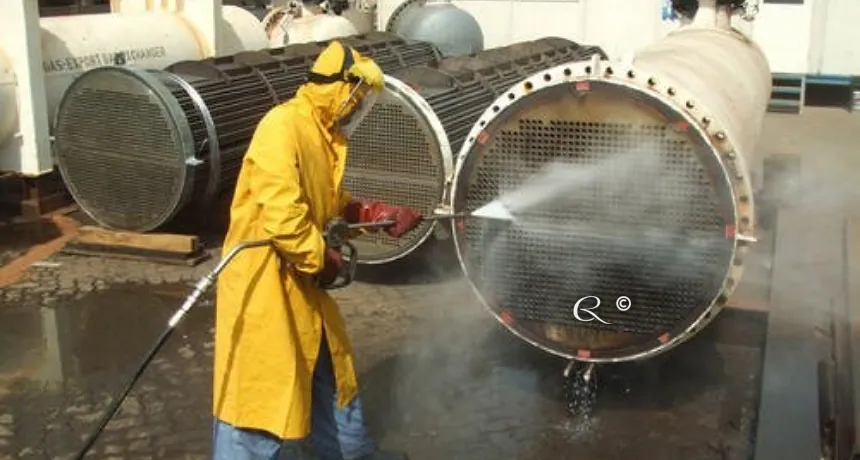
Tank Cleaning
Tanks emptied and cleaned where sludge has settled and no machine can reach it.
Turbine Oil Filtration
Turbine oil cleaned of water, particles and varnish.
Hydraulic Oil Filtration
Hydraulic oil cleaned to the class agreed, in presses, moulding machines and power packs.
Ask About Oil Management & Purification
Tell us the oil, the volume and the problem. “Not sure” is a fine answer; we will ask follow-up questions.
Request received. Your reference is {ref}. We reply during office hours, Monday to Saturday, 9.00 am to 5.30 pm. For a breakdown or a plant shutdown, call +91 99400 49505 at any time. Nothing is booked or ordered until we confirm scope, availability and terms in writing.Prefer to talk? Call +91 99400 49505 or WhatsApp us.

Schedule a Plant Walkthrough
Our team can come to your site to see the system and the oil, take a sample if needed and tell you what it needs.
Request an Assessment
Get Expert Advice for All Your Oil and Pipeline Needs
Call or WhatsApp an engineer, or send the oil type, the volume and the problem. We reply with a method and anything else we need from you.
WhatsApp +91 99400 49505