
Hydraulic Hoses and Hose Pipes
Ram Engineering, based in Chennai, is a hydraulic hose supplier in India: hose pipes with their end fittings, matched to the hose you are replacing.
What to Send for a Quote
If you know your hose, this is enough to start. Send photos on WhatsApp to +91 99400 49505 or by email to [email protected].
- The marking printed along the old hose, or a photo of it.
- Both ends: a photo of each fitting, or its thread, seal and angle.
- The overall length, and the angle between the ends if both are bent.
- The duty: the fluid, its highest temperature and the working pressure, if known.
- The quantity and the date you need the hoses.
What a Hydraulic Hose Does, and When to Replace It
A hydraulic hose carries oil under pressure between parts that move or vibrate, such as a pump and a valve block, or a valve and a cylinder.
Heat, pressure surges, rubbing and age wear a hose out. Take it out of service as soon as it is cracked, blistered, kinked, stiff, shows its wire or weeps oil at a fitting: oil escaping under pressure can injure people and start a fire.
Visible damage is a reason to remove a hose, not a replacement schedule: follow the inspection and replacement instructions for your machine. Isolate the machine and release the pressure before you inspect or measure a hose, and never run a hand along a pressurised hose to find a leak. Before you open the line, lower or support any load it holds, let the oil cool and drain it, following the machine maker’s and the plant’s instructions.
We are a supplier, not the maker.
Hose Families We Supply
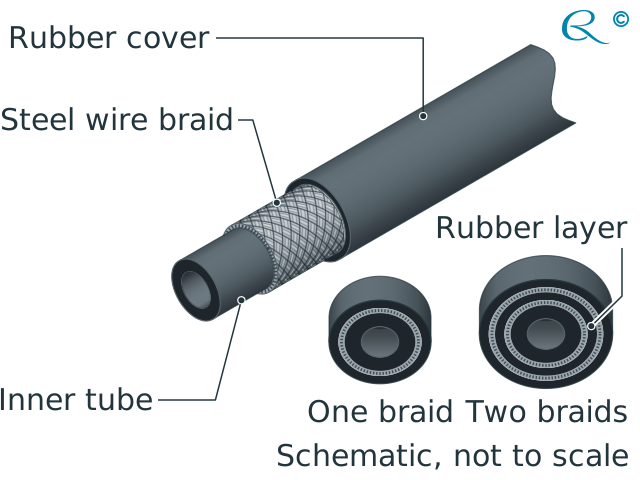
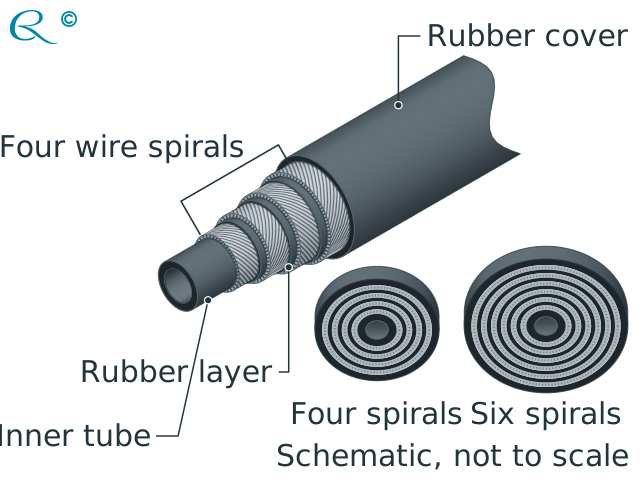
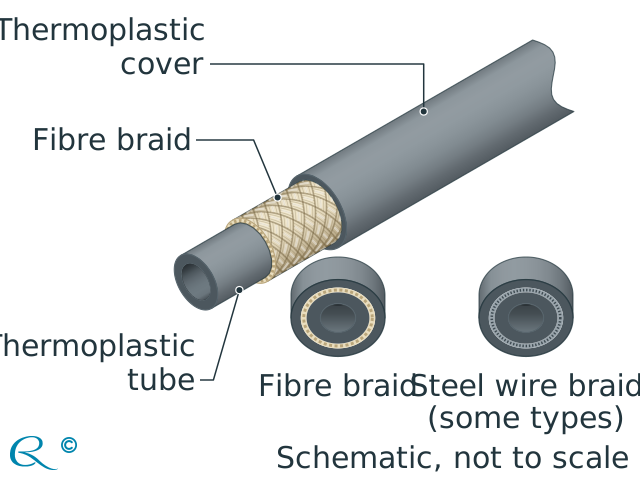
The drawings show one common construction of each family, schematic and not to scale; the marking on your old hose tells us which family you have.
Rubber Hoses With Steel Wire Braid
One or two steel wire braids between an oil-resistant rubber tube and a rubber cover, with a thin rubber layer between two braids. At corresponding standard sizes, the two-braid types are rated for higher pressures than the one-braid types. Used on power packs, presses, machine tools and moulding machines.
Tell us: the marking (such as R1AT, 1SN, R2AT or 2SN) and the working pressure.
Rubber Hoses With Steel Wire Spirals
Four or six layers of steel wire spirals, each wound opposite to the one below, with rubber between them. Made for high pressures and heavy, repeated surges; compare the exact types and sizes before choosing a spiral over a braided hose. Used on large presses and on earth-moving, mining and steel plant machines.
Tell us: the marking (such as 4SP, 4SH, R12, R13 or R15) and whether the line sees heavy surges.
Thermoplastic Hoses
A thermoplastic tube and cover over a braid of synthetic fibre, or of steel wire on some types. Often lighter than a rubber hose of the same bore, and some types take tight bends; check the figures of the exact hose. Used on hydraulic tools and jacks, grease lines and machines short of weight or space.
Tell us: the marking (such as R7 or R8), the fluid and how tightly the hose must bend.
PTFE Hoses
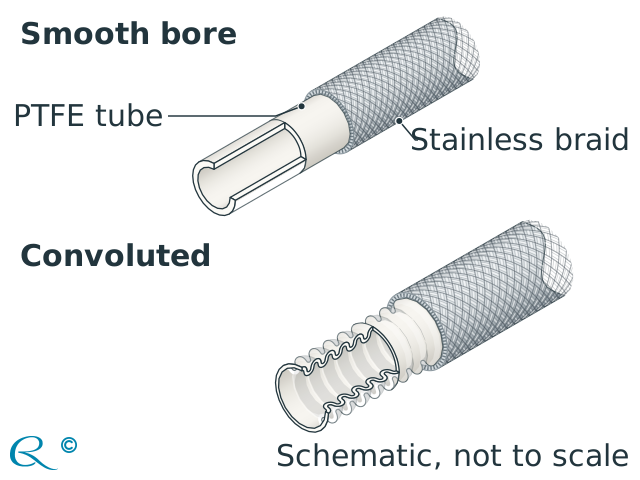
A PTFE tube under one or two stainless steel braids. PTFE resists most chemicals and takes more heat than rubber, within the limits of the exact hose and its fittings; a convoluted tube generally bends tighter than a smooth bore one. Used for hot oil, fuels, chemicals and fire-resistant fluids, and for steam only where the assembly is made for steam service.
Tell us: the marking (such as R14) if there is one, the fluid and its highest temperature, and smooth bore or convoluted.
Stainless Steel Flexible Hoses
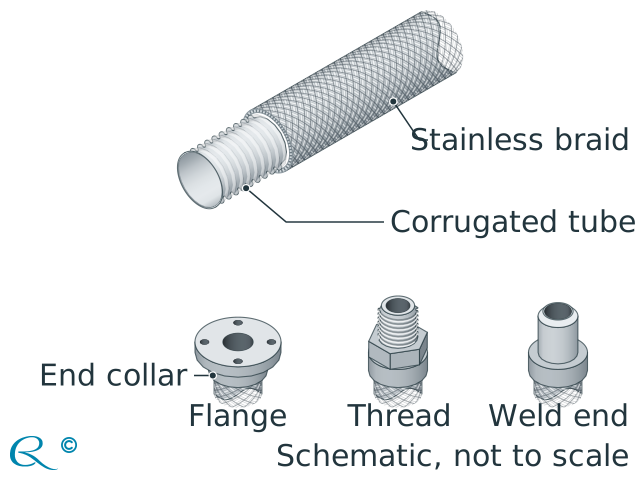
A corrugated stainless steel tube under a stainless steel braid, with flanges, threaded ends or weld ends. All metal, so it reaches hotter and colder service than most rubber and plastic hoses, within the limits of its ends. Used on steam, hot gas and liquid nitrogen lines, with ends chosen for the service, and on short connections that take movement or vibration.
Tell us: the fluid, its temperature and pressure, and the end type: flange, thread or weld end.
Textile Braided and Suction Hoses
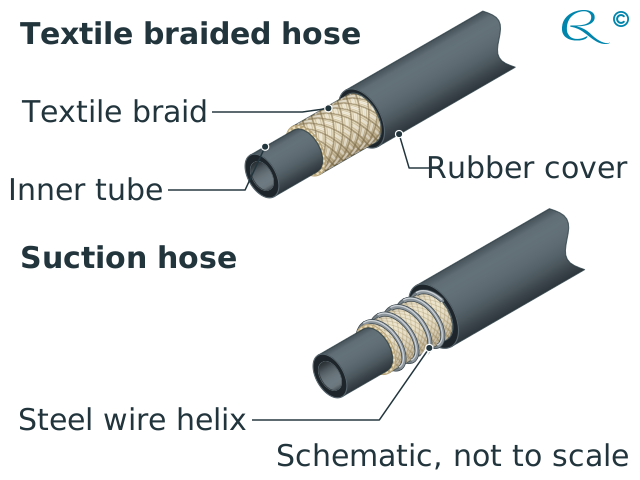
Rubber hoses with textile reinforcement, braided or spiral, for low pressures, or with a steel wire helix so that they resist collapse under suction; the drawing shows the braided kind. Used on return, drain, pump suction and transfer lines. Whether a hose suits suction or vacuum is checked for the exact hose.
Tell us: the marking (such as R3, R4 or R6) and whether the line is under pressure or suction.
Choosing Between the Families
Heavy, frequent surges point to a spiral hose; heat to a PTFE or stainless steel flexible hose; tight bends or low weight to a thermoplastic or convoluted PTFE hose. Steam needs an assembly expressly made for steam service, whatever the family.
How a Hose Is Specified
A hydraulic hose is sized by its nominal bore, usually as a dash size in sixteenths of an inch: dash 8 is a nominal half-inch bore. European markings give a DN number, a nominal designation rather than a measured bore.
Hydraulic Hose Sizes
Not every hose follows the dash rule. Many PTFE hoses, and hoses marked 100R5, take the dash size of the steel tube they replace, so a dash 8 hose of these kinds often has a bore of about 10 mm (13/32 inch), not 12.7 mm. For these, send the marking as printed, not only the dash size.
| Dash size | Nominal bore (inch) | Inch size converted to mm | DN (nominal designation) |
|---|---|---|---|
| -3 | 3/16 | 4.76 | DN 5 |
| -4 | 1/4 | 6.35 | DN 6 |
| -5 | 5/16 | 7.94 | DN 8 |
| -6 | 3/8 | 9.53 | DN 10 |
| -8 | 1/2 | 12.70 | DN 12 |
| -10 | 5/8 | 15.88 | DN 16 |
| -12 | 3/4 | 19.05 | DN 19 |
| -16 | 1 | 25.40 | DN 25 |
| -20 | 1 1/4 | 31.75 | DN 31 |
| -24 | 1 1/2 | 38.10 | DN 38 |
| -32 | 2 | 50.80 | DN 51 |
The mm column converts the inch size; it is not a measured bore. Catalogues write DN differently: dash 8 as DN 12, 12.5 or 13, and dash 20 as DN 31, 31.5 or 32.
Reading the Marking on the Hose
These are markings you may find on an existing hose. They are not a statement that every hose we supply follows every standard listed; the quotation confirms the specification of the hose and assembly we propose. The R types are named in SAE J517, where R1A, R1AT, R2A and R2AT are long-established forms still found on hoses; the others in EN 853 (wire braided), EN 854 (textile), EN 855 (thermoplastic), EN 856 (wire spiral) and EN 857 (compact wire braided). Codes in one row describe similar constructions; they are not declared equivalents, and their fittings may differ.
| Marking on the cover | What it means |
|---|---|
| R1AT, 1SN | One wire braid and a thin cover: no skiving (cutting back the cover) with the fittings of a matched hose and fitting system. |
| R1A, 1ST | One wire braid and a thicker cover, typically skived for the fittings specified for it. |
| R2AT, 2SN | Two wire braids and a thin cover; at corresponding sizes, rated for higher pressures than the one-braid types. |
| R2A, 2ST | Two wire braids and a thicker cover, typically skived. |
| 1SC, 2SC | Compact hoses of EN 857 with one or two braids: a smaller outside diameter and, typically, a tighter bend than the EN 853 types of the same size. |
| R16, R17 | Compact braided types of SAE J517 for tight routing: a separate specification, not equivalent to 1SC or 2SC. |
| 4SP, 4SH | Four wire spirals (EN 856); at corresponding sizes 4SH is specified for higher pressures, and the standard lists it only in the larger sizes. |
| R12, R13, R15 | Spiral hoses for heavy duty with frequent surges: R12 usually has four spirals, R13 and R15 four or six by size and design. |
| R7, R8 | Thermoplastic hoses with synthetic fibre reinforcement; at the same size R8 is specified for higher pressures than R7. Other thermoplastic hoses carry other markings. |
| R14 | A PTFE tube with a stainless steel braid; other PTFE hoses are built differently. |
| R3 | Rubber hose with two textile braids, for low pressures. |
| R6 | Rubber hose with one textile layer, braided or spiral, for low pressures. |
| R4 | Suction and return hose: textile plies with a steel wire helix; vacuum duty is checked for the exact hose. |
The full marking also gives the size, usually the maximum working pressure and often a date code: send it to us as it is printed.
How to Measure a Hydraulic Hose
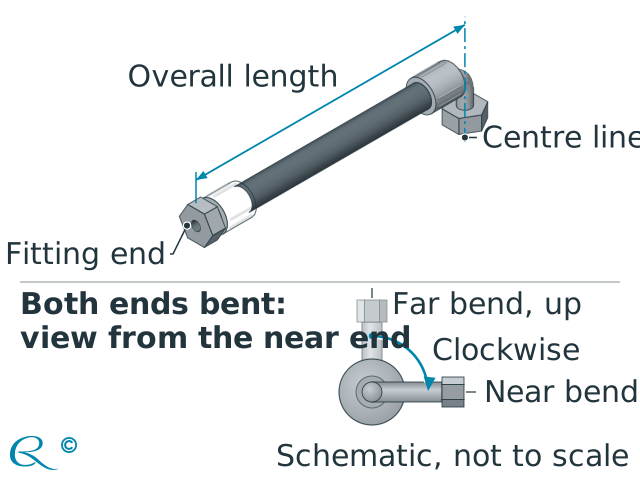
With the machine isolated and the pressure released, measure the whole assembly, not the bare hose. In the drawing’s example, a straight end and a 90-degree end, the length runs from the end of the straight fitting to the centre line of the bent end.
Flanges, 45-degree ends and other ends are measured to other points, such as a sealing face; agree them with us before the length is fixed.
If both ends are bent, give the angle between them, with the end you looked from, the reference bend and the direction. In the drawing the hose is seen from the near end, the far bend points up, and the angle is measured clockwise to the near bend. Conventions differ, so say which one you used.
A wrong angle twists the hose when it is fitted, and a twisted hose fails early. A line drawn along the old hose and across both fittings before removal keeps the angle.
Before We Select a Replacement
A replacement must suit the whole duty, not only the pressure: a hose with a higher pressure rating can still be wrong for the fluid, the temperature or the route. Its fittings must be made for that hose and fitted by the method their maker sets, and the weakest part of the assembly, hose or fitting, sets its limit.
| Detail | Why it matters |
|---|---|
| The marking on the old hose | It names the type and size: the quickest way to match it. |
| The fluid | The tube, the cover and the seals must suit it: mineral oil, water glycol, phosphate ester, fuel, water or a chemical. |
| Highest fluid and surrounding temperatures | The hose and its fittings must suit them; heat shortens hose life. |
| Operating pressure and surges, or vacuum | The system pressure, surges included, must stay within the maximum working pressure of the hose and of every fitting; suction needs a hose made for it. |
| Bore, or the flow it must carry | Too small a bore raises the oil speed, the pressure drop and the heat. |
| Route and bend radius | A hose bent tighter than its minimum radius, twisted or left rubbing fails early. |
| Both ends: thread, seal, size and angle | Threads that look alike can differ, and the seal (cone, O-ring face or flange) must match. |
| Overall length and the angle between bent ends | Measured as shown above; a wrong length or angle strains or twists the hose. |
| Quantity and required date | Lets us confirm availability and lead time with the quotation. |
What our quotation will confirm: the item we propose and its specification, what we matched it to, the quantity and availability.
Example
From Our Quotations
In 2025 and 2026 we quoted hose pipes with fittings for a hydraulic power pack, hose pipes with double-sided nipples in 10 m and 60 m lengths to go with oil centrifuges, and a 2 m stainless steel (SS 304) hose with fittings for a liquid nitrogen line.
Questions Buyers Ask
Can you match a hose from a photo?
Usually. A clear photo of the printed marking and of each end fitting tells us the type, the size and the ends; we confirm them with you before we quote. Send photos on WhatsApp to +91 99400 49505 or by email to [email protected].
Can you supply the hose with its end fittings?
Yes. We quote the hose with its end fittings, to the length and ends you give us.
What do R2AT and 2SN mean on a hose?
Both mark a rubber hose with two steel wire braids and a thin cover: R2AT in SAE J517, 2SN in EN 853. The constructions are similar, but they are separate specifications, not declared equivalents. The working pressure is not one figure: it falls as the bore grows and differs from hose to hose, so read it from the marking or send us the full marking and your operating conditions.
What is the difference between 4SP and 4SH?
Both are rubber hoses with four steel wire spirals, named in EN 856. At corresponding standard sizes, 4SH is specified for a higher working pressure than 4SP, and the standard lists 4SH only in the larger sizes. This explains the markings; it is not advice to use one in place of the other.
Do you supply hose guards and sleeves?
Yes. Tell us the outside diameter of the hose and the length to be covered. A spiral guard or a sleeve protects the cover where the hose rubs on the frame or on another hose.
How often should hydraulic hoses be replaced?
There is no single interval. Follow the inspection and replacement instructions for the machine or the hose assembly, and check more often where hoses run hot, flex a lot or see heavy surges. A hose with no visible damage is not proven fit.
Does your invoice show the HSN code?
Yes. Our GST invoice shows the HSN or SAC code for each line.
Do you keep stock?
Availability is confirmed with each quotation.
What is the price?
Prices depend on the hose type, the size, the fittings, the length and the quantity, so we quote for each enquiry.
Where We Work
Tamil Nadu
Telangana
Kerala
Andhra Pradesh
Odisha
Delhi NCR
Rajasthan
Jharkhand
Uttar Pradesh
West Bengal
Punjab
Chhattisgarh
Send Your Hose Details
Hose type or marking, size, length, both end fittings and quantity. Add the pressure and the fluid if you know them.
Request received. Your reference is {ref}. We reply during office hours, Monday to Saturday, 9.00 am to 5.30 pm. For a breakdown or a plant shutdown, call +91 99400 49505 at any time. Nothing is booked or ordered until we confirm scope, availability and terms in writing.Prefer to talk? Call +91 99400 49505 or WhatsApp us.
Related
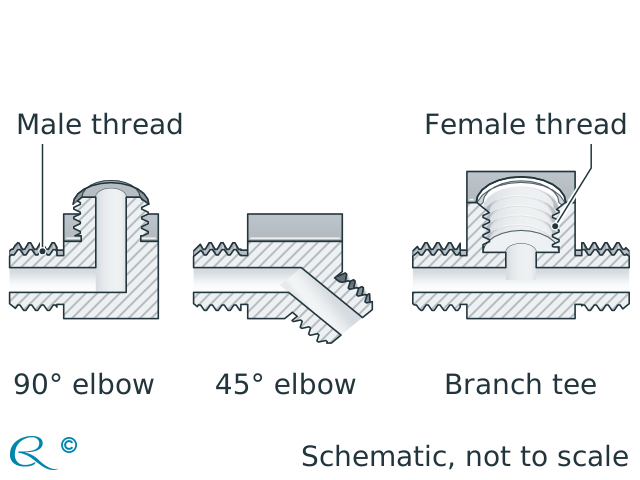
Hydraulic Fittings
Hose ends, tube fittings and adaptors, matched to your thread form and size.
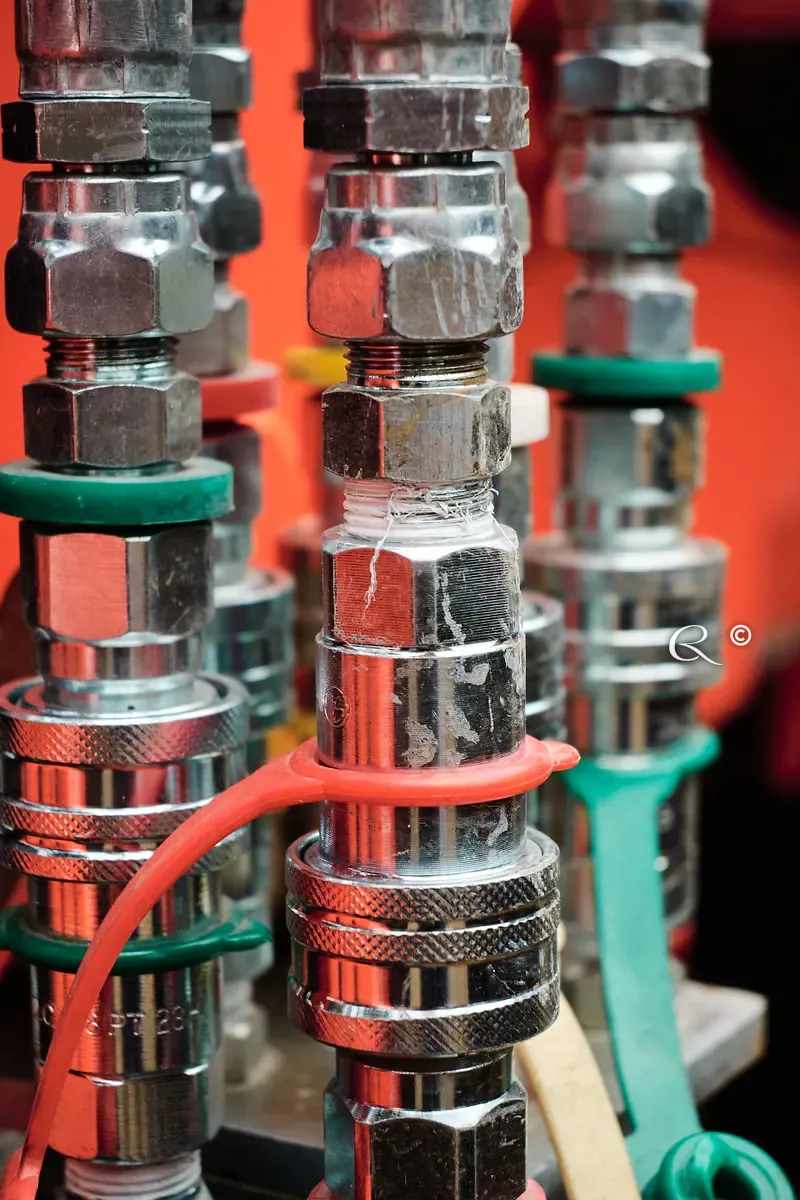
Quick Release Couplings
Couplings that connect and disconnect hydraulic lines by hand.
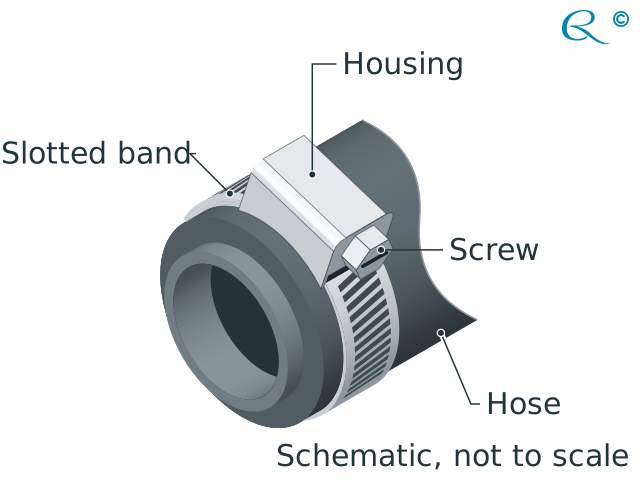
Hose Clamps
Worm-drive, T-bolt, spring and ear clamps for low pressure hose lines.
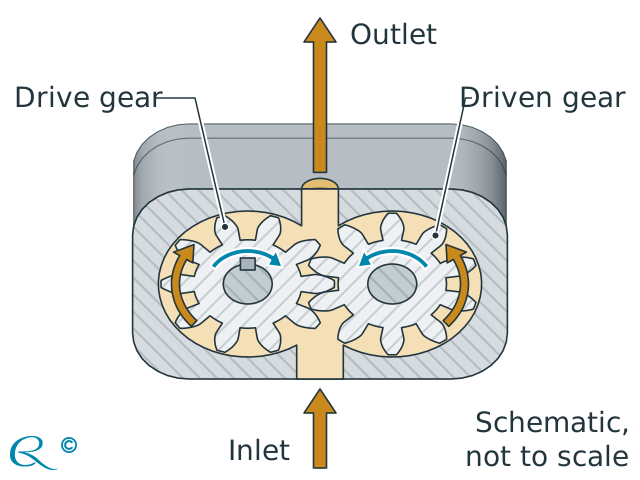
Hydraulic Pumps
Gear, vane and piston pumps, and transfer pumps for oil and diesel.
Hydraulic Oil Filtration
The oil in your power packs and presses filtered at your site with our machines.
Oil Flushing
Hydraulic and lube oil systems flushed after installation or repair, such as a change of hoses or pipes.