

Tank Level Indicators
Ram Engineering, based in Chennai, is a supplier of oil tank level gauges in India: gauges, level indicators and switches for hydraulic, lube oil and diesel tanks.
What to Send for a Quote
If you are replacing a gauge, this is enough to start:
- A photo of the old gauge on the tank, with any marking or part number on it. Send photos on WhatsApp to +91 99400 49505 or by email to [email protected].
- The mounting: the distance between the two bolts or tank connections, and the bolt thread or connection size.
- The tank and its fluid: hydraulic, lube oil or diesel tank, and the oil or fuel in it.
- The temperature of the oil or fuel, and whether the tank is vented or under pressure.
- Any switch or sensor: the alarm points, the voltage and the signal.
- The quantity, with the date you need them.
What a Level Gauge Does, and When to Replace It
A level gauge shows how much oil or fuel is in a tank without opening it. It indicates the level; it does not warn of a low level unless someone reads it or a level switch with an alarm is fitted.
Replace a gauge whose tube or glass is cracked, crazed or too cloudy to read, or that weeps at its seals or bolts. A gauge that looks sound can still read wrong, so check it against a dipstick or the known contents after any work on the tank.
Before a gauge is removed, isolate it from the tank or process, safely depressurise and drain it, and let it cool, following the gauge maker’s instructions and the plant procedure; on a fuel tank, keep sparks and flames away.
We can supply level indicators and fit them at your site, for example on a diesel tank, and we confirm the fitting with the quotation.
We are a supplier, not the maker.
Level Gauge and Indicator Types
Each type suits a different tank. Each drawing shows a common design, simplified and not to scale.
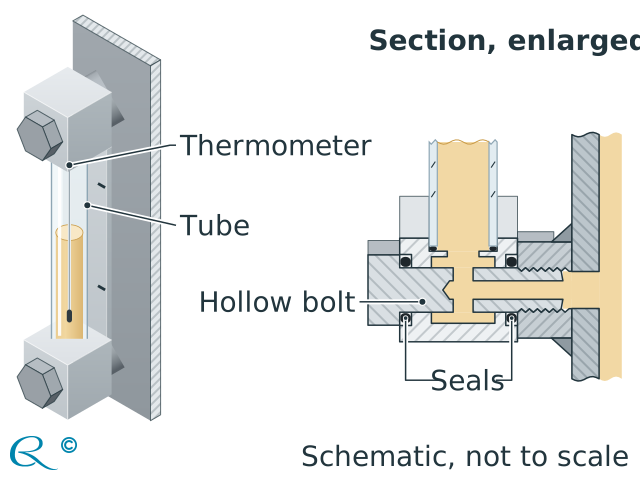
Column Level Gauges for Hydraulic Tanks
A clear tube in a housing, fixed to the side of the tank by two hollow bolts that let the oil into the tube. Common on hydraulic power packs and gearbox reservoirs, often with a thermometer and marks for the maximum and minimum levels; some carry a switch for a low level alarm. Many come in a few standard bolt centres, such as 76, 127 and 254 mm, usually with M10 or M12 bolts.
Tell us: the bolt centres, the bolt thread, and whether you need a thermometer or a switch.
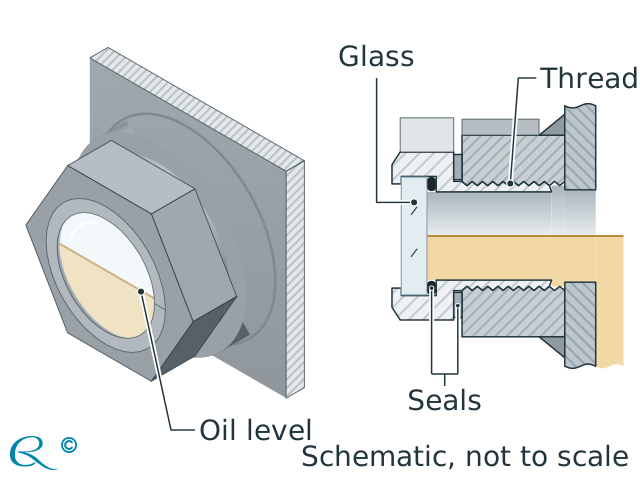
Sight Glasses
A round window screwed or bolted into the tank wall, showing the level at one point; the machine’s instructions say where the oil should stand, often at the centre of the glass. Used on gearboxes, compressors, small reservoirs and machines such as oil centrifuges.
Tell us: the thread size or the bolt pattern, and the fluid and its temperature.
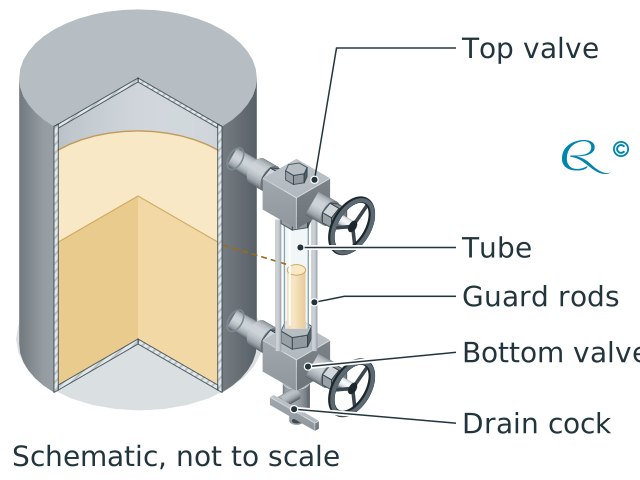
Tube Level Gauges With Isolating Valves
A glass or plastic tube between two valves on connections at the top and bottom of the tank, with guard rods or a cover around it. The valves isolate the tube for cleaning or replacement, and a drain cock empties it. Common on diesel day tanks and other vertical tanks.
Tell us: the centres of the two tank connections, their size and thread, and the fluid.
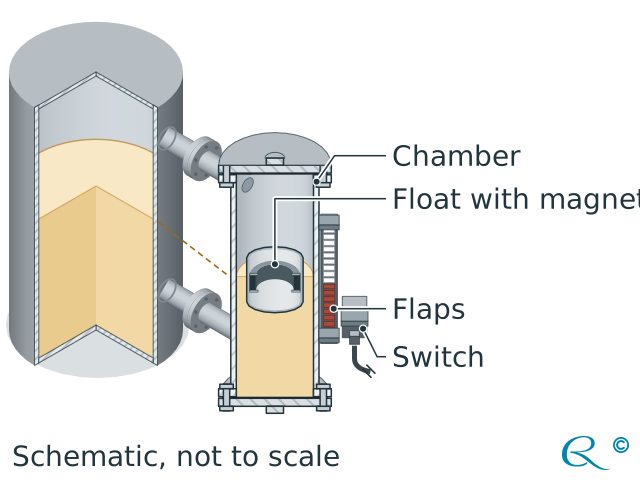
Magnetic Level Indicators
A float carrying a magnet rides on the liquid in a chamber beside the tank and turns coloured flaps on a rail outside it, so no glass touches the fluid. Used on hot, tall or hazardous tanks; switches and transmitters can be fixed to the chamber.
Tell us: the centres of the tank connections, the fluid, its density and temperature, and any switches.
Float and Board Gauges, and Dial Gauges
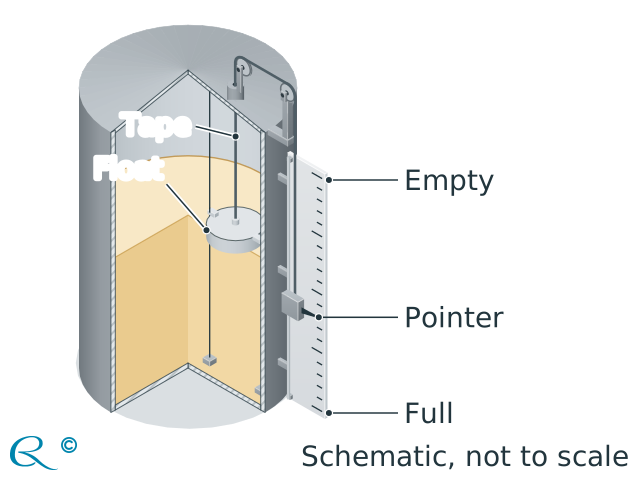
On a tall storage tank, a float hangs from a tape that runs over pulleys on the roof and down the outside to a pointer on a board. As the level rises the pointer falls, so the board reads empty at the top and full at the bottom, and it can be read from the ground. On smaller and underground tanks, a float gauge with a dial on a roof opening is common.
Tell us: the tank height, where the board can stand, and the openings on the tank roof.
Level Switches and Sensors
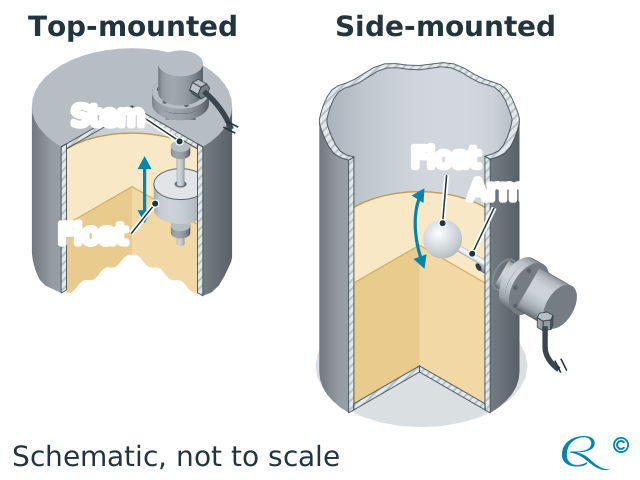
A float switch opens or closes a contact when the level reaches its switch point: to raise an alarm, to stop a pump before the tank runs low, or to stop the filling when it is full. Top-mounted types slide a float along a stem; side-mounted types swing a float on an arm. Level sensors send a continuous reading to a panel.
Tell us: the switch points, whether the contact opens or closes on a falling level, the voltage and the cable or plug.
How to Measure a Level Gauge
Most of these sizes can be measured from outside, with the gauge in place.
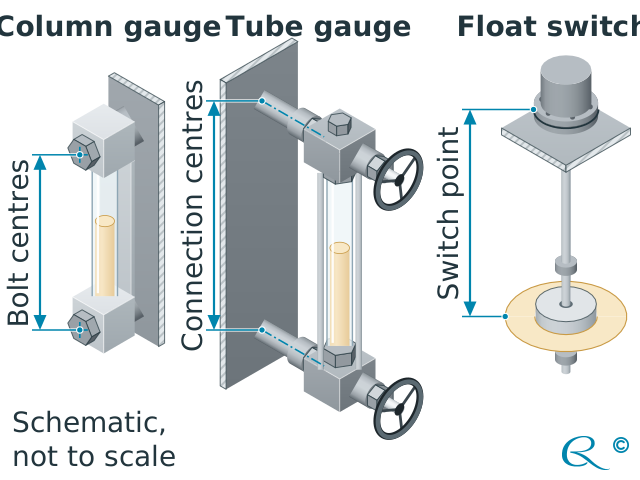
Column gauge: the distance between the centres of its two bolts, not the length of the gauge, and the bolt thread.
Tube gauge or magnetic indicator: the distance between the centres of the two tank connections, and their size and thread or flange.
Float switch: the distance from its mounting face to each switch point, and the depth of the tank below the mounting.
Sight glass: the thread size, or the flange and its bolt holes.
Before We Select a Replacement
A gauge must suit the tank, the fluid and the way the level is read, not only the mounting size. Send us these details. What our quotation will confirm: the item we propose and its specification, what we matched it to, the quantity and availability.
| Detail | Why it matters |
|---|---|
| Tank and fluid | Hydraulic tank, lube oil reservoir, gearbox or diesel tank, and the oil or fuel in it. The tube, the seals and any float must suit it: NBR seals generally suit mineral oils and diesel, while some fire-resistant fluids, such as phosphate esters, need other seal materials. |
| Mounting | Bolt centres and thread, the centres and size of the tank connections, or the opening on the roof. |
| Visible length or tank height | Sets the length of the gauge or the travel of the float. |
| Fluid temperature | Clear plastic tubes generally suit mineral hydraulic oil at normal tank temperatures; hotter oil, fuels and other fluids may need glass, a metal housing or a magnetic indicator, within the limits stated for that gauge. |
| Pressure in the tank | Many column gauges are made for vented tanks or low pressures; a tank under pressure needs a gauge made for its pressure. |
| Where it is read | At the machine, from the ground or on a panel: this decides between a gauge, a float and board, or a sensor. |
| Switch or sensor | The alarm points, the contact, the voltage and the signal, if you need one. |
| Hazardous area | A hazardous-area classification at the tank decides the type of any switch or sensor. |
| Quantity and required date | Lets us confirm availability and lead time with the quotation. |
Example
Recent Supply
In 2025 we supplied and fitted level gauges on a transport company’s diesel tank. We have also quoted a fluid level indicator with a sensor for a hydraulic tank, and a sight glass as an oil centrifuge spare.
Questions Buyers Ask
Can I add a low level alarm to an existing tank?
Often, yes: a float switch can go into a spare opening on the tank and be wired to an alarm or to stop the pump. Tell us the tank and the openings it has.
Can I replace just the tube or the glass?
Often, on gauges made to be serviced: the tube, the glass and the seals of many column and tube gauges can be renewed. Send a photo of the gauge and any part number on it, and we tell you whether a part or a whole gauge is the better replacement. Send photos on WhatsApp to +91 99400 49505 or by email to [email protected].
Which level gauge suits a diesel tank?
It depends on how the tank is built and read: commonly a tube or column gauge on a day tank, a float and board gauge on a tall storage tank, and a roof-mounted float gauge on an underground tank. Every part that touches the diesel must suit it.
Do you keep stock?
Availability is confirmed with each quotation.
What is the price?
Prices depend on the indicator type, the length, any switch or sensor and the quantity, so we quote for each enquiry.
Does your invoice show the HSN code?
Yes. Our GST invoice shows the HSN or SAC code for each line.
Where We Work
Tamil Nadu
- Chennai on our records
- Coimbatore
- Madurai
- Hosur
- Trichy
Telangana
Kerala
Andhra Pradesh
Odisha
Delhi NCR
Rajasthan
Jharkhand
Uttar Pradesh
West Bengal
Punjab
Chhattisgarh
Send Your Tank and Gauge Details
Tank type, fluid, mounting, visible length and quantity. Say if you need a switch or a sensor.
Request received. Your reference is {ref}. We reply during office hours, Monday to Saturday, 9.00 am to 5.30 pm. For a breakdown or a plant shutdown, call +91 99400 49505 at any time. Nothing is booked or ordered until we confirm scope, availability and terms in writing.Prefer to talk? Call +91 99400 49505 or WhatsApp us.
Related
Valves
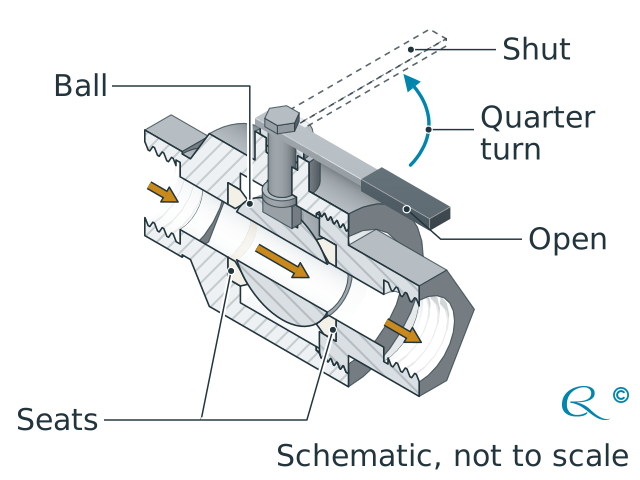
Ball, check and needle valves for tank outlets, fuel lines and gauge connections.
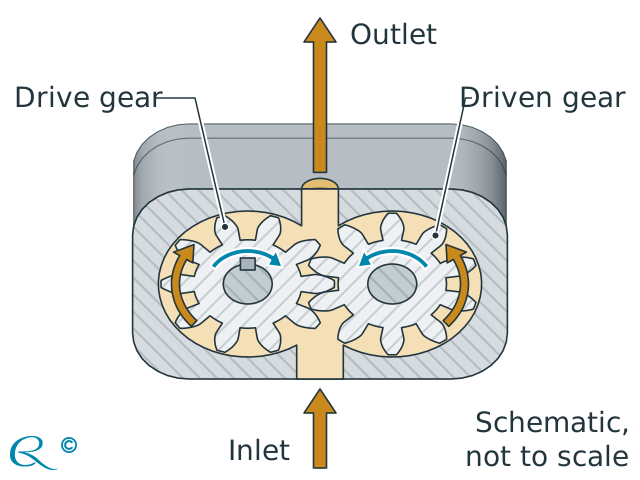
Hydraulic Pumps
Gear and screw pumps that move oil and diesel between tanks.
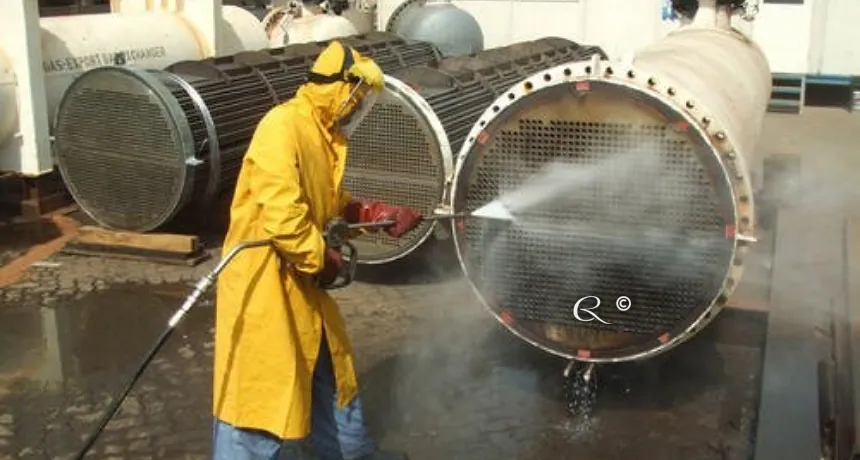
Tank Cleaning
Sludge, water and scale taken out of oil, fuel and chemical storage tanks, with or without entry as the tank allows.
High-Speed Diesel (HSD) Filtration
Clean stored diesel for generators and fleets by removing water and particles.

Hydraulic Oil Filtration
The oil in your power pack tanks filtered at your site with our machines.

Filter Elements
Hydraulic and lube oil elements by part number.