
Hydraulic Valves for Power Packs and Machines
Ram Engineering, based in Chennai, is a hydraulic valve supplier in India: directional, pressure and flow control valves, check valves and hydraulic ball valves.
What to Send for a Quote
If you know the valve, this is enough to start:
- The model code on the valve’s label and, for a solenoid valve, the coil’s label (it gives the voltage), or a photo of each. Send photos on WhatsApp to +91 99400 49505 or by email to [email protected].
- What it is: directional, pressure, flow or check valve; on a subplate (with its size, such as NG 6), a cartridge or in-line.
- The duty: the fluid, its temperature, the flow and the highest working pressure.
- The quantity, and when you need it.
When to Replace a Hydraulic Valve
A valve that leaks across its seat or spool (a cylinder creeps under load), sticks or no longer holds its setting should come out of service; follow the machine’s maintenance instructions.
Before a valve comes off, stop and isolate the pump drive, lower or support any raised load, release the pressure (an accumulator or trapped oil can hold it), drain the oil, let it cool and follow the machine’s or the plant’s instructions.
We can supply valves and fit them at your site, for example on a diesel line, and we confirm the fitting with the quotation.
We are a supplier, not the maker.
Hydraulic Valve Types We Supply
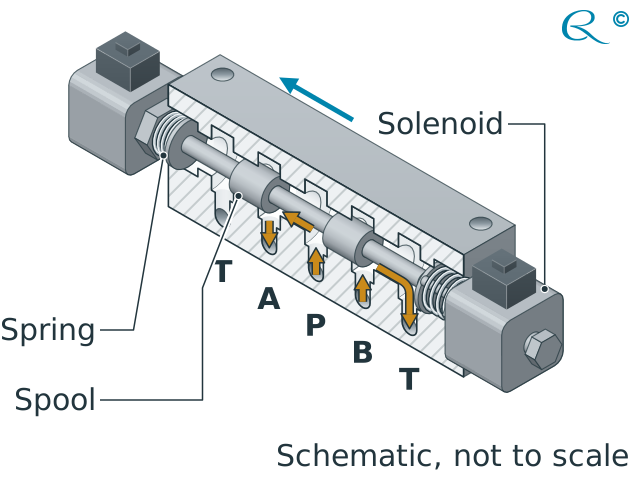
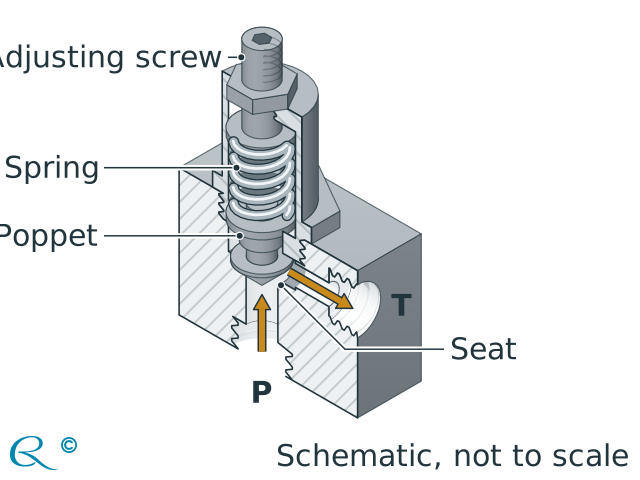
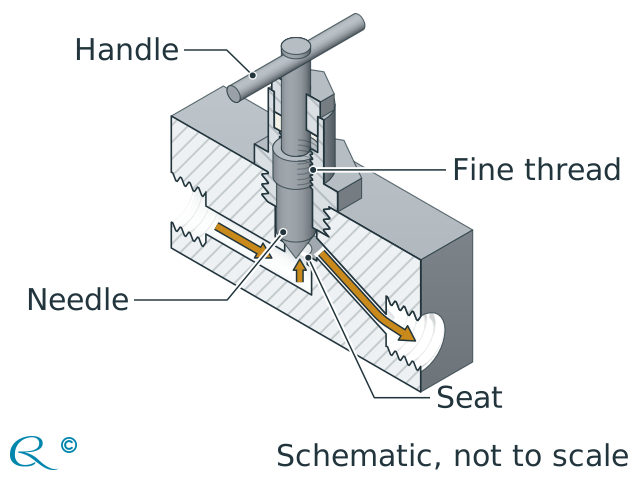
Each drawing shows one usual design, simplified and not to scale.
Directional Control Valves
A spool sliding in the body connects the pump and the tank to either side of a cylinder or motor, to start, stop and reverse it. Solenoids, a lever or pilot oil move it; the spool type sets how the ports connect in the centre position.
Tell us: the full model code, and the coil’s voltage, AC or DC, and plug.
Relief and Pressure Control Valves
A relief valve opens to the tank at its setting, so a correctly selected one limits the pressure in the circuit it protects. Reducing, sequence and counterbalance valves hold a lower pressure in a branch, order movements or hold a load.
Tell us: the model code, the setting if known, and the mounting.
Flow Control and Needle Valves
A throttle or needle valve opens a small orifice a little at a time, to set a cylinder’s speed or to isolate a gauge line; some add a check, to throttle one way only. Pressure-compensated types keep the set flow nearly steady as the load changes.
Tell us: the model code or the port threads, and whether it is one-way or pressure-compensated.
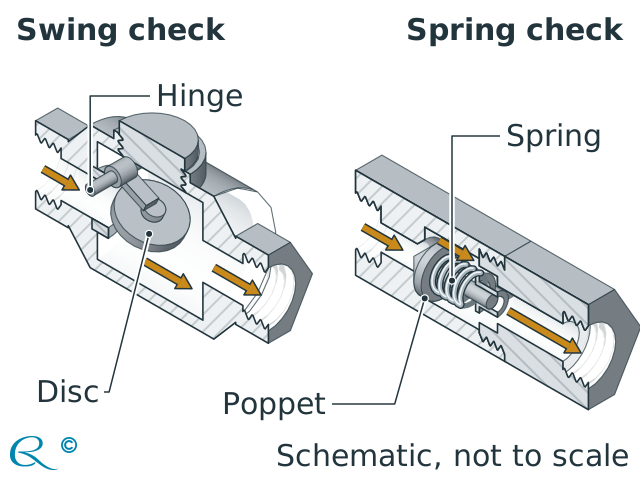
Check Valves (Non-return Valves)
A poppet, ball or disc that the flow opens and a reverse flow shuts. Hydraulic circuits commonly use spring-loaded poppet checks, and pilot-operated checks to hold a cylinder. The swing check, also drawn, suits larger pump and process lines, generally with horizontal or upward flow.
Tell us: the type, the ports or ends, and any opening pressure marked on it.
Choosing a Hydraulic Valve
Hydraulic valves mount on a subplate or manifold, screw into a block as cartridges, or sit in-line. Many subplate valves share a standard face, called NG 6 (CETOP 3) or NG 10 (CETOP 5); cartridge cavities differ between series.
The same mounting size means only that the bolts and ports line up. The spool function, the coil’s voltage and plug, and the pilot oil supply and drain (internal or external) must match too; the model code gives them.
Reading a Hydraulic Valve’s Label
These describe the valve you are replacing, not the valves we supply or a standard they follow; the quotation names the valve we propose.
| Marking | What it tells us |
|---|---|
| Model code | The function, the size and mounting, the spool or setting range, the pilot and drain arrangement and the series; codes differ between makers. |
| Spool symbol or code | How the ports connect in each position, the centre position included. |
| Port letters | P from the pump, T to the tank, A and B to the cylinder or motor; X and Y, where present, for the pilot oil and its drain. |
| Coil label | The voltage, AC or DC, and the power; tell us the plug or connector type too. |
| Maker’s name and part number | Lets us identify the valve and propose the same type, or one made for the same duty. |
No label? Photograph the mounting face and the ports beside a ruler. Send photos on WhatsApp to +91 99400 49505 or by email to [email protected].
Ball Valves and Process Isolation Valves
We also supply isolation valves for oil, diesel, water and process lines, sized by the pipe they fit (a 50 mm ball valve usually means 2 inch, DN 50), not by the bore.
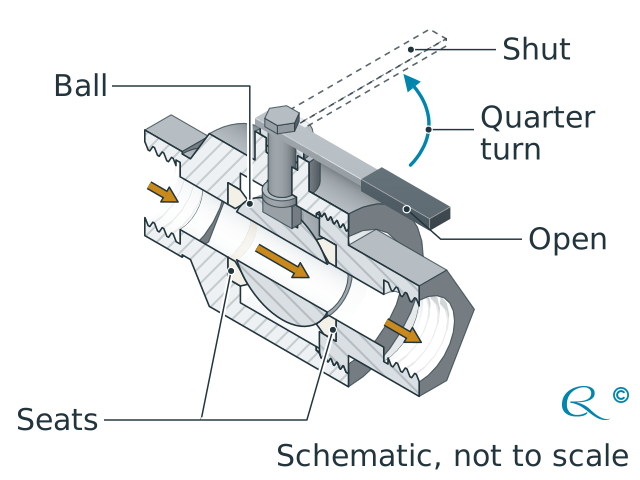
Ball Valves, Including Hydraulic Ball Valves
A ball with a hole through it turns a quarter turn to open or shut; reduced bore types have a smaller hole. Most are made to be fully open or shut: held part open, the flow can wear soft seats. High pressure hydraulic ball valves isolate lines on power packs and machines.
Tell us: the size, the ends, two-way or three-way, full or reduced bore, and the working pressure.
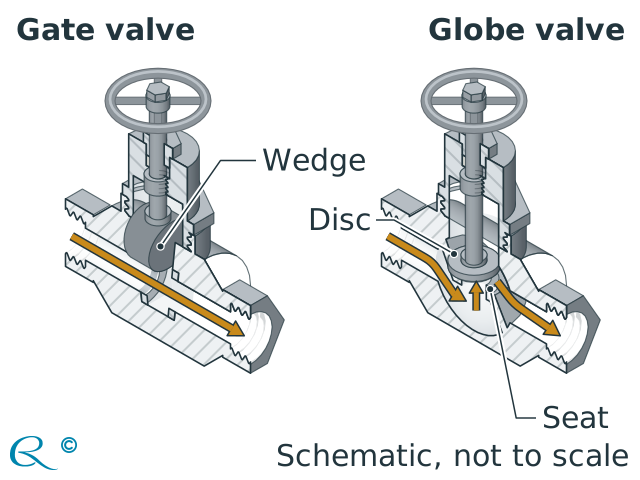
Gate and Globe Valves
A gate valve lifts a wedge clear of the flow: fully open it costs little pressure, but part open it can vibrate and wear, so it is not for throttling. A globe valve turns the flow through a seat, so it regulates well but generally costs more pressure.
Tell us: the size, the ends, the body material and the pressure designation on the body.
Markings on a Line Valve
Like a hydraulic valve’s label, these describe the valve you are replacing, not the valves we supply.
| Marking | What it tells us |
|---|---|
| Size | Inches (such as 2 inch) or a DN number (such as DN 50), cast on the body or on a tag. |
| Pressure designation | A PN or Class number, or a figure with WOG (water, oil, gas) or CWP (cold working pressure): a designation, not the pressure the valve may take at every temperature. |
| Body material | A grade such as WCB (cast carbon steel), A105 (forged carbon steel), or CF8 and CF8M (cast stainless steels that broadly correspond to the 304 and 316 families; the specifications are not identical). |
| Flow arrow | Globe, check and some other valves work one way only: the arrow points with the flow. |
Grades in one row are examples, not declared equivalents.
How to Measure a Line Valve
Measure with the line isolated, depressurised, drained and cool, or with the valve out.
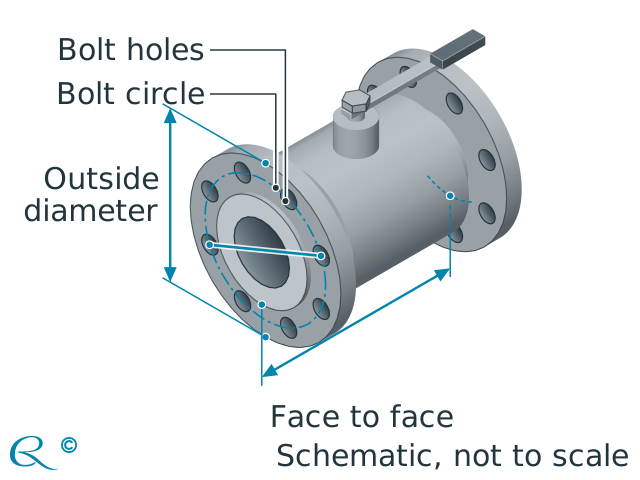
Flanged valve: the face-to-face length between the outer flange faces, which differs between valve types and pressure designations, and the flange’s outside diameter, bolt circle and holes.
Threaded valve: the thread form and size (BSP and NPT look alike but do not interchange); a 1/2 inch pipe thread is about 21 mm across, not 12.7 mm.
Before We Select a Replacement
Size and pressure alone do not choose a valve: one with a higher pressure designation may still not suit the fluid, the heat or its job in the circuit. Send us these details. What our quotation will confirm: the item we propose and its specification, what we matched it to, the quantity and availability.
| Detail | Why it matters |
|---|---|
| The model code or marking of the old valve | The quickest way to identify it and match its function, size and connections. |
| What the valve must do | Direct the flow, limit or reduce the pressure, set the speed, stop a reverse flow or isolate a line: this decides the type. |
| Flow and allowed pressure drop | Line size alone does not size a control valve: the flow, the pressure drop the circuit allows across it and its function or spool do. An isolating valve takes the line size. |
| The fluid | Body, seats and seals must suit it: mineral oil, diesel, water glycol, phosphate ester, water, a gas or a chemical. |
| Fluid temperatures, hot and cold | Soft seats and seals have temperature limits, and the pressure a valve may take falls as the temperature rises. Very cold service, such as liquid nitrogen, needs a valve made for it. |
| Operating pressure, surges and vacuum | The highest pressure in the line, surges included, must stay within what the valve and its connections may take at that temperature. |
| Mounting and connections | Mounting face and size, cartridge cavity or port threads; for a line valve, the thread, the flange drilling or the weld end. |
| Spool, pilot and drain | The spool function, and whether the pilot oil is supplied and drained internally or externally. |
| How it is worked | Lever, knob, handwheel, actuator, pilot oil or solenoid; for a solenoid, the voltage, AC or DC, and the plug. |
| Where it is fitted | The space around it, and any hazardous-area classification of the site, which affects solenoids and actuators. |
| Quantity and required date | Lets us confirm availability and lead time with the quotation. |
Example
Recent Supply
In 2025 we supplied and fitted ball valves (50, 65 and 80 mm), gaskets and level gauges on a transport company’s diesel system. Our quotations also include valves for a hydraulic power pack and a non-return valve for a liquid nitrogen line.
Questions Buyers Ask
Can you match a hydraulic valve from its label?
Usually, from the full model code, with the coil’s label for a solenoid valve. We confirm the match with you before we quote.
Is a non-return valve the same as a check valve?
Yes: both names mean a valve that lets the flow pass one way and shuts against a reverse flow, and NRV is a common name for it in India. Its type (swing, lift, dual plate or spring-loaded poppet) still has to be named.
What does WOG mean on a valve?
WOG stands for water, oil and gas. The figure beside it is the pressure for cold, shock-free service, in the units the valve’s documents give; at higher temperatures the valve may take less. It does not cover every oil or every gas: check the fluids the documents allow. Send us the marking as it is, with your line’s fluid and temperature.
Do you keep stock?
Availability is confirmed with each quotation.
What is the price?
Prices depend on the valve type, the size, the material and the quantity, so we quote for each enquiry.
Does your invoice show the HSN code?
Yes. Our GST invoice shows the HSN or SAC code for each line.
Where We Work
Tamil Nadu
- Chennai on our records
- Coimbatore
- Madurai
- Hosur
- Trichy
Telangana
Kerala
Andhra Pradesh
Odisha
Delhi NCR
Rajasthan
Jharkhand
Uttar Pradesh
West Bengal
Punjab
Chhattisgarh
Send Your Valve Details
Valve type or part number, size, end connection, pressure and quantity.
Request received. Your reference is {ref}. We reply during office hours, Monday to Saturday, 9.00 am to 5.30 pm. For a breakdown or a plant shutdown, call +91 99400 49505 at any time. Nothing is booked or ordered until we confirm scope, availability and terms in writing.Prefer to talk? Call +91 99400 49505 or WhatsApp us.
Related
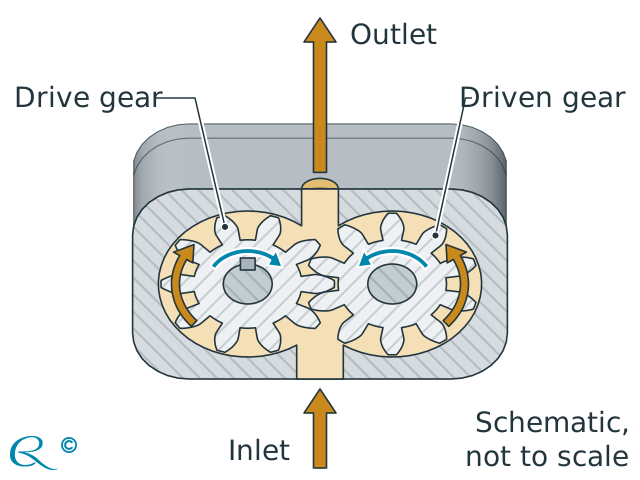
Hydraulic Pumps
Gear, vane, piston and screw pumps, matched to the old pump’s nameplate.
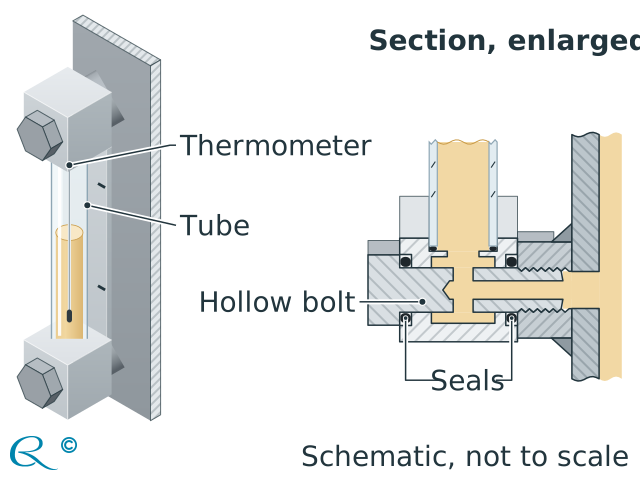
Tank Level Indicators
Column gauges, sight glasses, float gauges and level switches for oil and diesel tanks.
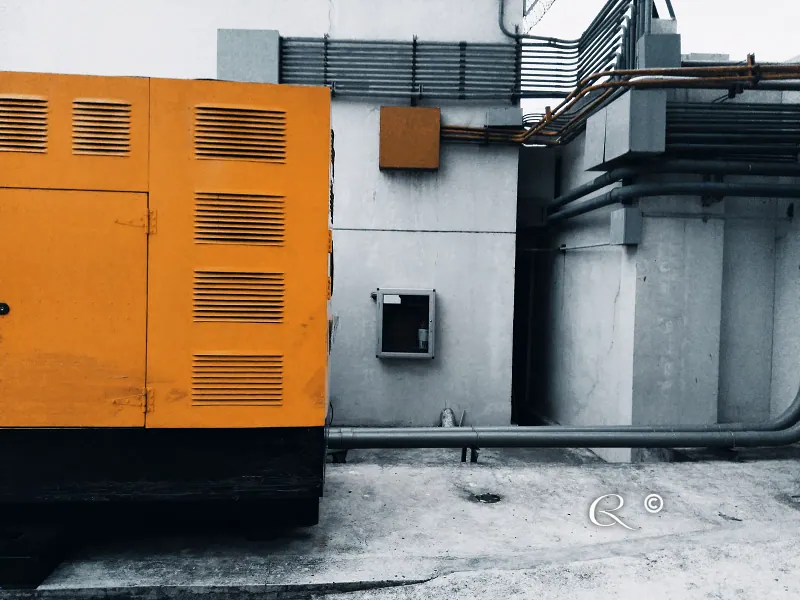
High-Speed Diesel (HSD) Filtration
Clean stored diesel for generators and fleets by removing water and particles.
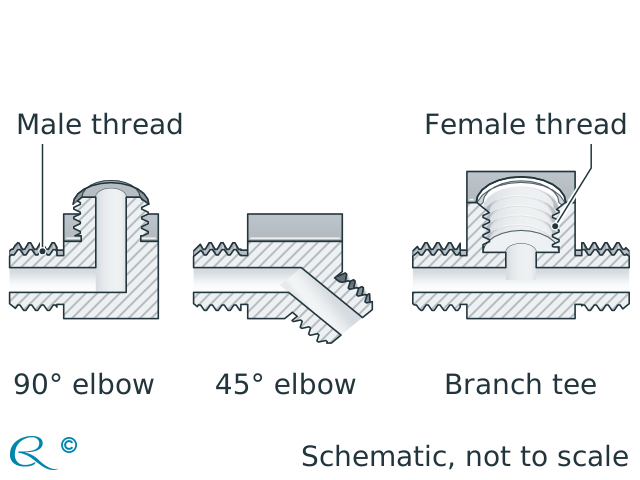
Hydraulic Fittings
Adaptors and hose ends that join a valve’s ports to your hoses and pipes.
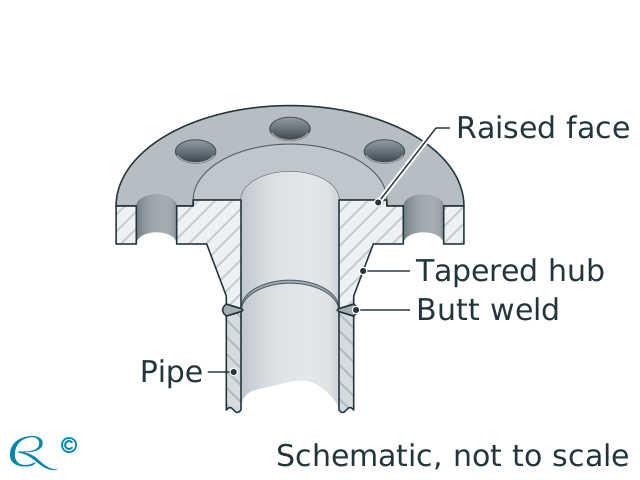
Flanges
Pipe flanges and hydraulic flanges for flanged valve ends.
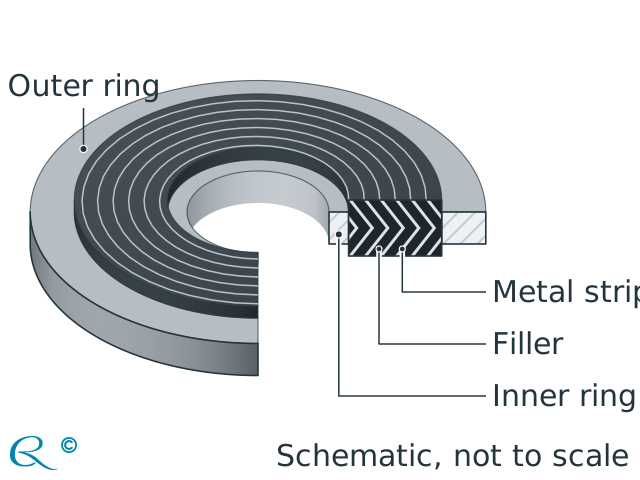
Gaskets
Gaskets for the flanged joints either side of a valve.