
Filter Paper for Electrostatic Oil Cleaners
Ram Engineering, based in Chennai, supplies filter paper for electrostatic oil cleaners (ELC): the paper between the electrodes that holds the particles drawn out of the oil.
What to Send for a Quote
Enough to start a quote:
- The machine’s nameplate: a photo of it, or the make, model and serial number.
- The paper size, or a photo of the paper in the machine beside a ruler. Send photos on WhatsApp to +91 99400 49505 or by email to [email protected].
- How many pieces one full change takes.
- The quantity, and the date you need it by.
How an Electrostatic Oil Cleaner Uses Filter Paper
Inside an electrostatic oil cleaner (ELC) the oil flows between electrode plates held at a high voltage. The field draws very fine solid particles and insoluble oxidation products, the soft deposits that can form varnish, out of the oil, and the filter paper between the plates holds them. It collects what is suspended in the oil; oxidation products still dissolved in it are not necessarily removed.
The paper is where the dirt ends up, so it fills as the oil gets cleaner, and the fuller it is, the less the machine collects. Whether a machine then keeps running, warns or stops depends on its design, so follow its instructions for when to change the paper.
It suits oils that are poor conductors of electricity and nearly dry, such as mineral hydraulic, lube, turbine and gear oils. It does not remove water, so free water is removed first, and water-based fluids are not suited to it.
Our own electrostatic machines work on our oil filtration jobs, and changing their paper is part of that work.
We are a supplier, not the maker.

Where It Is Used
Electrostatic cleaning is used where very fine dirt and varnish cause trouble, for example on:
- Turbine lube oil, where varnish can make control and trip valves stick.
- Hydraulic systems with proportional and other fine-clearance valves, which fine dirt and varnish can make sluggish.
- Moulding machines and presses whose oil runs warm for long hours.
- Compressor and gearbox oils kept in service for a long time.
Before We Select the Paper
Paper cut for one machine can be the wrong size, thickness or fit for another, so we match it to the model, not only to the sheet size. Send photos on WhatsApp to +91 99400 49505 or by email to [email protected]. What our quotation will confirm: the item we propose and its specification, what we matched it to, the quantity and availability.
| Detail | Why it matters |
|---|---|
| Machine make, model and serial number | Paper size and fitting differ from model to model. |
| A photo of the nameplate | Identifies the exact build of the machine. |
| Paper size: length, width and thickness | If the size is not known, a used piece or a photo of the paper in place beside a ruler. |
| How the paper is fitted | How it is folded and held between the electrodes; a photo of the opened machine, taken with it switched off and isolated, shows this. |
| Pieces for one full change | So a full set can be quoted, where the instructions ask for all the paper to be changed together. |
| The oil and its condition | Very dirty or varnished oil fills the paper faster, so expect to change it more often at first. |
| Quantity and required date | Lets us confirm availability and lead time. |
Changing and Storing the Paper
The machine works at a high voltage. Switch it off and isolate it electrically before you open it, and let the high-voltage parts discharge as its instructions set out. Isolate its oil lines, release any pressure, drain the collector and let hot oil cool, following the machine’s instructions and your plant’s rules.
Take the full paper out whole, so that the dirt it holds leaves with it. Fit the new paper to the machine’s instructions, without creases or tears, rather than simply as the old paper sat: it may not have been fitted correctly. Treat used paper as oily waste, under your plant’s rules.
Keep new paper sealed and dry until it is fitted: damp paper does not collect well.
Example
From Our Invoices
In 2025, filter paper for electrostatic machines was billed with our electrostatic filtration jobs at a rubber hose plant. In 2022, filter paper was billed with our electrostatic filtration job at a sugar mill in Kallakurichi district.
Questions Buyers Ask
Is electrostatic cleaning the same as filtering?
No. A filter element holds particles in its media and is rated by the size it holds. An electrostatic cleaner can also collect particles finer than most elements are rated for, and insoluble oxidation products that can form varnish.
Does an electrostatic cleaner remove water?
No. It needs nearly dry oil. Free water is removed first, for example with a vacuum dehydration (LVDH) machine or a centrifuge.
How often is the paper changed?
When it is full; how soon depends on how much dirt and varnish the oil carries. Machines differ in how they show full paper, so go by the machine’s instructions; an oil test shows whether the oil is still getting cleaner.
Can you run an electrostatic machine on our oil instead?
Yes. We bring our own electrostatic machine and run it on your oil, as part of our oil management and purification work.
Do you maintain electrostatic oil cleaners?
Yes. Under our electrostatic oil cleaner AMC we maintain the machine you have, whatever its make, through the year; new filter paper is charged at actuals.
Do you keep stock?
Availability is confirmed with each quotation.
What is the price?
Prices depend on the paper, the quantity and delivery, so we quote for each enquiry.
Does your invoice show the HSN code?
Yes. Our GST invoice shows the HSN or SAC code for each line.
Where We Work
Tamil Nadu
- Chennai on our records
- Coimbatore
- Madurai
- Hosur
- Trichy
Telangana
Kerala
Andhra Pradesh
Odisha
Delhi NCR
Rajasthan
Jharkhand
Uttar Pradesh
West Bengal
Punjab
Chhattisgarh
Send Your Machine and Paper Details
Machine make, model and serial number, the paper size and the quantity.
Request received. Your reference is {ref}. We reply during office hours, Monday to Saturday, 9.00 am to 5.30 pm. For a breakdown or a plant shutdown, call +91 99400 49505 at any time. Nothing is booked or ordered until we confirm scope, availability and terms in writing.Prefer to talk? Call +91 99400 49505 or WhatsApp us.
Related
Electrostatic Oil Cleaner AMC
Your own electrostatic machine maintained under a yearly contract, or your oil cleaned with ours.
Turbine Oil Filtration
Varnish and dirt removed from circulating turbine oil by electrostatic cleaning.
Oil Management & Purification
Centrifuge, vacuum dehydration or electrostatic cleaning, chosen from what your oil test shows.
Oil Analysis
Particle counts and BDV checks at your site, and laboratory tests of the oil.
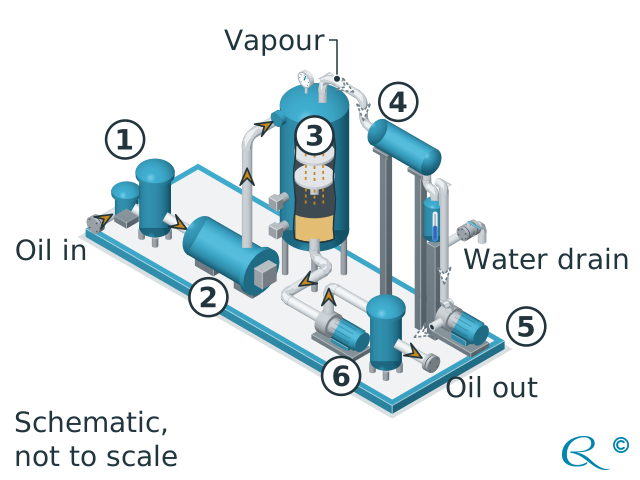
LVDH Spares
Spares for vacuum dehydration units, which take out the water an electrostatic cleaner cannot.

Filter Elements
Hydraulic and lube oil elements by part number, or a checked equivalent.