
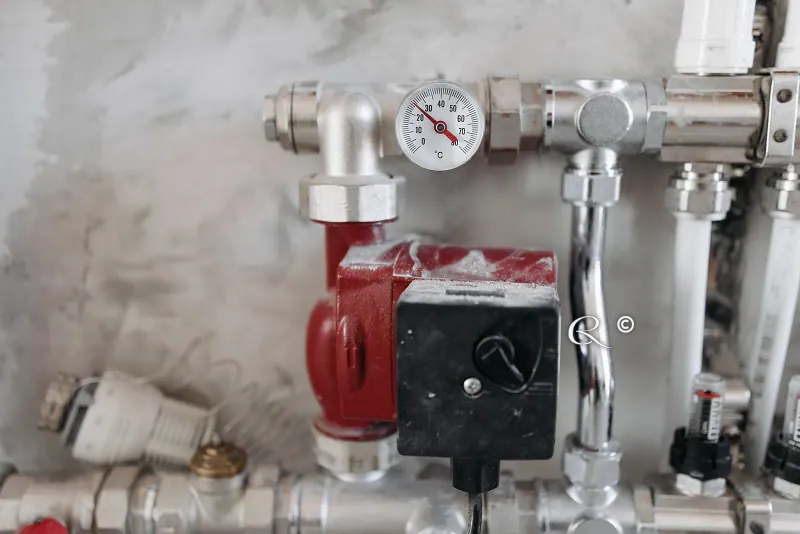
Hydraulic Hose and Pipe Fittings
Ram Engineering, based in Chennai, is a hydraulic fittings supplier in India: hose, tube and swivel fittings, adaptors, elbows and tees, matched to your machine’s threads.
What to Send for a Quote
These are enough to start; the checklist further down covers the rest. Send photos on WhatsApp to +91 99400 49505 or by email to [email protected].
- A photo of each end of the old fitting beside a ruler, with the thread and the seat in view.
- The thread form and size at each end, if known, such as 1/2 BSP or M18 x 1.5.
- The shape: straight, a 45 or 90 degree elbow, a tee, a swivel, a banjo or a bulkhead.
- For a hose end, the hose: the marking printed on it, or its bore and type.
- The fluid, the working pressure and the quantity, and when you need them.
What Hydraulic Fittings Do
Fittings join hoses, pipes and tubes to pumps, valves and cylinders, and to each other. They must seal at full system pressure without leaking.
Many leaks start at a fitting: threads that look alike but differ, a damaged seat, a wrong or missing seal, or a joint tightened too far or not enough.
Isolate the machine and release the pressure before you inspect or measure a fitting, or loosen one. Before you open the line, lower or support any load it holds, let the oil cool and drain it, following the machine maker’s and the plant’s instructions.
A cracked body, a damaged thread or seat, or a joint that weeps when correctly tightened is a reason to replace the part; follow the maintenance instructions for your machine.
We are a supplier, not the maker.
Fittings and Adaptors We Supply
Six families cover most connections. Each drawing shows one common form, schematic and not to scale; names vary between makers and regions.
Hose Fittings
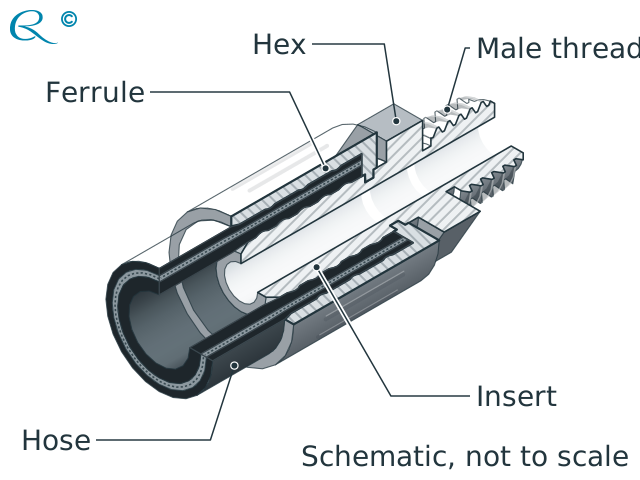
An insert goes into the bore of the hose and a ferrule is crimped over its cover; the other end is a male thread, a female swivel nut or a flange head, straight or bent at 45 or 90 degrees. Each suits one hose bore and family. Clamped low-pressure hoses take hose tails (barbed nipples) instead.
Tell us: the hose marking, or its bore and type, and each end’s thread, seat and angle.
Male and Female Adaptors
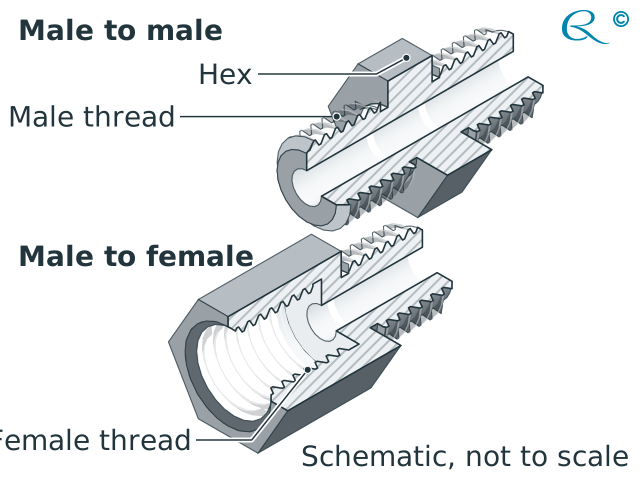
Straight adaptors that join two threads, male to male or male to female, in one thread form or between two, such as a BSP pump port and a JIC hose end.
Tell us: the thread form, size and seal at each end.
Elbows and Tees
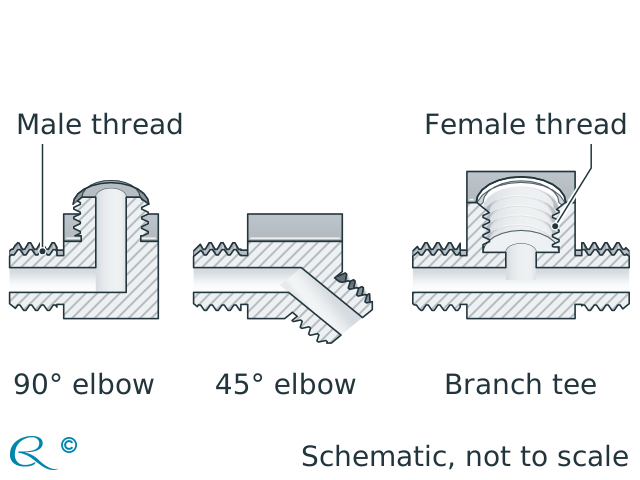
Male and female elbows at 45 and 90 degrees, and male, female and branch tees; a branch tee carries its odd end on the branch, a run tee on the run. They turn a line close to a port or split it in two.
Tell us: the angle, which ends are male or female, and each thread.
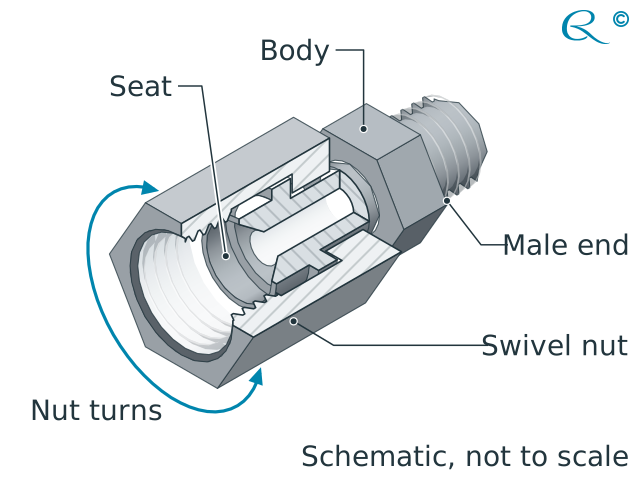
Swivel Fittings
Swivel adaptors, swivel elbows and swivel tees, with a nut that turns on the body only while the joint is made up, so the fitting can be lined up and tightened without twisting the hose. A swivel joint that must turn under pressure in service is a different part.
Tell us: the thread and seat of the swivel nut and of the other end, and whether the joint must turn in service.
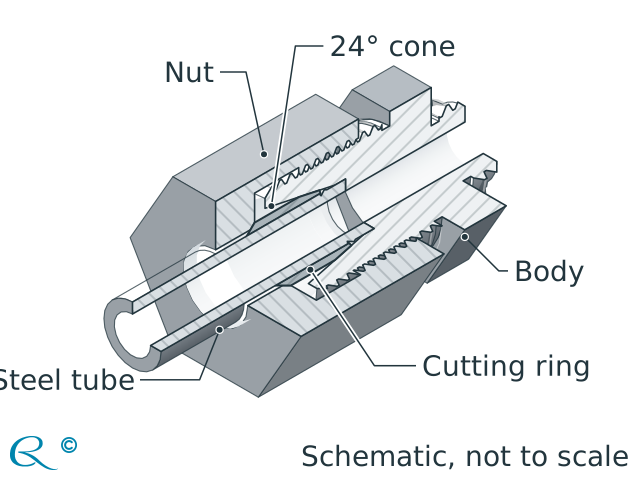
Tube Fittings
Fittings for steel tube that seal with a cutting ring, also called a ferrule, in the 24-degree cone of the fitting body, or with an O-ring, in light and heavy series. They are named by the tube’s outside diameter and series, such as 12 L or 16 S.
Tell us: the tube OD and wall thickness, the series, and the other end.
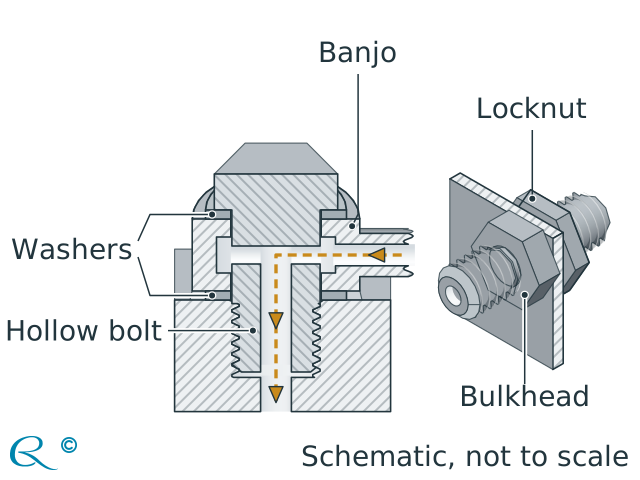
Banjo, Bulkhead and Blanking Fittings
Banjo fittings with their hollow bolts and sealing washers, for tight spaces at a pump or filter head; bulkhead fittings held through a panel or tank wall by a locknut; and plugs and caps that close an unused port.
Tell us: the bolt thread and length and the banjo bore, or the wall thickness for a bulkhead.
For pipework we can also supply long and short radius bends, tees and reducers in carbon steel and stainless steel.
How the Joints Seal
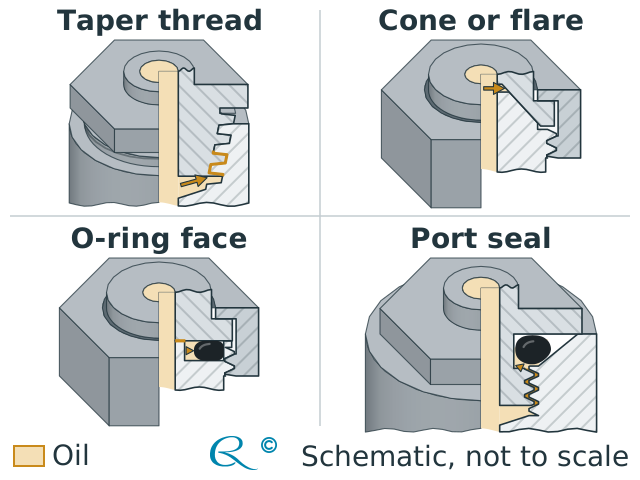
A hydraulic joint usually seals in one of four ways: on a taper thread; metal to metal on a cone or flare; with an O-ring in a flat face; or, at a port, with an O-ring or a bonded washer under the hex, where the parallel thread itself does not seal.
Ends that seal in different ways do not seal reliably together, even when their threads screw together.
How to Identify a Thread
Isolate the machine and release the pressure before you inspect or measure a fitting still on the machine. Clean the thread, then:
Look at the Seal
Is it a taper thread, a cone or flare, an O-ring in a flat face, or a seal under the hex at a port?
Check for Taper
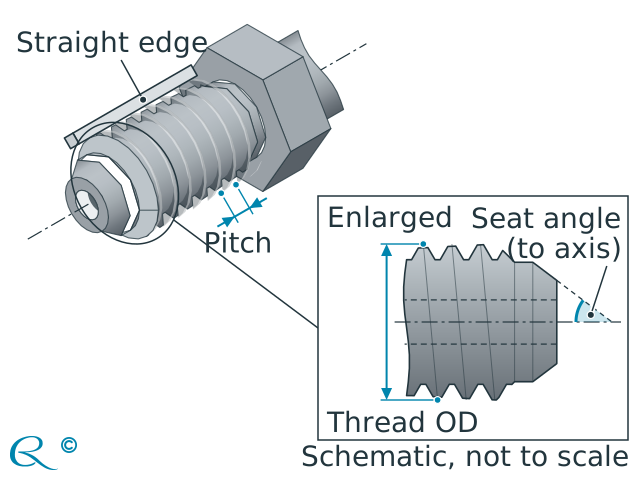
Lay a straight edge along the crests: a taper thread narrows towards its end.
Measure the Diameter
Measure a male thread across its crests with a vernier calliper; a female thread reads smaller than the male that fits it.
Count the Pitch and Check the Seat
Count the threads in one inch, or read the pitch with a thread gauge, and compare with the tables below; then check the seat angle with a seat gauge.
Thread Forms Buyers Ask About
These are thread forms and seats you may find on an existing fitting or port. They are not a statement that every fitting we supply follows every specification behind these names; the quotation confirms the fitting we propose.
| Thread form | How it seals | How to recognise it |
|---|---|---|
| BSPP (parallel) | At a port, with a bonded washer or an O-ring under the hex; on most hose ends, on a 60-degree cone. | Parallel; 55-degree thread angle, rounded crests. The size names a pipe bore: a 1/2 BSP thread measures about 21 mm. |
| BSPT (taper) | On the thread, with a sealant. | As BSPP, but narrowing towards its end. |
| NPT, NPTF | On the thread, usually with a sealant. | American taper; 60-degree thread angle, flat crests, diameters near those of BSP. NPTF looks like NPT: the marking or the drawing tells them apart. |
| JIC (37-degree flare) | Metal to metal, on a 37-degree cone. | Inch UN or UNF thread, named by dash size; a smooth 37-degree cone on the male nose. |
| ORFS (O-ring face seal) | With an O-ring in a groove in the flat face of the male end. | Flat male face with an O-ring groove; inch UN or UNF thread. |
| Metric 24-degree cone | With a cutting ring (ferrule) on the tube, or an O-ring on the cone. | A 24-degree cone inside the fitting body, commonly within an external metric fine thread (such as M18 x 1.5) that takes the tube nut. Tell us the connection and its series: light (L) or heavy (S). |
| UNF O-ring port | With an O-ring at the base of the male thread, pressed into a chamfer at the port. | Straight inch thread with an O-ring at its base, and no cone. |
| Flange head | With an O-ring in the face of the flange head, held by a split flange or a one-piece flange clamp. | A flat flange on a hose end or tube, held to the port by four bolts. Tell us whether the port calls for code 61 or code 62, and its size. |
Look-alikes differ: a JIC -6 nut and an ORFS -4 nut share the 9/16-18 thread but seal differently, and a 12 mm light-series and a 10 mm heavy-series metric fitting both take M18 x 1.5 but suit different tubes.
Pipe Thread Sizes: BSP and NPT
A pipe thread’s size names the bore of the pipe it was first made for, not the thread itself.
| Nominal size (inch) | BSP basic major diameter (mm) | BSP threads per inch | NPT threads per inch |
|---|---|---|---|
| 1/8 | 9.7 | 28 | 27 |
| 1/4 | 13.2 | 19 | 18 |
| 3/8 | 16.7 | 19 | 18 |
| 1/2 | 21.0 | 14 | 14 |
| 3/4 | 26.4 | 14 | 14 |
| 1 | 33.2 | 11 | 11.5 |
| 1 1/4 | 41.9 | 11 | 11.5 |
| 1 1/2 | 47.8 | 11 | 11.5 |
| 2 | 59.6 | 11 | 11.5 |
The basic major diameter is the thread’s theoretical outside diameter; a taper thread measures less towards its end, and a worn thread a little less. Tell BSP from NPT by the threads per inch and the thread angle: 55 degrees for BSP, 60 for NPT.
JIC and ORFS Threads by Dash Size
JIC and ORFS ends are named by the connection dash size: the outside diameter of the tube the end is made for, in sixteenths of an inch, not the thread size. A reducing hose fitting carries a hose of another size, so read the size from the end, not from the hose.
| Connection dash size | JIC thread (inch, mm) | ORFS thread (inch, mm) |
|---|---|---|
| -4 | 7/16-20, 11.1 | 9/16-18, 14.3 |
| -6 | 9/16-18, 14.3 | 11/16-16, 17.5 |
| -8 | 3/4-16, 19.1 | 13/16-16, 20.6 |
| -10 | 7/8-14, 22.2 | 1-14, 25.4 |
| -12 | 1 1/16-12, 27.0 | 1 3/16-12, 30.2 |
| -16 | 1 5/16-12, 33.3 | 1 7/16-12, 36.5 |
| -20 | 1 5/8-12, 41.3 | 1 11/16-12, 42.9 |
| -24 | 1 7/8-12, 47.6 | 2-12, 50.8 |
Before We Select a Replacement
A replacement must suit the whole joint, not only the thread: the seat or seal, the material and, for a hose end, the hose. A fitting rated for more pressure is still wrong if its seat or seal differs, and the weakest part of the line sets its limit.
| Detail | Why it matters |
|---|---|
| Thread form and size at each end | For example BSP, NPT, JIC, ORFS, UNF or metric; the two ends often differ. |
| Seat or seal at each end | Cone, flare, O-ring face or port seal: it must match the part it meets. |
| Type and shape | Hose fitting, adaptor, elbow, tee, swivel, tube or banjo fitting, and the angle. |
| For a hose end: the hose | Its marking, or its bore and type: a hose end is made for one hose family and crimped as its maker specifies; a hose of one make takes fittings of another only where a maker approves it. |
| For a tube fitting: the tube | Outside diameter, wall thickness and series, which the cutting ring and the body must suit. |
| Material and seals | Plated carbon steel for most oil lines, stainless steel where there is water or corrosion, and seals that suit the fluid and its temperature. |
| Working pressure and surges | The fitting and its seals must be rated for the system pressure, surges included. |
| Quantity and required date | Lets us confirm availability and lead time. |
What our quotation will confirm: the item we propose and its specification, what we matched it to, the quantity and availability.
Example
From Our Quotations
In 2025 and 2026 our pipeline and machine quotations included double-sided hose nipples, carbon steel long and short bends in 3 inch and 4 inch sizes, a tee with a flange, and bends for carbon steel and stainless steel pipelines.
Questions Buyers Ask
What is a ferrule fitting?
The word names two parts. On a hose end, the ferrule (or socket) is the sleeve crimped over the hose. On a tube fitting, it is the ring that grips and seals the tube as the nut is tightened: the cutting ring of a 24-degree metric fitting, or the one or two ferrules of a compression fitting on instrument tubing. Tell us which you mean, with the size.
Will BSP and NPT fittings fit together?
Not so that they seal. Both are inch pipe threads, but their thread angles differ (55 and 60 degrees) and most sizes have a different pitch. In 1/2 and 3/4 inch both have 14 threads per inch, so the two may start together, but the joint will not seal reliably and the threads can be damaged. Use an adaptor with the right thread at each end.
Can you supply an adaptor from one thread to another?
Yes, from the thread form and size at each end. Adaptors between thread forms are common when a machine built in one country is repaired with parts from another.
Should I reuse an old fitting on a new hose?
Not a crimped fitting: it is made for one hose and is replaced with it. A reusable fitting can go on a new hose of the same type if its maker allows it and its threads, seat and seals are undamaged.
Should I use PTFE tape on hydraulic fittings?
Only taper threads (NPT, BSPT) seal on the thread; parallel threads, cones, flares and O-ring joints take no tape. On a taper thread many fitting makers advise a liquid or paste sealant instead of tape, as shreds of tape can enter the oil; keep it off the first thread.
Do you keep stock?
Availability is confirmed with each quotation.
What is the price?
Prices depend on the fitting, the material, the size and the quantity, so we quote for each enquiry.
Does your invoice show the HSN code?
Yes. Our GST invoice shows the HSN or SAC code for each line.
Where We Work
Tamil Nadu
Telangana
Kerala
Andhra Pradesh
Odisha
Delhi NCR
Rajasthan
Jharkhand
Uttar Pradesh
West Bengal
Punjab
Chhattisgarh
Send Your Fitting Details
Thread and size at each end, the shape and the quantity. Add the hose size if it is a hose fitting.
Request received. Your reference is {ref}. We reply during office hours, Monday to Saturday, 9.00 am to 5.30 pm. For a breakdown or a plant shutdown, call +91 99400 49505 at any time. Nothing is booked or ordered until we confirm scope, availability and terms in writing.Prefer to talk? Call +91 99400 49505 or WhatsApp us.
Related
Hydraulic Hoses
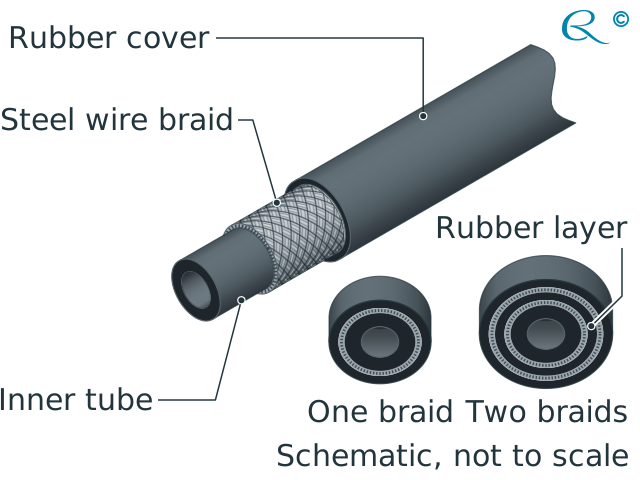
Braided, spiral, thermoplastic, PTFE and stainless steel hoses, supplied with their ends.
O-Rings
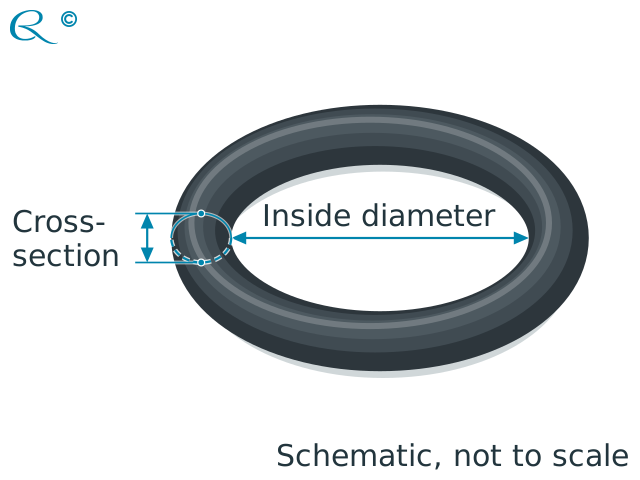
O-rings in NBR, FKM, EPDM and silicone, by size or from the old ring.
Flanges
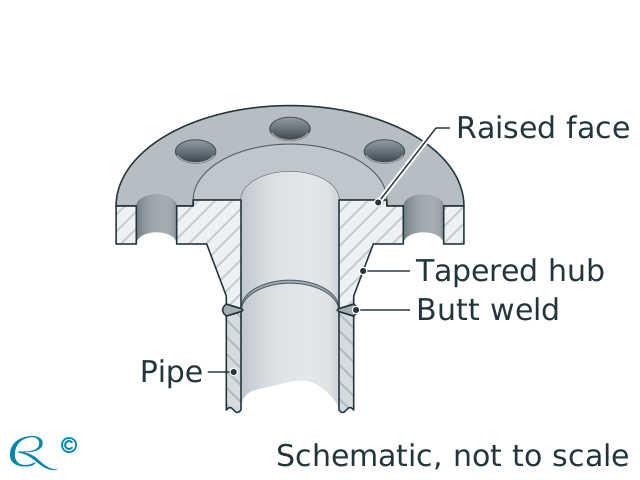
Weld neck, slip-on, blind, socket weld, threaded and split flanges.
SS and CS Pipes
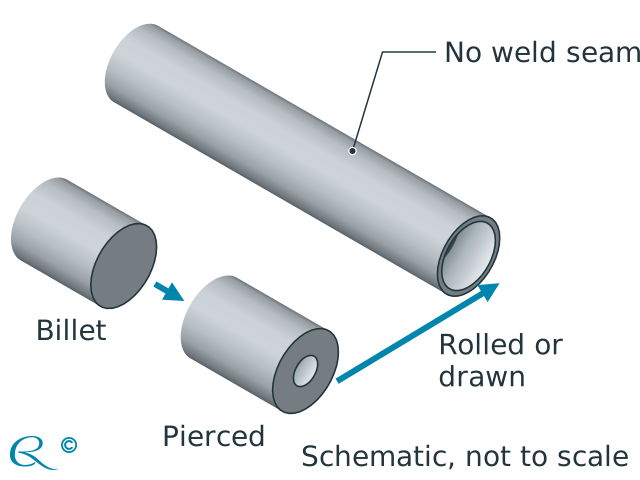
Stainless and carbon steel pipes, seamless or welded, to your size and grade.
Quick Release Couplings
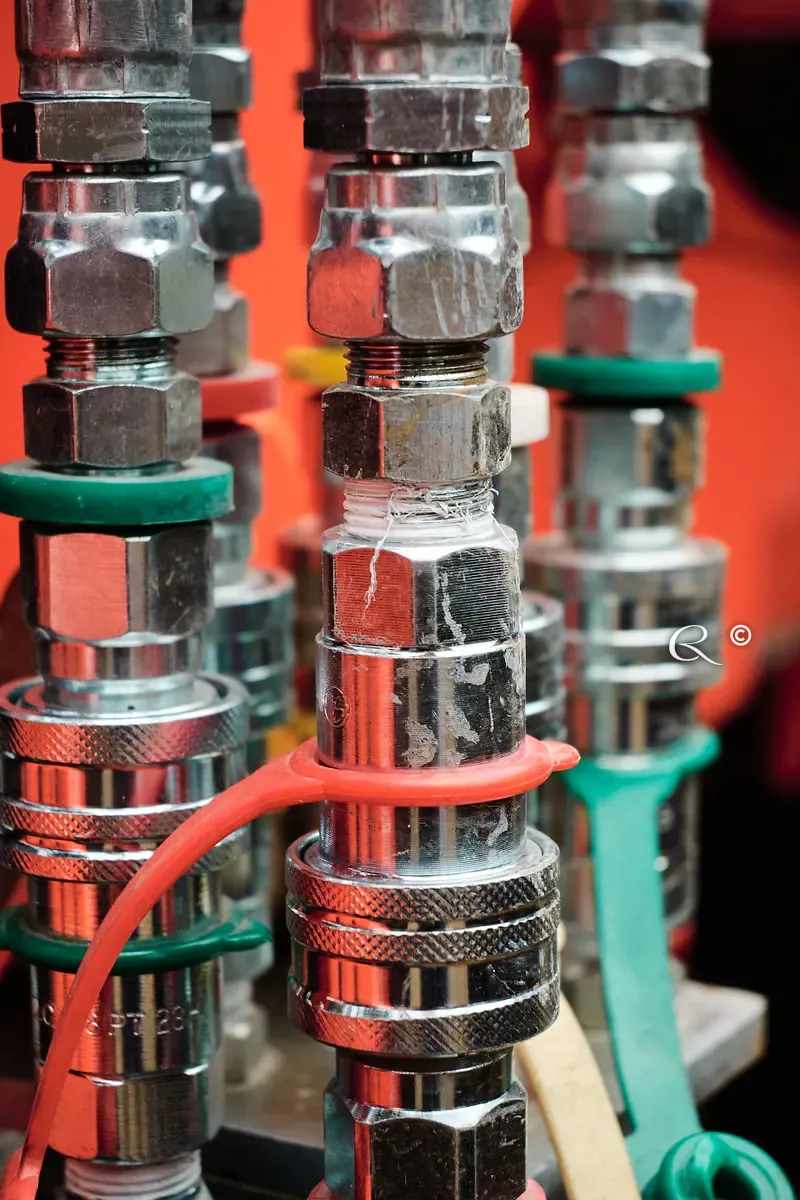
Couplings that connect and disconnect hydraulic lines by hand.
Pipeline Flushing
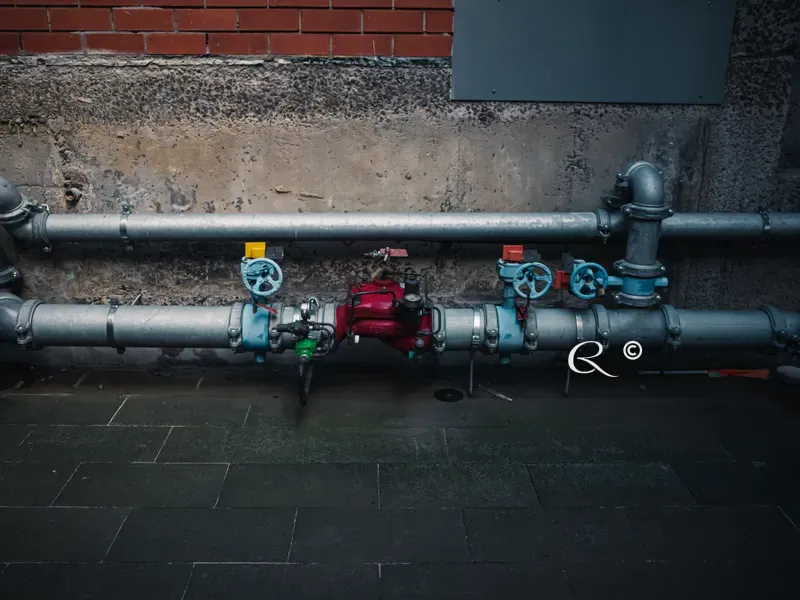
New or repaired hydraulic and lube oil pipework flushed clean before it goes into service.