
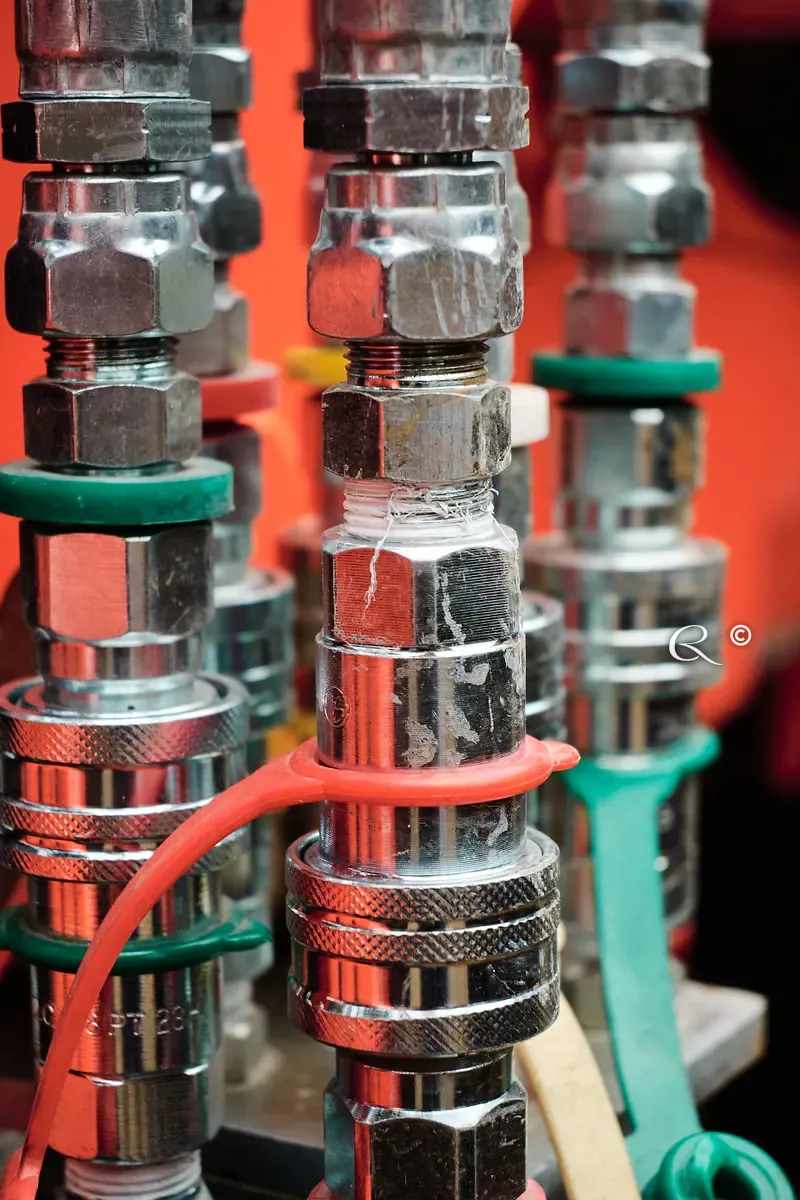
Hydraulic Quick Release Couplings
Ram Engineering, based in Chennai, is a hydraulic quick release coupling supplier in India: quick couplings for hydraulic hoses and test point couplings for gauges.
What to Send for a Quote
To start a quote, this is enough. Send photos on WhatsApp to +91 99400 49505 or by email to [email protected].
- A photo of the half you have, or of both halves, with any marking on the body.
- Which half you need: male (plug), female (coupler) or both.
- The port thread of each half, its form and size, such as 1/2 BSP.
- The duty: the fluid, the working pressure, and whether it must connect with pressure left in the line.
- How many of each half, and the date you need them.
What a Quick Release Coupling Does
A quick release coupling lets you connect and disconnect a hydraulic line by hand, without tools and with little oil lost. Each coupling has two halves: the male half, also called the plug or nipple, and the female half, also called the coupler or socket.
In most hydraulic couplings, valves inside both halves close as they part, so the oil stays in the hose and in the machine.
Isolate the machine and release the pressure before you inspect or measure a coupling, or change a half. Connect and part a coupling only as its maker’s and the machine’s instructions allow, and cap the halves while they are apart: dirt on a coupling goes into the oil.
Before you open the line, lower or support any load it holds, let the oil cool and drain it, following the machine maker’s and the plant’s instructions.
We use quick couplings on our own oil flushing and transfer equipment.
We are a supplier, not the maker.
Hydraulic Quick Release Coupling Types
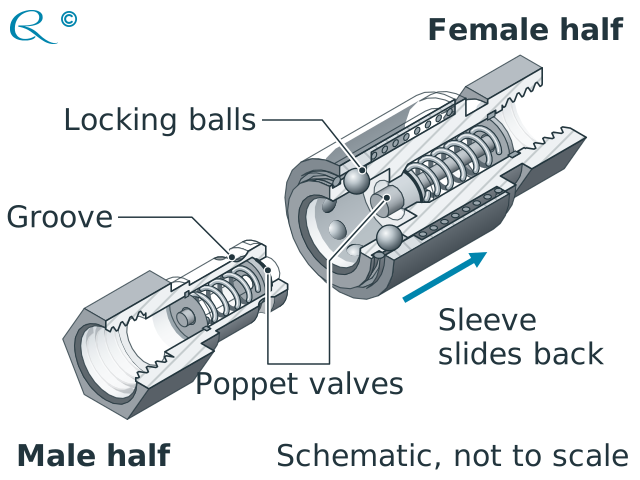
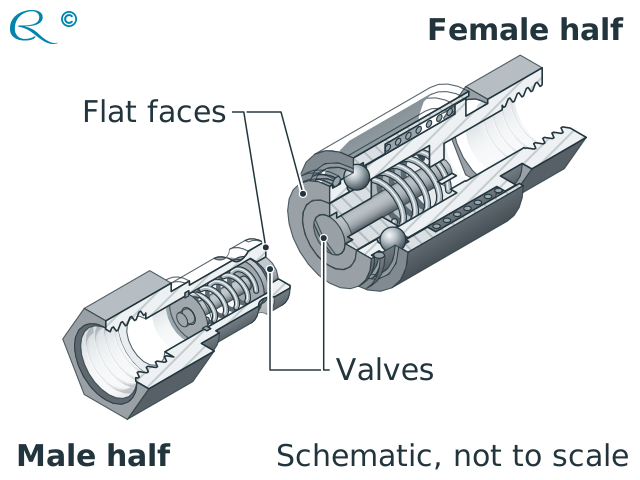
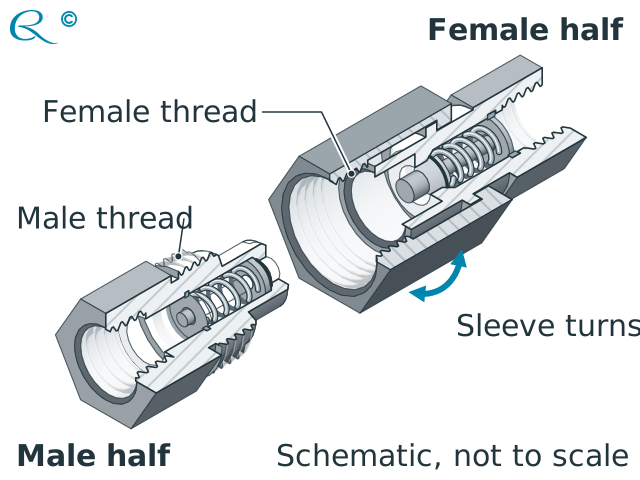
Each type is drawn with its halves parted, in one common form; the drawings are schematic, not to scale.
Ball-Locking Couplings With Poppet Valves
Locking balls in the female half drop into a groove on the male half. Some designs connect with a push; on others the sleeve is pulled back to connect, and on most it is pulled back to release. A poppet valve in each half closes as they part, but a little oil escapes, and some air and dirt can get in, at each disconnection. Used on general hydraulic lines, tools and test benches.
Tell us: the marking or the pattern (A or B), the body size, the port thread, and whether it connects by a push or by pulling the sleeve back.
Flat-Face Couplings
The faces of both halves sit flush when they part, so very little oil spills, little air gets in, and the faces can be wiped clean before they connect. Used on attachments and wherever clean connections matter; some types connect against residual pressure.
Tell us: the body size, the port thread and whether it must connect against pressure left in the line.
Screw-to-Connect Couplings
The halves are joined by turning a threaded sleeve, so they cannot be pulled apart by accident. Made for high pressures, heavy pulses and vibration, as on hydraulic tools and heavy machines; certain designs can be screwed together while pressure remains in the line.
Tell us: the size, the port thread and the working pressure.
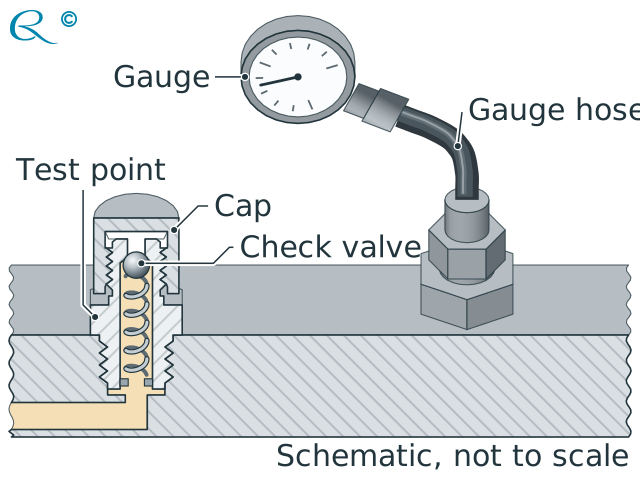
Test Point Couplings
Small couplings fitted at a test port of a pump, valve block or line and closed by a cap. A gauge hose or a sensor screws on while the system runs, within the limits of the exact type, to read the pressure or take an oil sample.
Tell us: the connection thread of the test point and its port thread.
Dust caps and plugs, which we can supply with the couplings, keep the halves clean; they do not hold pressure.
Matching an Existing Coupling
A new half fits an old one only when both follow the same interchange pattern and size. Ball-locking couplings with poppet valves are commonly made to one of two international patterns, A and B. The pattern sets the shape of the mating ends, not how the halves are connected, and at the same nominal size an A half and a B half do not connect. Flat-face couplings commonly follow a pattern of their own; screw-to-connect and test point types vary between makers, so match these by the marking.
The nominal size names the body and the flow it passes, not the thread. Each half also has a port thread to the hose or the machine, such as BSP, NPT, JIC, ORFS or a metric thread, and one body size can come with different port threads.
Seals inside couplings are usually NBR; tell us if the fluid is fire-resistant or the oil runs hot, because another seal material may be needed.
Before We Select a Replacement
A replacement half must mate with the half you keep and suit the whole duty, not only the size. A coupling made for a higher pressure is still wrong if its pattern, its valve or its seals differ, and a line is only as strong as its weakest part.
| Detail | Why it matters |
|---|---|
| Type and interchange pattern | Ball-locking (pattern A or B), flat-face, screw-to-connect or test point; the marking on the body often says which. |
| Male half, female half or both | So the new half mates with what you already have. |
| Nominal size or hose bore | Sets the flow the coupling can pass; too small a coupling raises the pressure drop and heats the oil. |
| Port thread on each half | The thread form, size and seal that connect to the hose or the machine. |
| Fluid and temperature | The seals must suit them: NBR for most mineral oils, another material for some fire-resistant fluids or hot oil. |
| Working pressure and surges | The working pressure of the coupling, and of every fitting with it, must cover the system pressure, surges included. |
| Connecting under pressure | Whether it must connect or disconnect with pressure left in the line: only some types are made for it. |
| Quantity and required date | Lets us confirm availability and lead time. A less common item takes longer to deliver, and the quotation states the delivery time. |
What our quotation will confirm: the item we propose and its specification, what we matched it to, the quantity and availability.
Cam-and-Groove Couplings for Transfer Hoses
We also supply cam-and-groove couplings. They are a separate family, not hydraulic couplings. A grooved adaptor is locked into a coupler by two cam arms, on low-pressure transfer, suction and tanker hoses for oil, diesel, water and other liquids, with a body and gasket that suit the liquid.
They are not for hydraulic pressure lines, and they have no valve: isolate the line, release the pressure and drain it before you part them, following the equipment maker’s and the plant’s instructions.
For a quotation, send the size, the letter of each part (see the table below), the liquid, and the body and gasket material.
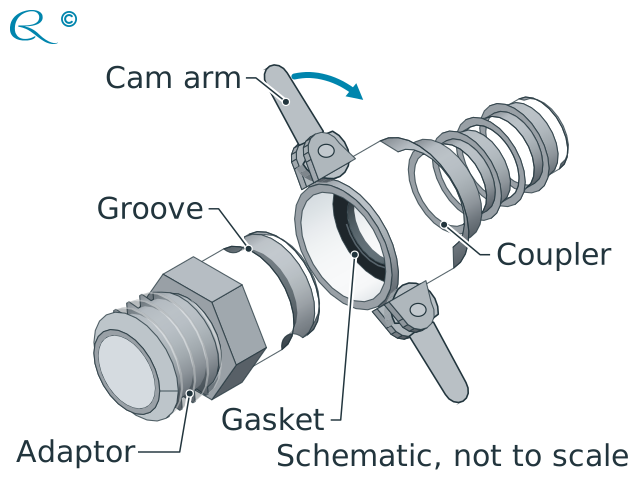
Cam-and-Groove Parts by Letter
Ordinary cam-and-groove couplings are not for compressed air, gas or steam, and their dust caps and plugs are not pressure-retaining closures. The parts are commonly named by a letter for the end each one has; check the old part or its drawing, because some makers use their own names.
| Letter | Part | Other end |
|---|---|---|
| A | Adaptor (grooved) | Female thread |
| B | Coupler (cam arms) | Male thread |
| C | Coupler (cam arms) | Hose shank |
| D | Coupler (cam arms) | Female thread |
| E | Adaptor (grooved) | Hose shank |
| F | Adaptor (grooved) | Male thread |
| DC | Dust cap | Closes an adaptor |
| DP | Dust plug | Closes a coupler |
Questions Buyers Ask
Can I connect a coupling while the line is under pressure?
Most ball-locking couplings must be connected with the pressure released. Some flat-face and screw-to-connect types are made to connect against pressure left in the line, and test points are made to connect while the system runs, each within its own limits. Tell us if you need that.
Why will my coupling not connect?
Often because pressure is trapped in the disconnected hose or in the machine, for example when the sun warms a hose left lying in the open. Release it only as the machine’s or the coupling maker’s instructions set out, and never strike a coupling to force it. Dirt in the halves and a worn locking sleeve are other causes.
Can I use an air coupling on a hydraulic line?
No. Air couplings are made for compressed air at much lower pressures; never fit one to a hydraulic line, even where it looks alike or the thread fits.
Do you keep stock?
Availability is confirmed with each quotation.
What is the price?
Prices depend on the coupling type, the size, the thread and the quantity, so we quote for each enquiry.
Does your invoice show the HSN code?
Yes. Our GST invoice shows the HSN or SAC code for each line.
Where We Work
Tamil Nadu
Telangana
Kerala
Andhra Pradesh
Odisha
Delhi NCR
Rajasthan
Jharkhand
Uttar Pradesh
West Bengal
Punjab
Chhattisgarh
Send Your Coupling Details
Coupling type, size, port thread, which half and the quantity.
Request received. Your reference is {ref}. We reply during office hours, Monday to Saturday, 9.00 am to 5.30 pm. For a breakdown or a plant shutdown, call +91 99400 49505 at any time. Nothing is booked or ordered until we confirm scope, availability and terms in writing.Prefer to talk? Call +91 99400 49505 or WhatsApp us.
Related
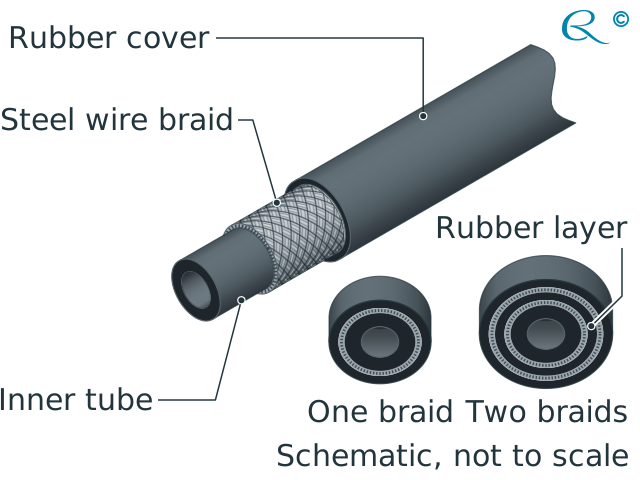
Hydraulic Hoses
Hydraulic hose pipes with their end fittings, to carry your couplings.
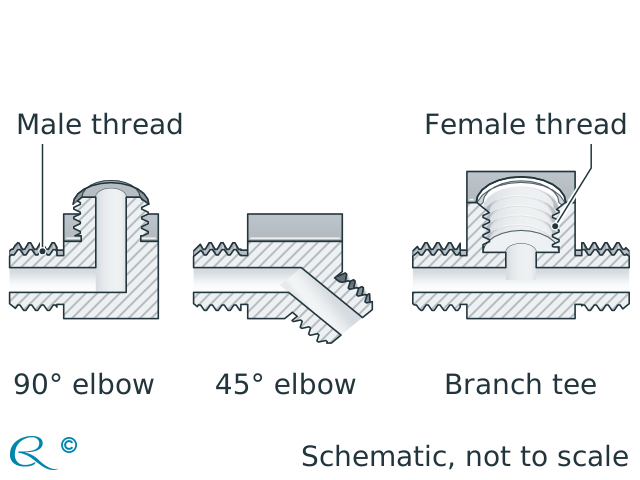
Hydraulic Fittings
Adaptors that join a coupling’s port thread to a hose or a machine port.
O-Rings
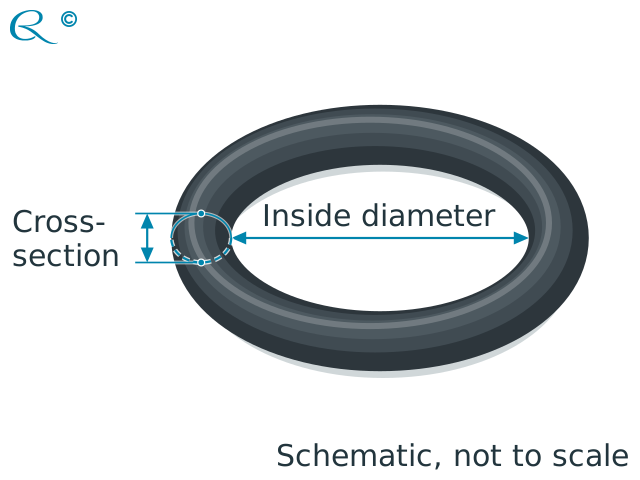
O-rings in NBR, FKM, EPDM and silicone, by size or from the old ring.
Hose Clamps
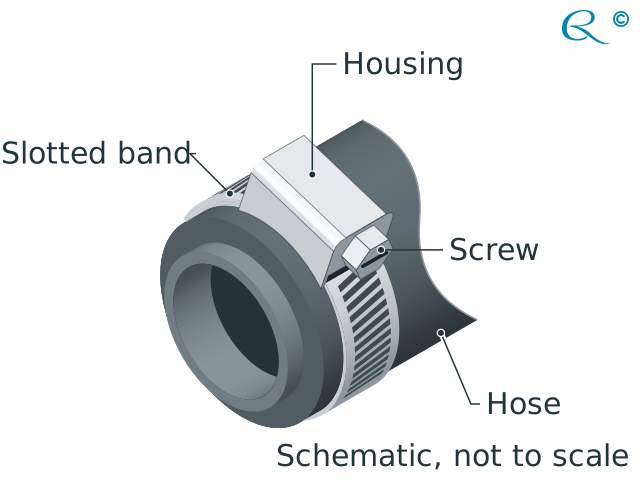
Worm-drive, T-bolt, spring and ear clamps for low pressure hose lines.
Hydraulic Pumps
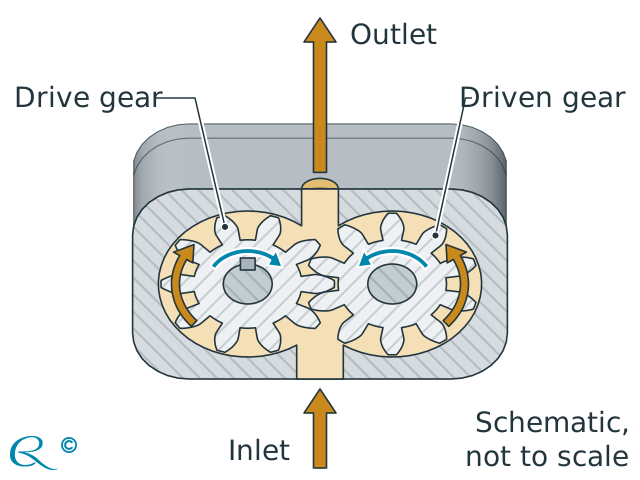
Gear, vane and piston pumps, and transfer pumps for oil and diesel.
Oil Flushing
Systems flushed clean after a repair, a new line or a change of hoses and couplings.