
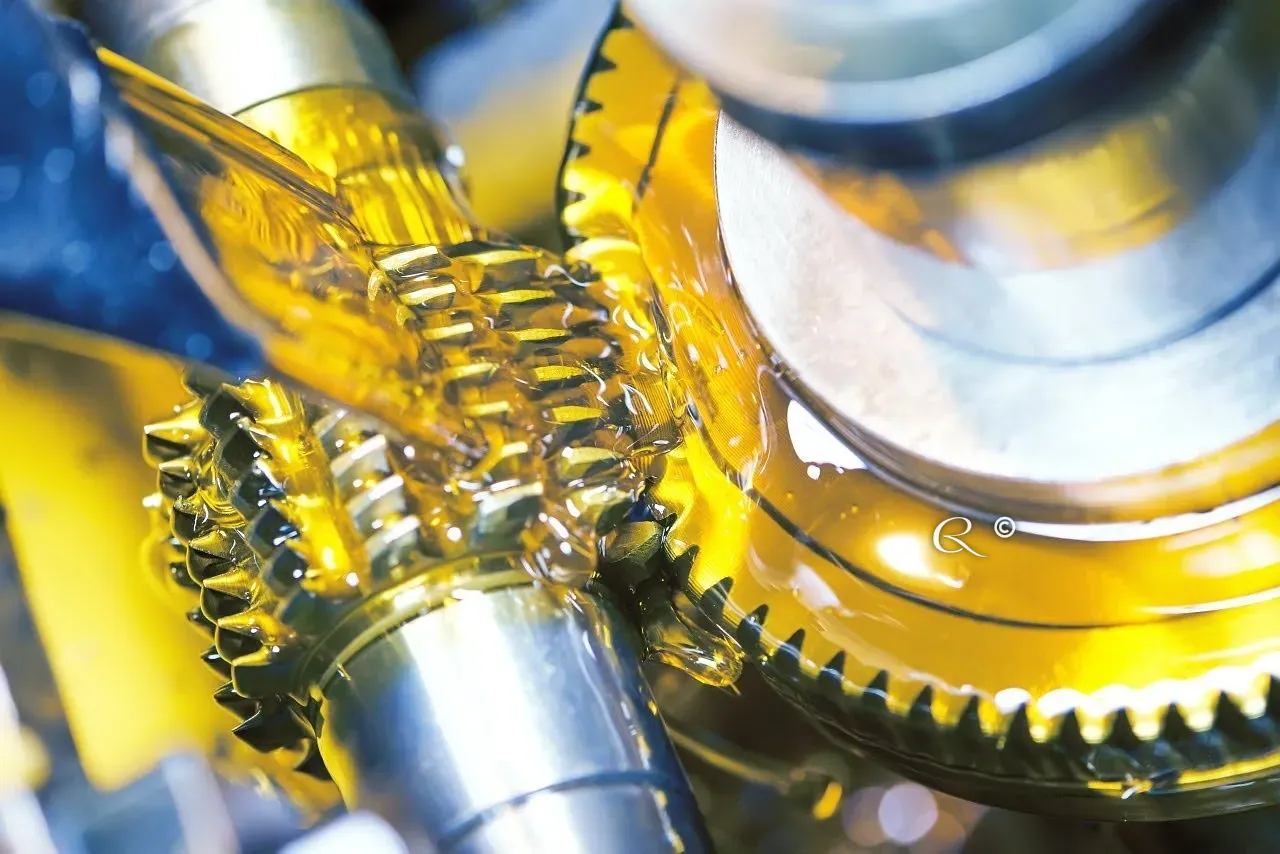
Hydraulic Pumps and Oil Transfer Pumps
Ram Engineering, based in Chennai, is a hydraulic pump supplier in India: pumps for power packs and machines, and transfer pumps for oil and diesel.
What to Send for a Quote
If you are replacing a pump, this is enough to start:
- The nameplate or model code of the old pump, or a clear photo of it.
- The shaft end and the mounting flange: a photo of each, with a ruler beside them. Send photos on WhatsApp to +91 99400 49505 or by email to [email protected].
- The drive and the duty: the motor’s power and speed, or the engine drive; the fluid, the flow, the working pressure and the highest oil temperature.
- How many, and the date you need them by.
What a Hydraulic Pump Does, and When to Replace It
A hydraulic pump turns the power of a motor or an engine into a flow of oil. It does not make pressure by itself: the load resists the flow, and a correctly selected relief valve limits the pressure in the circuit it protects. Pressure surges, and pressure trapped by a load, still need to be assessed.
A worn pump delivers less oil: the cylinders slow down, and the oil often runs hotter and the pump noisier. Before you work on a pump, stop and lock off its motor or engine, lower or support any raised load, release the pressure (an accumulator or trapped oil can hold it), drain the oil, let it cool and follow the machine’s or the plant’s instructions. Where the pump sits below the tank, shut the suction valve, if one is fitted, before you open the pump, or the tank drains through it.
We are a supplier, not the maker.
Pump Types We Supply
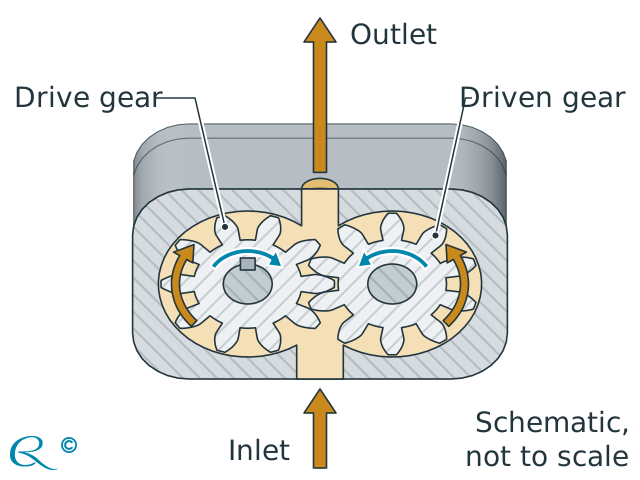
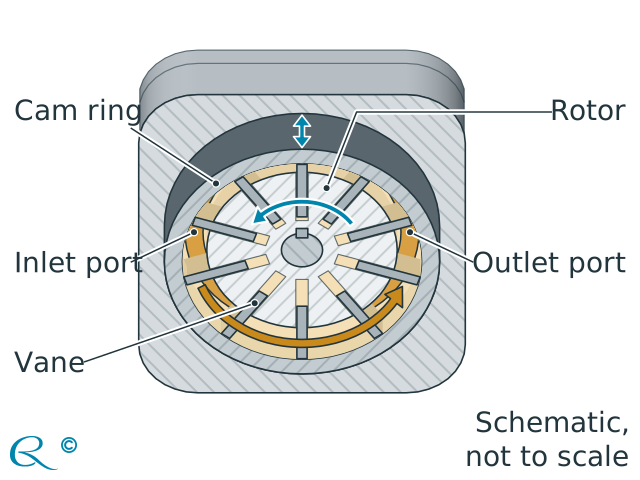
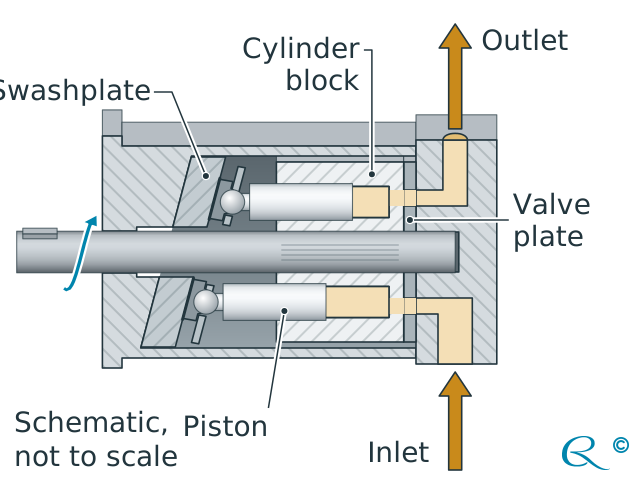
The drawings are simplified, one usual design of each and not to scale.
External Gear Pumps
Two gears turn in a close-fitting housing and carry oil round the outside of their teeth from the inlet to the outlet; where the teeth mesh, they stop it flowing back. Simple, robust and generally more tolerant of dirty oil than piston pumps, they give a fixed flow per turn, on power packs, lubrication systems and oil transfer.
Tell us: the displacement or the flow, the direction of rotation, and the shaft, flange and ports.
Vane Pumps
Vanes slide in slots in a rotor and follow a cam ring, so the spaces between them open over the inlet and close over the outlet. Generally quieter than gear pumps. Fixed types often have an oval ring with two pumping zones that balance the load on the shaft; variable types, as drawn, move a round ring off centre, often under a pressure compensator.
Tell us: the model code, fixed or variable, and the compensator setting if it is marked.
Axial Piston Pumps
Pistons in a cylinder block turning with the shaft slide on a tilted swashplate, so each draws oil in and pushes it out once per turn. The swashplate angle sets the flow; variable types change it with a control such as a pressure compensator or load sensing. Built for high pressures, they generally need the cleanest oil of these types; bent-axis pumps tilt the cylinder block instead.
Tell us: the full model code, including its control, and the shaft, flange and port details.
Screw Pumps
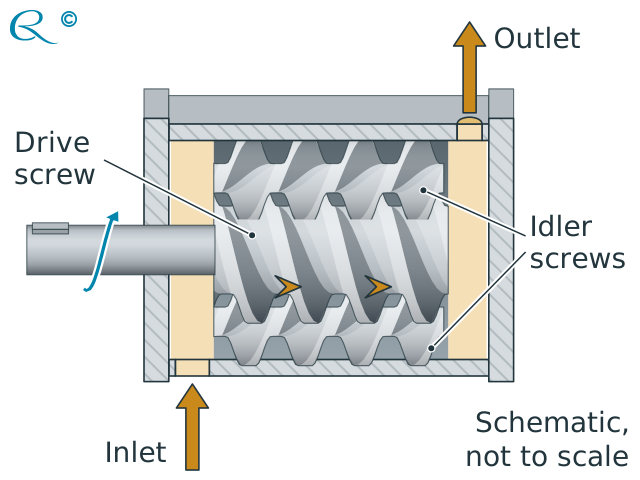
In the common three-screw design, a drive screw turns two idler screws in a close-fitting housing, moving the oil along the threads in a steady flow with little pulsation. Quiet, and suited to lube oil, fuel oil and thicker oils, for transfer and circulation.
Tell us: the fluid and its viscosity, the flow, and the pressure at the outlet.
Oil Transfer Pump Sets, Flameproof Where Needed
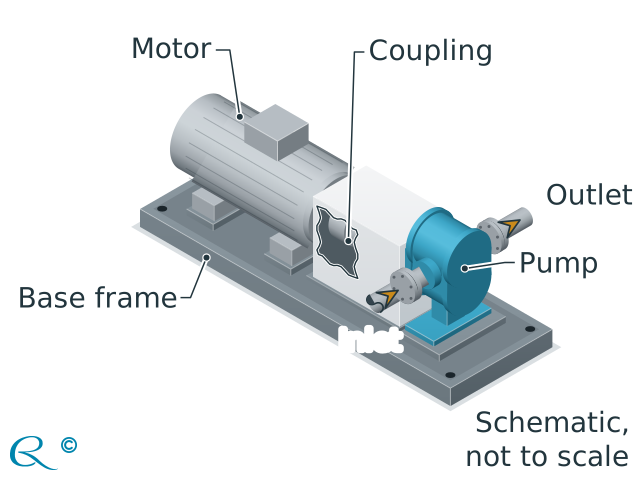
A pump with its motor, coupling and base frame, for oil and diesel transfer. Centrifugal pumps suit thin fluids at high flow and low pressure, not hydraulic duty. In an area the site classes as hazardous, such as a fuel yard, the motor and the other electrical parts must be of a type made for it, such as flameproof.
Tell us: the fluid, the flow, the distance and height to pump, and any hazardous-area classification.
Flow, Speed and Motor Power
A 16 cc/rev (cubic centimetres per revolution) pump at 1,440 rpm moves 16 × 1,440 / 1,000 = 23.04 litres a minute in theory; internal leakage, which grows with pressure, heat and wear, takes some of that away.
For power, use the pressure difference across the pump (outlet less inlet), not an unspecified pressure. The power at the pump shaft is less than the motor’s electrical input, which also covers the motor’s own losses.
A larger pump or a faster motor also speeds up the cylinders and puts more flow through the valves and lines, and more load on the motor. These are explanatory calculations, not ratings of the pumps we offer.
Flow and Power Formulas
| Quantity (unit) | Formula |
|---|---|
| Theoretical flow (L/min) | displacement (cc/rev) × speed (rpm) / 1,000 |
| Actual flow (L/min) | displacement × speed × volumetric efficiency / 1,000 |
| Shaft power (kW) | actual flow (L/min) × pressure difference across the pump (bar) / (600 × overall efficiency) |
Efficiencies as decimals (0.9 for 90 %). The overall efficiency is the volumetric efficiency times the mechanical efficiency.
Reading the Old Pump
The nameplate or model code usually gives the type, displacement, rotation, shaft and mounting; a clear photo of it is the quickest start. Send photos on WhatsApp to +91 99400 49505 or by email to [email protected].
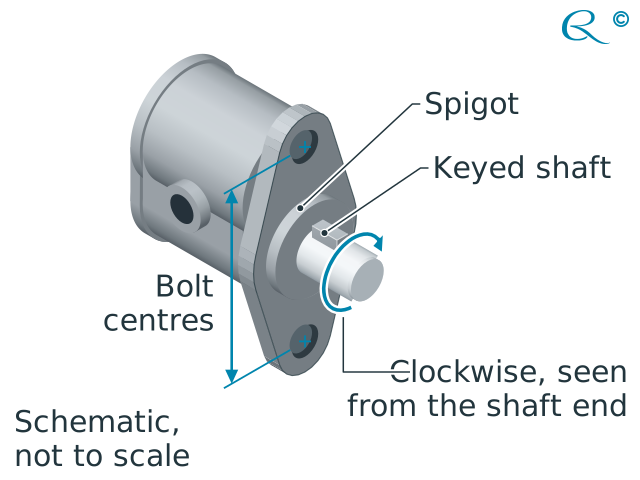
Rotation is usually stated as seen looking at the shaft end, clockwise or anticlockwise, but not by every maker: check the arrow on the body and say which end you looked from.
If the code cannot be read, measure the shaft (keyed or splined, its diameter, the key width or spline count), the mounting flange (two or four bolts, the bolt centres, the spigot diameter) and the ports (thread or flange, and size).
Before We Select a Replacement
A pump that matches the old flow and pressure can still fail early on the wrong fluid, with a starved inlet or at the wrong speed. Send us these details. What our quotation will confirm: the item we propose and its specification, what we matched it to, the quantity and availability.
| Detail | Why it matters |
|---|---|
| Nameplate or model code | Names the type, displacement, rotation, shaft and mounting of the old pump. |
| Fluid and its viscosity | Mineral oil, water glycol, phosphate ester, diesel or a thicker oil: the seals and the pump type must suit it, and thick oils limit the speed. |
| Flow, or displacement and speed | Sets how fast the machine moves; the pump must suit the motor’s speed. |
| Working and peak pressure | Must stay within the pump’s continuous and peak limits, surges included. |
| Oil temperature | Hot, thin oil leaks more inside the pump and lowers its flow, and seals have limits. |
| Inlet conditions | Where the oil level sits above or below the pump, and the suction line and its strainer: a starved inlet causes cavitation, noise and wear. |
| Drive and rotation | Motor power and speed, or an engine or gearbox drive, and the rotation seen from the shaft end. |
| Shaft, flange and ports | Shaft type and size, flange pattern and spigot, and port threads or flanges, so the pump fits the coupling, the bell housing and the pipework. |
| Hazardous area | If your site classes the pump’s area as hazardous, the classification decides the motor type. |
| Quantity and required date | Lets us confirm availability and lead time with the quotation. |
Example
From Our Quotations
In 2026 we quoted flameproof gear pumps, with supply and installation, for a fuel storage site, and in 2025 pump sets to go with oil centrifuges.
Questions Buyers Ask
Can you supply the motor and coupling as well?
Tell us whether you need the bare pump or a pump set with a motor, a coupling and a base, and we quote what you need.
My pump is noisy and the oil runs hot. Does it need replacing?
Not always. Noise and heat can also come from a blocked suction filter, air in the oil or a worn relief valve. An oil test and a check of the suction side help decide.
Can I replace a gear pump with a vane or piston pump?
Sometimes, but not on flow and pressure alone. The other pump must also suit the fluid, the cleanliness of the oil, the inlet conditions and the controls of the circuit, and fit the shaft, flange and ports. We look at the whole system before we propose one.
What is the difference between a fixed and a variable displacement pump?
A fixed pump moves the same volume each turn; when the machine needs less, the extra oil returns to the tank, often over the relief valve, and that power turns into heat. A variable pump reduces its displacement, often to hold a set pressure, so it wastes less power.
Do you keep stock?
Availability is confirmed with each quotation.
What is the price?
Prices depend on the pump type, the size, the drive and the quantity, so we quote for each enquiry.
Does your invoice show the HSN code?
Yes. Our GST invoice shows the HSN or SAC code for each line.
Where We Work
Tamil Nadu
Telangana
Kerala
Andhra Pradesh
Odisha
Delhi NCR
Rajasthan
Jharkhand
Uttar Pradesh
West Bengal
Punjab
Chhattisgarh
Send Your Pump Details
Nameplate or model code, flow, pressure, drive and quantity.
Request received. Your reference is {ref}. We reply during office hours, Monday to Saturday, 9.00 am to 5.30 pm. For a breakdown or a plant shutdown, call +91 99400 49505 at any time. Nothing is booked or ordered until we confirm scope, availability and terms in writing.Prefer to talk? Call +91 99400 49505 or WhatsApp us.
Related
Valves
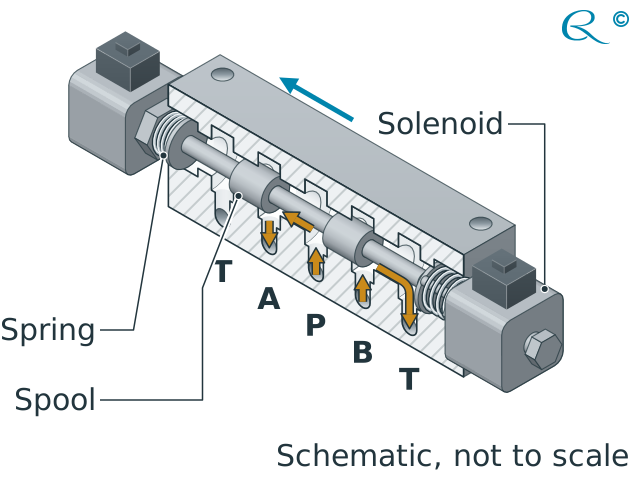
Relief, directional, check and ball valves for the circuit the pump feeds.
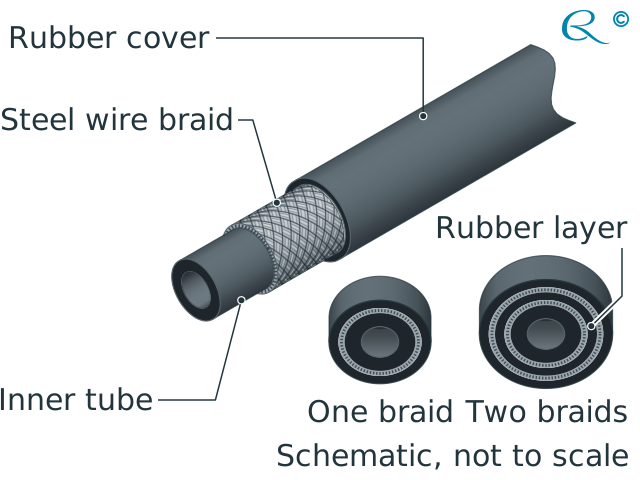
Hydraulic Hoses
Hose pipes with their end fittings for the pump’s suction and pressure lines.

Filter Elements
Hydraulic and lube oil elements by part number.
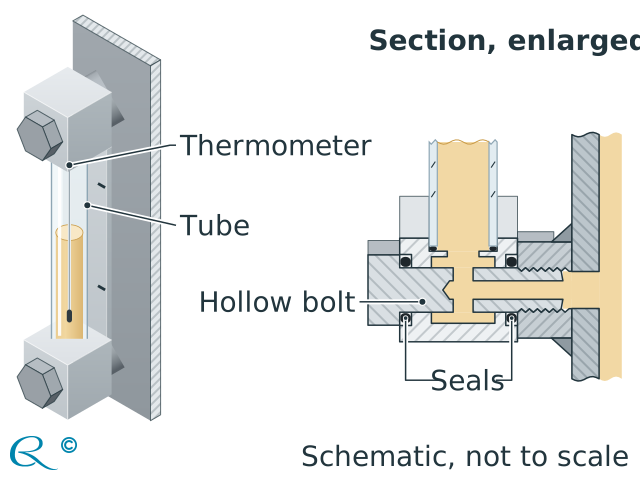
Tank Level Indicators
Level gauges and switches that show the oil level in the pump’s tank.
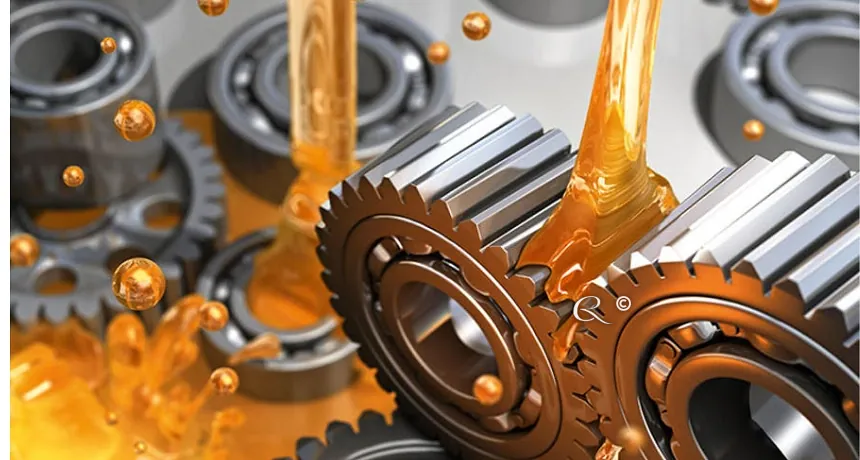
Hydraulic Oil Filtration
Power pack and press oil filtered at your site, so a new pump starts on clean oil.
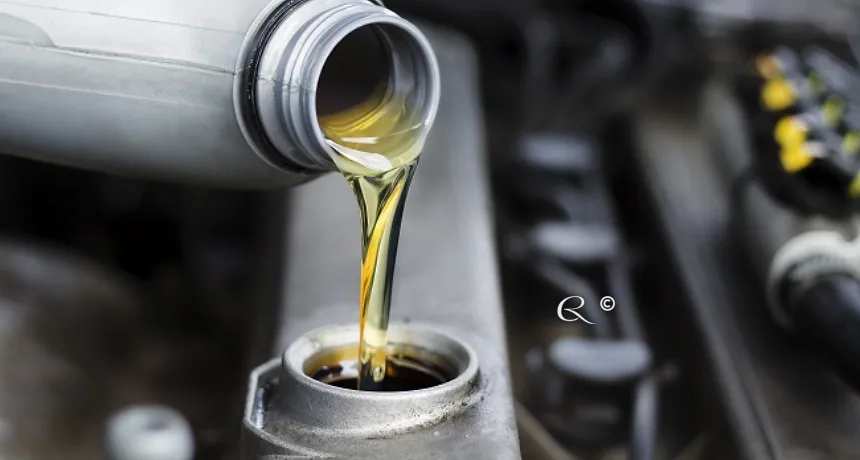
Oil Flushing
Hydraulic systems flushed after a repair, such as a pump change.